Cavapoo Puppies: Complete Guide to Their Personality, Care, Training, Cost, and Health
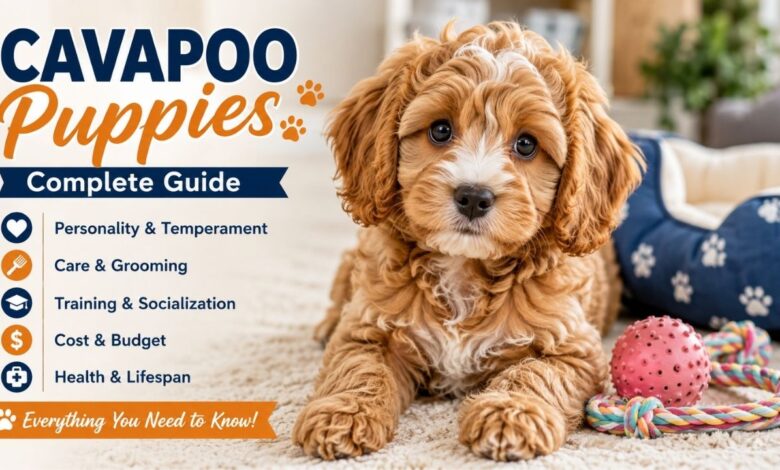
Cavapoo puppies have become one of the most popular small companion dogs for families, couples, singles, and first-time dog owners. Known for their adorable appearance, affectionate personality, intelligence, and soft coats, these puppies combine characteristics from two well-loved breeds: the Cavalier King Charles Spaniel and the Toy or Miniature Poodle.
Their friendly nature and manageable size make Cavapoo puppies appealing to people living in apartments as well as those with larger homes. However, bringing a Cavapoo puppy home is a long-term responsibility. Before choosing one, prospective owners should understand its temperament, grooming requirements, exercise needs, training, feeding, health considerations, and overall cost.
This comprehensive guide explains everything you need to know about Cavapoo puppies and what it takes to raise one into a happy and healthy adult dog.
What Are Cavapoo Puppies?
Cavapoo puppies are a cross between a Cavalier King Charles Spaniel and a Poodle, usually a Toy or Miniature Poodle. The combination brings together characteristics associated with both parent breeds.
The Cavalier King Charles Spaniel is known for its gentle and affectionate personality, while the Poodle is recognized for intelligence, trainability, and an active nature. Cavapoos can inherit different combinations of these characteristics, meaning individual puppies can vary considerably.
Cavapoos are also known by names such as Cavoodle and Cavadoodle. Because they are crossbred dogs, their appearance, size, coat texture, and temperament are not completely standardized.
This variation is part of their appeal, but it also means potential owners should evaluate each puppy individually rather than assuming every Cavapoo will have the same characteristics.
Cavapoo Puppy Appearance
One of the main reasons Cavapoo puppies attract so much attention is their charming appearance. They typically have a small body, rounded facial features, floppy ears, expressive eyes, and a soft coat.
Their coat may be:
- Wavy
- Curly
- Slightly straight
- Soft and silky
- Dense and fluffy
Cavapoo colors can also vary. Common colors include apricot, red, cream, black, brown, white, and combinations of these shades.
Some puppies may have distinctive markings on their chest, face, legs, or paws. Coat color can sometimes change as the dog matures, particularly in puppies with darker coats.
It is important to remember that appearance should not be the only factor when selecting a puppy. Health, temperament, breeding practices, early socialization, and veterinary care are much more important considerations.
How Big Do Cavapoo Puppies Get?
The adult size of a Cavapoo depends heavily on the size of the Poodle parent. Cavapoos bred from Toy Poodles may remain particularly small, while those descended from Miniature Poodles can become somewhat larger.
Many adult Cavapoos fall within a small-dog size range, but there is no single guaranteed adult weight or height for every puppy.
Several factors influence their eventual size, including:
- Parent size
- Genetics
- Nutrition
- Overall health
- Growth rate
- Sex
- Individual variation
Responsible breeders should be able to provide information about the puppy’s parents and, where appropriate, estimates regarding expected adult size.
Cavapoo Puppies Temperament
Cavapoo puppies are generally known for being affectionate, social, playful, and people-oriented. They often enjoy spending time with their owners and can develop strong bonds with household members.
Their Cavalier heritage may contribute to their gentle and companionable nature, while their Poodle heritage can contribute intelligence and eagerness to learn.
However, every puppy is an individual. Genetics, early experiences, socialization, training, and environment all influence behavior.
A well-socialized Cavapoo puppy may enjoy:
- Playing with appropriate toys
- Learning new commands
- Meeting familiar people
- Going on walks
- Spending time with family members
- Participating in interactive games
Because they often enjoy human companionship, Cavapoos may not be ideal for households where a dog would routinely be left alone for very long periods.
Are Cavapoo Puppies Good Family Dogs?
Cavapoo puppies can be suitable family companions when properly socialized and trained. Their small size and affectionate nature can work well in many households.
Families with young children should teach children how to interact respectfully with a puppy. Small dogs can be injured accidentally if children pick them up improperly, pull their ears or tail, chase them, or play too roughly.
Parents should supervise interactions between young children and puppies. Children should learn that dogs need quiet time, especially while eating, sleeping, or resting.
A Cavapoo can become a wonderful family companion when both the dog and household members receive appropriate guidance.
Training Cavapoo Puppies
Training should begin as soon as a Cavapoo puppy settles into its new home. Early training helps establish good habits and provides valuable mental stimulation.
Basic training can include:
- Learning its name
- House training
- Crate training
- Sit and stay commands
- Recall training
- Leash manners
- Bite inhibition
- Appropriate chewing
- Calm greetings
- Basic socialization
Positive reinforcement is generally a useful approach. Rewarding desirable behavior with treats, praise, toys, or affection can help puppies understand what their owners want.
Consistency is especially important. If one household member allows behavior that another discourages, the puppy may become confused.
Short, regular training sessions are often more effective than long sessions that overwhelm a young dog.
House Training a Cavapoo Puppy
House training requires patience and consistency. Puppies have smaller bladders and less control than adult dogs, so accidents are normal during the learning process.
Owners can establish a routine by taking the puppy outside:
- After waking
- After eating
- After drinking
- After playing
- Before bedtime
- At regular intervals throughout the day
When the puppy eliminates in the correct place, immediate positive reinforcement can help reinforce the behavior.
Accidents should be cleaned thoroughly to remove odors that could encourage the puppy to return to the same location.
Punishing a puppy after an accident is generally counterproductive because it does not teach the puppy what behavior is expected.
Socialization for Cavapoo Puppies
Socialization is one of the most important parts of raising a confident dog. A puppy should gradually experience different sights, sounds, people, surfaces, environments, and situations in a safe and age-appropriate way.
Useful experiences can include getting used to:
- Household noises
- Car rides
- Grooming
- Gentle handling
- Different floor surfaces
- Visitors
- Leashes and collars
- Veterinary examinations
- Calm, appropriately vaccinated dogs
Socialization should be gradual rather than overwhelming. A frightened puppy should not be forced into situations that cause extreme stress.
Owners should also discuss vaccination and disease-prevention considerations with their veterinarian before exposing young puppies to public areas or unknown dogs.
Feeding Cavapoo Puppies
Proper nutrition is essential during puppyhood because young dogs are growing rapidly. Cavapoo puppies should receive a nutritionally complete food formulated for puppies and appropriate for their expected size.
Meal frequency depends on the puppy’s age, size, activity level, and individual needs. Young puppies commonly benefit from several smaller meals throughout the day rather than one or two large meals.
Owners should monitor body condition instead of simply providing unlimited food. Overfeeding can contribute to excessive weight gain and may negatively affect growing joints.
A veterinarian can provide personalized guidance regarding:
- Appropriate food
- Portion sizes
- Feeding frequency
- Treat quantities
- Weight monitoring
- Dietary changes
Fresh drinking water should always be available.
Grooming Cavapoo Puppies
Grooming is an important responsibility for Cavapoo owners. Their coats can become tangled or matted, particularly when the hair is curly or dense.
Regular brushing helps prevent mats and keeps the coat manageable. As the puppy grows, professional grooming may become necessary.
A grooming routine can include:
- Regular brushing
- Bathing when necessary
- Nail trimming
- Ear care
- Dental hygiene
- Coat trimming
Puppies should gradually become accustomed to grooming from an early age. Gentle handling of the paws, ears, mouth, and coat can make future grooming appointments easier.
Owners should never assume that a low-shedding coat means no maintenance is required.
Are Cavapoo Puppies Hypoallergenic?
Cavapoo puppies are sometimes marketed as hypoallergenic because Poodles are often associated with low-shedding coats. However, no dog can be guaranteed to be completely hypoallergenic.
Allergies can be triggered by proteins found in a dog’s dander, saliva, and other biological materials, not simply by visible hair.
A person with allergies should spend time around the specific dog before making a long-term commitment and should speak with an appropriate medical professional about allergy management.
Exercise Needs of Cavapoo Puppies
Although Cavapoos are small, they still need regular physical activity and mental stimulation.
Age-appropriate activities can include:
- Short walks
- Gentle play
- Fetch
- Training games
- Puzzle toys
- Supervised exploration
- Interactive play with owners
Young puppies should not be pushed into excessive or strenuous exercise. Their bodies are still developing, so activities should be appropriate for their age and physical condition.
Mental stimulation is equally important. Teaching new commands and providing safe puzzle toys can help keep an intelligent puppy engaged.
Cavapoo Puppy Health
Like all dogs, Cavapoos can experience health problems. Because they are descended from two different breeds, potential owners should learn about health conditions associated with both parent breeds.
Potential concerns can include heart disease, eye conditions, patellar luxation, hip problems, dental disease, and other inherited or acquired conditions.
This does not mean every Cavapoo will develop these problems. Genetics, breeding practices, preventive healthcare, nutrition, exercise, and environmental factors all influence a dog’s health.
Regular veterinary examinations are essential for monitoring development and identifying potential problems early.
How to Find Healthy Cavapoo Puppies
Finding a responsible breeder is one of the most important steps when purchasing a Cavapoo puppy.
Potential buyers should ask breeders about the health history and screening of both parents. They should also ask to see appropriate veterinary documentation.
A responsible breeder should be willing to discuss:
- Parent health
- Genetic testing where appropriate
- Vaccinations
- Parasite prevention
- Veterinary examinations
- Puppy socialization
- Living conditions
- Feeding
- Contracts and health guarantees
Be cautious when a seller refuses to provide basic information, insists on rushing the purchase, or focuses entirely on appearance and payment.
Online advertisements can make it easy to find Cavapoo puppies, but buyers should investigate the source carefully before sending money.
How Much Do Cavapoo Puppies Cost?
The price of Cavapoo puppies varies significantly based on location, breeder, lineage, parent health testing, coat characteristics, demand, and other factors.
The purchase price is only the beginning of the financial commitment.
New owners should budget for:
- Puppy food
- Vaccinations
- Veterinary examinations
- Parasite prevention
- Grooming
- Training
- Toys
- Bedding
- Collar and leash
- Identification
- Emergency veterinary care
A lower initial purchase price does not necessarily mean a lower overall cost. Investing in responsible breeding, preventive veterinary care, and proper nutrition can be valuable over the dog’s lifetime.
Cavapoo Puppies and Separation Anxiety
Because Cavapoos can be strongly attached to their owners, some may struggle when left alone. This makes teaching independence during puppyhood particularly useful.
Owners can gradually introduce periods of alone time while ensuring the puppy is in a safe environment.
A consistent routine, appropriate exercise, enrichment toys, and gradual training can help a puppy become more comfortable with being alone.
If a dog shows severe distress, destructive behavior, excessive vocalization, or other concerning signs, professional veterinary or behavioral advice may be appropriate.
Cavapoo Puppies in Apartments
Cavapoos can adapt well to apartment living when their exercise, mental stimulation, training, and toilet needs are properly managed.
Living in an apartment does not eliminate the need for daily activity. Owners should provide opportunities for safe walks and play while also considering noise levels and neighboring residents.
Because Cavapoos can be social and people-oriented, apartment owners should pay particular attention to separation training and barking behavior.
Cavapoo Puppies vs. Other Small Dogs
One reason Cavapoos are popular is that they combine several characteristics people seek in companion dogs. Compared with some breeds, they can offer small size, intelligence, affection, and a potentially low-shedding coat.
However, there is no universally perfect dog breed.
Someone choosing a dog should consider:
- Daily schedule
- Home environment
- Grooming commitment
- Exercise availability
- Training experience
- Budget
- Children and other pets
- Desired adult size
- Time available for companionship
The best puppy is one whose needs fit the owner’s lifestyle.
Common Questions About Cavapoo Puppies
Are Cavapoo puppies easy to train?
Many Cavapoo puppies are intelligent and responsive to positive reinforcement, which can make training enjoyable. However, consistency and patience are still necessary.
Do Cavapoo puppies shed?
Shedding varies. Some Cavapoos shed relatively little, while others may shed more. Coat type depends largely on genetics.
How often should Cavapoo puppies be groomed?
The exact schedule depends on coat type and length. Regular brushing at home is important, while professional grooming may be needed as the coat grows.
Are Cavapoo puppies good for first-time owners?
They can be, but first-time owners should understand that small size does not mean low responsibility. Training, grooming, socialization, exercise, and veterinary care are still necessary.
Can Cavapoo puppies live with other pets?
Many can live successfully with other pets when introductions are gradual and carefully managed. Individual temperament matters.
Final Thoughts on Cavapoo Puppies
Cavapoo puppies are attractive, affectionate, intelligent companion dogs that can fit into many different households. Their combination of Cavalier King Charles Spaniel and Poodle characteristics gives them an appealing personality and appearance, but prospective owners should look beyond their cute faces when making a decision.
You May Also Read: The Rise of Puppygirlxd: Redefining Online Creativity and Pet Advocacy