1800s Bodybuilders: The Fascinating History of 19th-Century Physical Culture
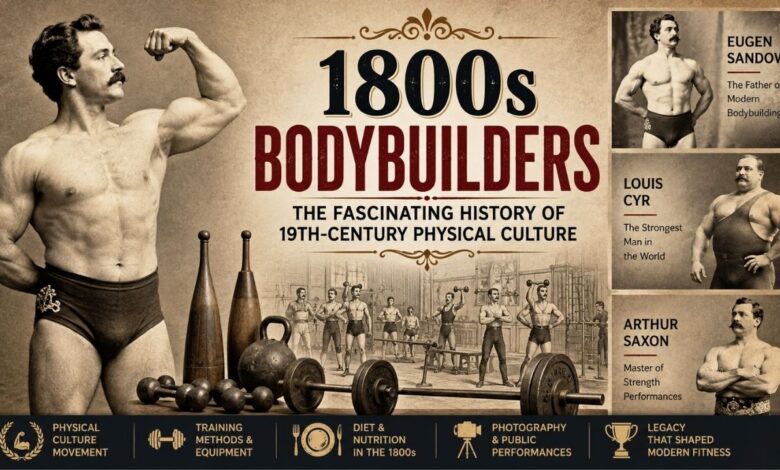
When they think of bodybuilding, they often picture modern gyms, professional competitions, carefully planned diets, supplements, and athletes with highly developed physiques. However, the history of bodybuilding goes back much further than the modern fitness industry. Bodybuilders and strongmen of the 1800s helped establish many of the ideas that eventually developed into modern bodybuilding.
The 19th century was a fascinating period for physical culture. There were no modern fitness centers, sophisticated exercise machines, or scientifically designed bodybuilding programs. Instead, athletes relied on dumbbells, barbells, gymnastics, calisthenics, wrestling, manual exercises, and traditional strength-training methods. Public performances also helped turn physical strength and muscular development into entertainment.
Among the most important figures of this period was Eugen Sandow, whose physique, posing style, business activities, and approach to exercise helped shape the future of bodybuilding. Other famous strongmen, including Louis Cyr and Arthur Saxon, contributed to the growing fascination with physical strength.
This article explores the world of 1800s bodybuilders, their training methods, physiques, diets, equipment, famous personalities, and lasting influence on modern fitness culture.
What Were 1800s Bodybuilders?
The term “bodybuilder” did not have the same meaning in the 1800s as it does today. Modern bodybuilding generally focuses on developing muscle size, symmetry, proportion, definition, and overall aesthetics for competitions. During the 19th century, these concepts were still developing.
Many of the people we now associate with 1800s bodybuilders were actually strongmen, circus performers, gymnasts, wrestlers, or physical-culture advocates. Their main goal was often to demonstrate extraordinary strength rather than achieve the highly specialized muscular development expected from modern professional bodybuilders.
Nevertheless, some athletes began placing increasing importance on how their bodies looked. They developed muscular physiques and deliberately displayed their bodies through photographs, public performances, and posing. This transition from strength demonstration toward aesthetic physique development was one of the most important developments in the history of bodybuilding.
The late 1800s therefore represent an important bridge between traditional strength performance and modern bodybuilding.
The Rise of Physical Culture in the 19th Century
Physical culture was a broad movement that encouraged people to improve their bodies through exercise, strength training, healthy living, gymnastics, nutrition, and disciplined lifestyles.
During the Victorian era, interest in physical fitness grew considerably. Exercise was increasingly promoted as a way to develop strength, improve posture, build confidence, and maintain general health.
Gyms and athletic clubs began appearing in various parts of Europe and North America. Physical educators published books and magazines explaining exercise techniques, while performers demonstrated feats of strength to large audiences.
This environment provided an ideal foundation for the emergence of 1800s bodybuilders.
Physical culture was not exclusively about muscle size. It was also concerned with athletic ability, physical appearance, discipline, and overall bodily development. This broader philosophy influenced the early development of bodybuilding.
Eugen Sandow: The Most Famous 1800s Bodybuilder
When discussing 1800s bodybuilders, one name stands above almost everyone else: Eugen Sandow.
Born Friedrich Wilhelm Müller in 1867, Sandow became internationally famous as a strongman and physical-culture performer. He eventually developed a physique that was unusual for his time and became known for displaying his muscles through carefully controlled poses.
Sandow’s significance goes beyond his impressive physique. He understood that audiences were fascinated not only by strength but also by muscular appearance.
He reportedly studied classical statues and attempted to develop his body in a way that emphasized proportion and symmetry. His performances often involved posing and demonstrations that highlighted individual muscle groups.
This approach helped establish the idea that a muscular body could be appreciated as an aesthetic achievement rather than simply as evidence of physical strength.
Why Eugen Sandow Changed Bodybuilding
Sandow became much more than a performer. He developed a business empire around physical culture and helped popularize exercise among the general public.
His activities included promoting exercise equipment, publishing fitness material, operating physical-culture establishments, and encouraging structured exercise.
He also became famous for photographs of his physique. At a time when photography was becoming increasingly accessible, these images helped spread his reputation beyond the audiences who watched him perform.
Sandow’s influence was so significant that he is frequently called the “father of modern bodybuilding.”
His legacy can be seen in the continuing importance of muscular proportions, posing, physical presentation, and dedicated resistance training.
Louis Cyr and the Strongman Tradition
Another major name associated with 19th-century physical culture was Louis Cyr.
Born in Quebec in 1863, Cyr became famous for extraordinary feats of strength. Unlike Sandow, whose career increasingly emphasized physique aesthetics, Cyr was primarily celebrated for his incredible physical power.
His performances included lifting and carrying heavy objects and demonstrating feats that seemed almost impossible to ordinary spectators.
Louis Cyr is important when studying 1800s bodybuilders because he represents the strongman side of the physical-culture movement.
The distinction between bodybuilders and strongmen is important. Modern bodybuilding emphasizes muscle development and appearance, while strongman competition focuses primarily on maximum or exceptional strength. During the 19th century, these categories were much less clearly separated.
Arthur Saxon and Early Strength Training
Arthur Saxon was another influential figure who emerged near the end of the 19th century. Born in Germany in 1878, Saxon became famous for his strength performances, especially his unusual lifting abilities.
He and his brothers became associated with traveling strength performances and helped popularize the spectacle of physical power.
Saxon represents another stage in the development of modern strength sports. His training was focused on performance and strength rather than the competition-style physique development seen in contemporary bodybuilding.
Together, figures such as Sandow, Cyr, and Saxon demonstrate the diversity of physical culture during this period.
How Did 1800s Bodybuilders Train?
One of the most interesting questions about 1800s bodybuilders concerns their workouts.
They did not have access to modern fitness technology. There were no computerized machines, commercial cable systems, advanced resistance machines, or extensive supplement industries.
Instead, their training commonly involved free weights and bodyweight exercises.
Typical forms of exercise included:
- Dumbbell exercises
- Barbell lifting
- Calisthenics
- Gymnastics
- Wrestling
- Indian clubs
- Kettlebell-style exercises
- Bodyweight movements
- Carrying heavy objects
- Manual labor and practical strength exercises
- Circus and performance exercises
Training was often less standardized than it is today. Athletes experimented with different movements and routines based on personal experience.
Some performers developed highly specialized techniques for their particular strength demonstrations.
Dumbbells and Barbells in the 1800s
Dumbbells were among the most important pieces of equipment used by early physical-culture enthusiasts.
They allowed athletes to train individual limbs and perform a variety of pressing, curling, raising, and swinging movements. Some dumbbells were relatively small, while others were designed specifically for strength demonstrations.
Barbells also became increasingly important during the latter part of the century. Early barbells were often quite different from modern Olympic barbells, and lifting styles varied considerably.
The increasing popularity of free-weight training helped establish resistance exercise as a legitimate method of developing physical strength and muscularity.
What Did 1800s Bodybuilders Look Like?
The appearance of 1800s bodybuilders varied considerably.
Strongmen often had thick, powerful physiques designed for strength. Physical-culture performers could have more balanced and symmetrical physiques.
Eugen Sandow is particularly notable because his body emphasized proportion and muscular definition. His physique was considerably different from the extremely muscular appearance associated with today’s professional bodybuilding.
Modern bodybuilders generally train for much greater muscle mass and extremely low body fat levels. In contrast, 19th-century physical culturists generally pursued a combination of strength, athleticism, muscularity, and aesthetic proportion.
Sandow’s appearance was particularly influential because it demonstrated that a male physique could be deliberately developed and presented almost like a classical sculpture.
Diet of 1800s Bodybuilders
Another major difference between 19th-century athletes and modern bodybuilders was nutrition.
There were no modern protein powders, pre-workout formulas, creatine supplements, mass gainers, or sophisticated sports-nutrition products.
Instead, athletes depended on ordinary foods.
Depending on location and personal preference, their diets could include:
- Meat
- Eggs
- Milk
- Cheese
- Bread
- Grains
- Vegetables
- Fruits
- Potatoes
- Beans
- Nuts
The exact diets of individual athletes are difficult to reconstruct because nutrition science was still developing and reliable records were not always maintained.
Some physical-culture advocates promoted particular eating philosophies, while others emphasized moderation and general healthy living.
It would therefore be misleading to claim that all 1800s bodybuilders followed one specific diet.
Bodybuilding Photography in the 19th Century
Photography played an important role in the development of early bodybuilding culture.
Images of muscular performers could be distributed through newspapers, magazines, postcards, and private collections. These photographs allowed people to see famous athletes even if they had never attended one of their performances.
Eugen Sandow became especially famous for photographs showing his muscular physique in classical poses.
This was an important development because it transformed the muscular body into a visual form of celebrity branding.
In many ways, this resembles the role that social media photographs and videos play in today’s fitness industry.
The Influence of Classical Greek and Roman Ideals
Classical art strongly influenced early physical culture.
Many 19th-century physical culturists admired the physiques represented in ancient Greek and Roman sculpture. Sandow in particular became known for posing in ways that resembled classical statues.
The goal was not necessarily to become as large as possible. Instead, proportion and symmetry were considered important.
This aesthetic philosophy influenced the development of bodybuilding and helped distinguish physique presentation from pure strength performance.
The First Major Bodybuilding Competition
Modern bodybuilding competitions developed gradually.
One of the most important milestones occurred in 1901, when Eugen Sandow organized a major physique competition in London. Although this event technically occurred at the beginning of the 20th century, it was the product of the physical-culture movement that had developed during the late 1800s.
The competition demonstrated how far the concept of physique display had evolved.
Instead of asking only how much an athlete could lift, audiences could evaluate muscular development and physical appearance.
This was an important step toward the bodybuilding competitions that would become popular throughout the 20th century.
1800s Bodybuilders vs Modern Bodybuilders
There are significant differences between 19th-century physical culturists and modern bodybuilders.
Modern bodybuilders generally have access to:
- Specialized bodybuilding gyms
- Advanced resistance machines
- Sports nutrition
- Protein supplements
- Professional coaching
- Exercise science
- Detailed nutritional tracking
- Modern bodybuilding competitions
- Advanced recovery methods
The athletes of the 1800s had much more limited resources.
However, their fundamental principle was surprisingly familiar: consistent physical training could transform the human body.
The methods were different, but the basic concept remains relevant today.
Why 1800s Bodybuilders Matter Today
The influence of 1800s bodybuilders can still be seen throughout modern fitness culture.
Today’s fitness industry includes personal trainers, commercial gyms, exercise equipment companies, fitness publications, physique competitions, online workout programs, and fitness influencers.
Many of these concepts have historical roots in the physical-culture movement.
Eugen Sandow was particularly ahead of his time in recognizing that fitness could become a commercial lifestyle. He promoted exercise, sold equipment, published information, and built a recognizable personal brand around his physique.
Modern fitness influencers use social media rather than Victorian-era photographs and magazines, but the basic idea of combining physical development with public image is remarkably similar.
Common Misconceptions About 1800s Bodybuilders
There are several misconceptions surrounding this subject.
They Were All Professional Bodybuilders
This is incorrect. Many famous athletes of the era were strongmen, performers, wrestlers, or physical-culture advocates rather than bodybuilders in the modern sense.
They Trained Like Modern Athletes
They did not have today’s sophisticated training systems. Their workouts were generally based on free weights, bodyweight movements, gymnastics, and practical strength exercises.
They All Had Huge Muscles
Not necessarily. Many 19th-century athletes focused on strength and overall physical development rather than maximum muscle size.
They Followed Modern Sports Nutrition
Modern sports nutrition did not exist. Their diets were based primarily on conventional foods available during the period.
The Lasting Legacy of 1800s Bodybuilders
The greatest contribution of 1800s bodybuilders was not simply their impressive physiques. Their larger contribution was changing how society viewed physical development.
They helped demonstrate that exercise could be a deliberate part of everyday life. They also helped make muscularity, strength, fitness, and physical appearance subjects of public interest.
Eugen Sandow’s career was especially important because he connected athletic performance with aesthetics and commercial fitness.
The physical-culture movement of the 19th century eventually evolved into organized bodybuilding, modern weightlifting, fitness clubs, and the global fitness industry.
Frequently Asked Questions About 1800s Bodybuilders
Who was the most famous bodybuilder in the 1800s?
Eugen Sandow is generally the most famous figure associated with bodybuilding and physical culture during the late 19th century. His emphasis on muscular aesthetics and physique presentation had a major influence on modern bodybuilding.
Did bodybuilding exist in the 1800s?
The modern competitive form of bodybuilding had not yet fully developed. However, physical culture, strongman performances, resistance training, and aesthetic physique displays were becoming increasingly popular during the late 19th century.
How did 1800s bodybuilders build muscle?
They primarily used free weights, dumbbells, barbells, bodyweight exercises, gymnastics, calisthenics, and other forms of physical training. Training methods varied significantly between individuals.
Did 1800s bodybuilders use supplements?
Modern bodybuilding supplements did not exist in their current form. Athletes relied primarily on ordinary foods such as meat, eggs, milk, grains, vegetables, and other available foods.
Who is considered the father of modern bodybuilding?
Eugen Sandow is widely regarded as one of the principal founders or “fathers” of modern bodybuilding because of his physique, posing, competitions, publications, exercise equipment, and promotion of physical culture.
Conclusion
The story of 1800s bodybuilders is really the story of how modern bodybuilding began to take shape. During the 19th century, physical culture grew from a collection of strength demonstrations, gymnastics, athletic activities, and health practices into a recognizable movement centered on improving the human body.
You May Also Read: Coco Fausone: Biography, Career, Family, Fitness Journey, and Everything You Need to Know