Abbeydale Picture House Sheffield: A Historic Landmark Through the Years
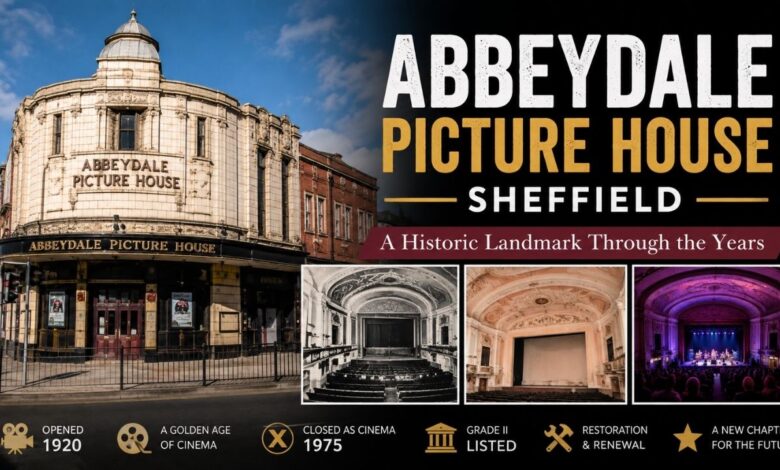
The Abbeydale Picture House Sheffield is one of the city’s most recognizable historic entertainment buildings. Located on Abbeydale Road, this former cinema has witnessed more than a century of changes in film, theatre, architecture, and community life. Although it no longer operates as a traditional cinema, its impressive design and fascinating history continue to attract interest from residents, heritage enthusiasts, and visitors.
From its opening in 1920 to its closure as a cinema in the 1970s and its ongoing restoration, Abbeydale Picture House has experienced several different chapters. Today, it remains an important part of Sheffield’s architectural and cultural heritage, with efforts continuing to secure a sustainable future for the historic building.
What Is Abbeydale Picture House Sheffield?
Abbeydale Picture House is a historic former cinema and theatre situated at 387 Abbeydale Road, Sheffield, S7 1FS. The building opened in December 1920 and was designed to provide audiences with an impressive entertainment experience at a time when purpose-built picture houses were becoming increasingly popular across Britain.
Unlike many ordinary cinemas, the building was designed as a lavish picture palace. Its decorative architecture, spacious auditorium, balcony, stage and theatrical features reflected the importance placed on cinema-going during the early twentieth century.
The building is particularly significant because much of its original architectural character has survived. It was awarded Grade II listed status in 1989, recognizing its special architectural and historic interest.
The Early History of Abbeydale Picture House
The story of Abbeydale Picture House began in the early twentieth century, when cinema was rapidly becoming one of Britain’s most popular forms of entertainment. The building opened its doors on 20 December 1920, giving people in the Abbeydale area a purpose-built venue for films and other entertainment.
Dixon & Stienlet of North Shields designed the cinema. Its architecture was intended to make the cinema feel like a special occasion rather than simply a film screening.
During its early years, Abbeydale Picture House offered more than movies. Like many picture palaces of the period, it could accommodate different forms of entertainment. Historical records indicate that cine-variety performances were introduced during the 1920s, while sound films became part of the cinema’s program around 1930.
This combination of cinema and live entertainment helped establish the building as an important local venue.
Abbeydale Picture House Sheffield and Its Grand Architecture
One of the most interesting aspects of Abbeydale Picture House Sheffield is its architecture. The building reflects the ambition of cinema design during the 1920s, when architects often created elaborate interiors and exteriors to impress audiences.
The exterior includes distinctive white faience tiles and decorative detailing. The building’s design incorporates Neo-Baroque characteristics, while some elements are associated with the developing Art Deco aesthetic.
Its prominent corner position and decorative features helped make it a landmark on Abbeydale Road.
Inside, the original auditorium was equally impressive. Historic features include a decorative plasterwork auditorium ceiling, a balcony, a proscenium arch, and other ornamental details. These features demonstrate how much attention was given to the visual experience of early cinema audiences.
The building also included areas designed for functions beyond film viewing, further emphasizing its role as an entertainment complex.
Why Is Abbeydale Picture House Grade II Listed?
Abbeydale Picture House was listed as a Grade II building in 1989. Listing recognizes buildings that have special architectural or historic interest and helps protect significant elements of their heritage.
The building’s listing is important because it preserves a physical connection with the history of cinema and entertainment in Sheffield.
Several features contribute to its heritage significance. These include the surviving external decoration, the auditorium, balcony, stage-related features, plasterwork, and other original architectural details.
For heritage enthusiasts, the importance of Abbeydale Picture House lies not only in its age but also in how much of its historic design remains visible. It provides an example of how early twentieth-century cinemas were constructed and decorated.
The Golden Age of Cinema
During the first half of the twentieth century, cinemas played a major role in British social life. Going to the cinema was an important form of entertainment for families, couples, and groups of friends.
Abbeydale Picture House formed part of this broader cinema culture. Its large auditorium and theatrical design helped create an atmosphere that was very different from watching entertainment at home.
The rise of television eventually changed the cinema industry. As more households acquired televisions, traditional cinemas faced increasing competition. Changing entertainment habits, operating costs, and the development of newer cinema formats also affected older picture houses.
Abbeydale Picture House eventually reached the end of its original cinema era.
When Did Abbeydale Picture House Close?
Abbeydale Picture House closed as a cinema on 5 July 1975, ending more than five decades of operation as a movie venue.
However, closure did not mean the immediate end of the building’s life. Instead, the property entered a new chapter.
Following its cinema closure, the building was used for other purposes, including an office-furniture showroom and warehouse. While these uses helped keep the property occupied, they were very different from its original entertainment function.
Over time, however, the historic significance of the building became increasingly recognized, particularly as many similar cinemas and picture palaces disappeared or were substantially altered.
Attempts to Restore Abbeydale Picture House Sheffield
The restoration story is one of the most important parts of Abbeydale Picture House Sheffield.
Efforts to bring the building back into cultural use gained momentum during the 2000s. The Friends of Abbeydale Picture House played an important role in protecting and restoring the property.
The auditorium was restored sufficiently for performances to return, and the building reopened for cultural events in 2008. This represented an important moment because it demonstrated that the former cinema could once again serve as a place for public entertainment.
The building subsequently hosted various activities, including performances and other cultural events.
However, maintaining a historic building of this scale is a significant challenge. Structural problems and the condition of parts of the roof and auditorium created difficulties, eventually restricting the use of some areas.
The Role of CADS
Another important chapter involved CADS, a Sheffield-based arts organization that became involved with the building.
CADS helped use the venue for a range of cultural activities, including music, comedy, film, theatre, and other events. This period showed Abbeydale Picture House’s potential as more than a museum piece.
The building could potentially serve a modern audience while retaining its historic identity.
However, the cost and complexity of maintaining and restoring a large Grade II-listed property presented substantial challenges. Problems affecting the roof and historic auditorium features meant that significant work was needed before the building could achieve a long-term future.
True North Brew Co and the Future
A major development occurred in January 2025, when True North Brew Co acquired Abbeydale Picture House.
The change in ownership generated renewed interest in the building’s future. Plans have focused on restoring the historic property and developing it as an entertainment destination.
Potential future activities have included live music, comedy, arts events, and food and drink-related events.
The idea is significant because it could give the building a sustainable modern purpose while preserving its historic character.
For a landmark like Abbeydale Picture House, successful restoration requires more than simply repairing the structure. A viable long-term use is essential if the building is to remain maintained and accessible.
Abbeydale Picture House as a Sheffield Heritage Landmark
Today, Abbeydale Picture House represents an important part of Sheffield’s history.
It reflects several major changes in British society: the growth of mass cinema, the popularity of picture palaces, the rise of television, the decline of traditional cinemas, and the modern movement to preserve historic buildings.
The building also has local importance because it has remained physically connected to Abbeydale Road for more than a century.
While many historic cinemas have disappeared, been demolished, or been converted beyond recognition, Abbeydale Picture House retains many features that allow visitors and researchers to understand what a 1920s picture palace looked like.
What Makes Abbeydale Picture House Special?
Several factors make Abbeydale Picture House Sheffield particularly interesting.
First, its age gives it an important place in Sheffield’s entertainment history. Second, its architecture makes it visually distinctive. Third, its Grade II listing recognizes its heritage significance. Finally, its continuing restoration story demonstrates the challenges of preserving historic buildings in modern cities.
The building is also interesting because its history is not simply a story of opening and closure. It has repeatedly adapted to changing circumstances.
From cinema to showroom, from restoration project to cultural venue, Abbeydale Picture House has continued to evolve.
Visiting and Finding Abbeydale Picture House
Abbeydale Picture House is located at 387 Abbeydale Road in Sheffield. Its position on Abbeydale Road makes it relatively easy to identify because of its distinctive historic façade.
Because restoration and redevelopment plans can change, people interested in visiting should check current information before making a special journey. Access to historic buildings can depend on restoration work, events, licensing arrangements, and safety requirements.
Those interested in the venue’s history can also explore historical photographs, heritage records, and archival information relating to Sheffield’s former cinemas.
The Importance of Preserving Historic Cinemas
The story of Abbeydale Picture House highlights why historic cinemas deserve attention.
Old cinemas provide more than attractive architecture. They preserve evidence of how previous generations spent their leisure time. Their auditoriums, balconies, decorative ceilings, stages, foyers, and entrances tell stories about changing technology and social culture.
Preserving these buildings can also provide economic and cultural benefits. When successfully restored, former cinemas can become venues for music, theatre, film screenings, exhibitions, community activities, food events, and other forms of entertainment.
Abbeydale Picture House demonstrates both the possibilities and difficulties involved in achieving this goal.
Frequently Asked Questions About Abbeydale Picture House Sheffield
Is Abbeydale Picture House still a cinema?
No. It closed as a traditional cinema in 1975. The historic building has subsequently been used for different purposes and has been the subject of restoration and redevelopment efforts.
When did Abbeydale Picture House open?
Abbeydale Picture House opened on 20 December 1920.
It is located at 387 Abbeydale Road, Sheffield, S7 1FS.
It is located at 387 Abbeydale Road, Sheffield, S7 1FS.
It is located at 387 Abbeydale Road, Sheffield, S7 1FS.
Yes. The building has Grade II listed status, reflecting its architectural and historic importance.
When did the cinema close?
The cinema closed on 5 July 1975.
Conclusion
The history of Abbeydale Picture House Sheffield, is a story of cinema, architecture, change, and preservation. Opening in 1920, the building became an important local entertainment venue and remained a cinema for more than five decades before closing in 1975.
You May Also Read: The Architectural and Community Legacy of Yocom Hospital History of Building Chariton Iowa