Curved LED Panel Buying Guide 2025: Everything US Event Producers Need to Know
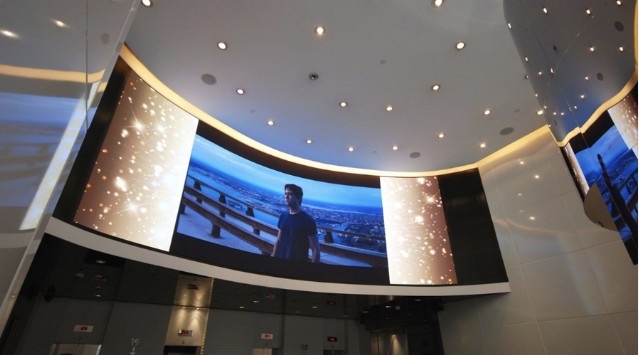
Event production in the United States has grown considerably more demanding over the past several years. Clients expect environments that feel considered and immersive rather than assembled. Stages, conferences, branded activations, and live broadcasts all share a common challenge: flat, rigid display infrastructure rarely fits the physical realities of the venues or the visual ambitions of the events. This is where curved display systems have become a practical necessity rather than a premium option.
For event producers managing complex installs, tight timelines, and high-visibility deliverables, the decision to invest in curved display technology is rarely about aesthetics alone. It involves understanding how these systems behave under repeated installation cycles, how they hold up across different indoor environments, and how the purchasing decision today will affect the operational reality of productions for years ahead. This guide is intended to help producers, technical directors, and AV buyers make that decision with clarity.
What a Curved LED Panel Actually Is and Why It Matters for Productions
A curved LED panel is a modular display component engineered with hinged or flexible cabinet joints that allow individual tiles to be arranged in concave or convex configurations. Unlike traditional flat LED walls, which can only present content on a linear plane, curved systems can wrap around architectural features, follow circular stage designs, or create enclosed environments that place the audience inside the visual experience rather than in front of it.
Understanding the full technical and logistical scope of what a curved led panel system involves is essential before any purchasing conversation begins. The physical design of these panels — particularly how the cabinet joints flex and lock — determines how consistently the modules can be reconfigured between events. A system that performs well in a single install but requires significant recalibration for the next deployment adds hidden labor costs that erode the value of the initial investment.
The Difference Between Flexible and Rigid Curved Cabinets
There are two primary approaches to achieving curvature in LED display systems. The first involves cabinets with adjustable hinge mechanisms that allow producers to set a specific arc angle and lock it into place. The second involves genuinely flexible substrates where the display surface itself bends. Each approach carries different implications for production environments.
Hinged rigid cabinets are far more common in professional event production because they maintain consistent pixel alignment across the display surface even after multiple transport and installation cycles. Flexible substrates, while visually dramatic and useful in permanent architectural installs, are more susceptible to surface inconsistencies when handling is not controlled precisely. For touring productions or rental inventory, this distinction matters considerably. Panels that lose pixel integrity after a few dozen deployments become a liability in a rental fleet, not an asset.
Pixel Pitch and Viewing Distance in Curved Configurations
Pixel pitch — the density of LED clusters across the display surface — behaves differently in curved configurations than it does in flat walls. When panels are arranged in a concave arc, the effective viewing distance changes for audience members at different positions in the room. A pitch that delivers clean, seamless imagery to someone seated at center may produce visible pixelation for viewers positioned at the outer edges of the arc, depending on the radius of the curve.
This is not a reason to avoid curved configurations. It is a reason to account for seating geometry during the specification process. Event producers who treat curved LED builds as a direct substitution for flat walls without adjusting pitch selection or arc radius will encounter visual quality issues that could have been avoided at the planning stage. The geometry of the room and the distribution of the audience should drive display configuration decisions, not the other way around.
Key Structural Considerations for Event and Rental Use
Event production environments subject display equipment to a category of stress that permanent installations rarely experience. Panels are packed, transported, unpacked, assembled in unfamiliar conditions, operated under load, disassembled, and repacked — often within a 48-hour window. Curved panel systems add mechanical complexity to each stage of this cycle because the hinge mechanisms and locking systems must withstand repeated articulation without developing play or misalignment.
Cabinet Weight and Load Distribution
Curved LED systems are typically heavier per square meter than their flat counterparts because of the reinforced framing required to support adjustable or flexible joints. This weight difference affects rigging calculations, ground-support structure engineering, and the practical speed of installation. An event producer who has built workflows around flat panel installation times may find that curved systems require additional crew or extended build windows to achieve the same result safely.
Load distribution across a curved structure is also non-uniform in ways that flat walls are not. The arc creates lateral forces that a straight wall does not generate, and those forces need to be accounted for in the ground support or hanging hardware. Working with a structural engineer who has direct experience with curved LED builds is not optional for large-scale deployments — it is a basic risk management step.
Serviceability During Live Events
A critical factor that many buyers underestimate during specification is front-versus-rear access for panel servicing. In a flat LED wall, rear access is achievable in most configurations. In a curved installation, particularly a deeply concave design, rear access may be physically restricted by the arc itself or by rigging structures inside the curve. Front-serviceable panels — where LED modules and power components can be reached and replaced from the front of the display — become significantly more practical in these configurations.
For live event applications where a failure during a broadcast window or keynote presentation is not acceptable, front serviceability can be the deciding factor between two otherwise comparable systems. Producers should request clear documentation from suppliers on how each cabinet design handles module replacement and power supply access before committing to a system.
Understanding Signal Management in Curved LED Systems
Signal distribution in a curved LED display follows the same fundamental logic as a flat wall — video processors send image data through data cables to individual receiving cards inside each cabinet — but the physical routing of those cables becomes more complex when cabinets are arranged at angles. Cable management that works neatly in a straight horizontal run may not accommodate the geometry of a concave arc without additional planning.
The Audiovisual and Integrated Experience Association maintains published standards for signal integrity and cable management in professional AV installs, and those standards provide useful reference benchmarks when reviewing supplier claims about maximum cable run lengths and signal degradation in non-linear configurations. Producers who are specifying systems for long-term use should review these benchmarks alongside supplier specifications.
Processor Compatibility and Refresh Rate
Curved LED walls require video processors capable of handling the non-standard geometric mapping that curved configurations create. Not all processors handle this equally well. Some entry-level or mid-range processors can manage simple barrel curves but struggle with compound curves — configurations that change direction across the display surface — without introducing visible seam artifacts or color inconsistencies at the joints between panels.
Refresh rate is also relevant in curved systems used for broadcast or camera-facing applications. Panels with lower refresh rates produce visible flicker in camera footage, even when the display appears clean to the human eye in the room. For any deployment where professional video cameras will be present, refresh rate should be verified against the camera specifications being used, not assumed to be adequate based on the panel manufacturer’s general marketing summary.
Evaluating Suppliers and Rental Inventory in the US Market
The US event production market includes a wide range of suppliers offering curved LED panel systems — from large integrated manufacturers with domestic support infrastructure to importers offering lower acquisition costs with limited after-sales technical support. The difference between these supplier categories becomes apparent not at the point of purchase but at the point of a technical problem on a live event day.
Inventory Consistency in Rental Fleets
For producers who are renting curved LED inventory rather than purchasing it outright, fleet consistency is a non-trivial concern. A rental company that has built its curved panel inventory across multiple procurement cycles may have panels from different manufacturing batches within the same model line. When panels from different batches are mixed in the same wall, color calibration can differ in ways that are difficult to correct through software alone.
Before committing to a rental supplier for a high-profile event, producers should ask directly about batch consistency within the available curved panel inventory. A reputable supplier will have calibration records and be transparent about whether panels have been factory-matched or field-calibrated to match across batches. This question often reveals more about a supplier’s operational standards than any other single inquiry.
Domestic Technical Support and Spare Part Availability
Curved LED panel systems have more mechanical components than flat systems, which means more components that can fail or wear over time. Hinges, locking pins, and magnetic alignment systems are all subject to mechanical fatigue with repeated use. Producers and rental companies building long-term inventory should confirm that the supplier maintains domestic spare part stock and can provide technical support without requiring international shipping lead times during a critical event window.
This is particularly relevant for US-based buyers working with suppliers whose manufacturing and primary support operations are overseas. A low per-panel acquisition cost that comes with multi-week spare part lead times may represent a significantly higher total cost of ownership than a moderately more expensive system with next-day domestic support availability.
Concluding Thoughts for US Event Producers
The decision to invest in or specify a curved LED panel system is one that affects production quality, crew workflow, structural planning, and long-term operational cost simultaneously. It is not a decision that should be driven by visual trends alone or resolved purely on unit cost. The producers who get the most consistent value from these systems are those who approach the specification process with a clear understanding of how their deployment patterns, venue types, and audience configurations interact with the physical and technical characteristics of curved display technology.
In 2025, the US market has enough mature curved LED product lines and enough experienced suppliers to make well-informed purchasing decisions realistic for almost any budget level. The challenge is not availability — it is knowing what questions to ask before a contract is signed and equipment is delivered to a loading dock. Structural load planning, pixel pitch selection relative to audience geometry, processor compatibility, serviceability access, and supplier support infrastructure are not details to address after the fact. They are the foundation of a system that performs reliably when the stakes are highest.
The event producers who treat curved display infrastructure as a long-term operational asset rather than a short-term visual upgrade will consistently outperform those who do not — not because they spent more, but because they planned more carefully before spending at all.