AI Song Generator: Understanding Its Value Through Real Creative Decisions
There is a quiet moment in every creative project where things either move forward—or stall completely. You have a video timeline ready, a brand story outlined, or a product about to launch, yet the music is missing. Not because music is unimportant, but because choosing or creating the right track feels heavier than it should.
I ran into this exact problem while preparing a short promotional clip. Stock music felt generic, and producing from scratch felt disproportionate to the task. That’s when I decided to experiment with an AI Song Generator, not as a replacement for music production, but as a way to test whether AI could realistically support early-stage creative decisions.
What follows is not a feature list or a sales pitch. It’s a reflection on how this type of tool fits into a real workflow, where it performs well, and where it still depends on human judgment.
Why Music Often Becomes the Bottleneck
Music usually enters a project later than visuals or copy, but it carries equal emotional weight.
Creative intent is clear, execution is not
You may know the feeling you want—optimistic, restrained, energetic—but translating that into sound typically requires technical steps before you hear anything useful.
Time pressure changes standards
Under deadlines, “good enough” often replaces “right.” This is how projects end up with music that technically works but emotionally underdelivers.
The cost of starting over
Once music is placed, changing it feels expensive. That psychological friction discourages experimentation, even when the first choice isn’t ideal.
These issues are less about musical ability and more about workflow friction. That’s where AI-assisted generation becomes interesting.
What AISong.ai Actually Changes
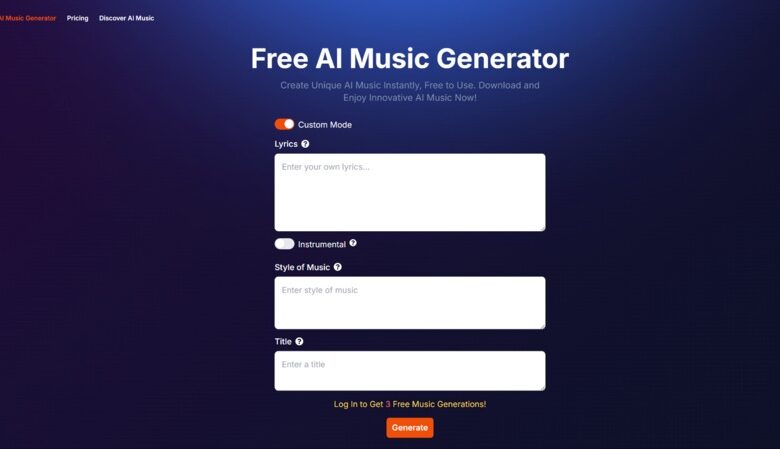
AISong.ai shifts the order of operations. Instead of building music step by step, you begin with a description and evaluate sound immediately.
The core interaction
You describe what you want in natural language—genre, mood, energy, instrumentation, pacing—and receive a playable track. The value is not perfection, but immediacy.
Why immediacy matters
Once sound exists, feedback becomes concrete:
- “This is too busy for voiceover.”
- “The hook comes in too late.”
- “The mood is right, but it feels cold.”
Those observations are difficult to make before hearing audio. In my testing, this alone reduced wasted time.
A More Effective Way to Prompt
The difference between usable output and forgettable output often comes down to how the request is framed.
Think in terms of musical intention
Instead of listing genres, describe the role the music plays.
Elements that consistently improved results
- Emotional tone (uplifting, restrained, tense, playful)
- Energy level (low, mid, high; steady or driving)
- Instrument texture (warm, digital, sparse, layered)
- Structural hint (early hook, gradual build, loop-friendly)
- Context (background for voiceover, standalone, cinematic)
A prompt that combines these ideas tends to guide generation more reliably than technical jargon.
Example prompt
“Warm modern pop, mid-energy, bright but restrained, clean drums, soft bass, minimal lead melody, hook appears early, designed to support spoken narration.”
Why this works
It limits ambiguity. The tool has fewer creative paths to explore, which often leads to more coherent results.
How This Compares to Other Options
Understanding where AISong.ai fits requires comparison—not just with production software, but with the tools people actually use under time pressure.
| Aspect | Stock Music | Full DAW Production | AISong.ai |
| Speed to first result | Fast | Slow | Fast |
| Custom fit to project | Limited | High | Moderate to high |
| Technical skill required | Low | High | Low |
| Iteration cost | Medium | High | Low |
| Risk of generic feel | Medium | Low | Depends on prompt quality |
| Best use case | Convenience | Final polish | Drafting and exploration |
This comparison highlights a key point: AISong.ai is strongest before commitment, not after it.
Strengths Observed in Practical Use
Rapid exploration of directions
When I was unsure whether a clip needed warmth, energy, or restraint, generating multiple drafts helped me decide quickly. The tool acted more like a sketchpad than a finished canvas.
Instrumentals integrate easily
Instrumental tracks were consistently easier to place under content. They interfered less with narration and required fewer adjustments.
Encourages creative testing
Because generation is fast, experimentation feels low-risk. That psychological shift matters more than it sounds.
Limitations Worth Acknowledging
AI Song that claims to remove all effort usually shifts effort elsewhere. AISong.ai is no exception.
Quality is prompt-dependent
Generic prompts lead to generic results. This is not a flaw so much as a constraint of language-driven generation.
Multiple attempts are normal
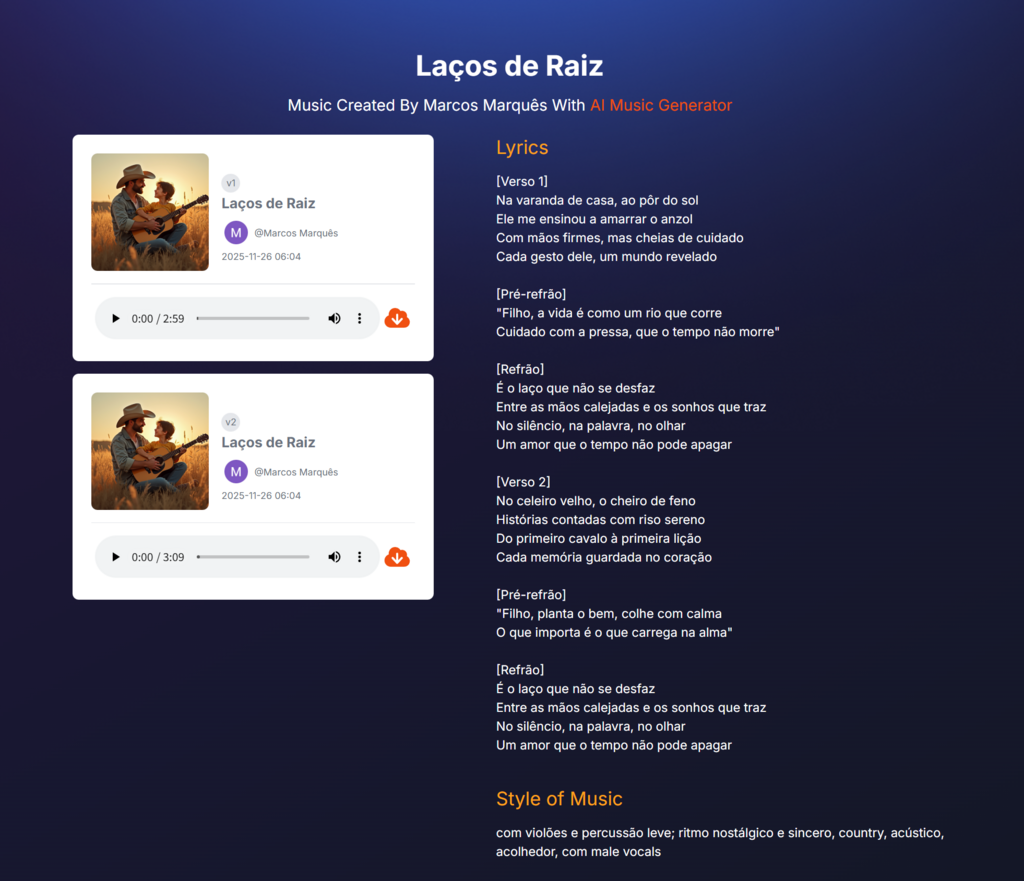
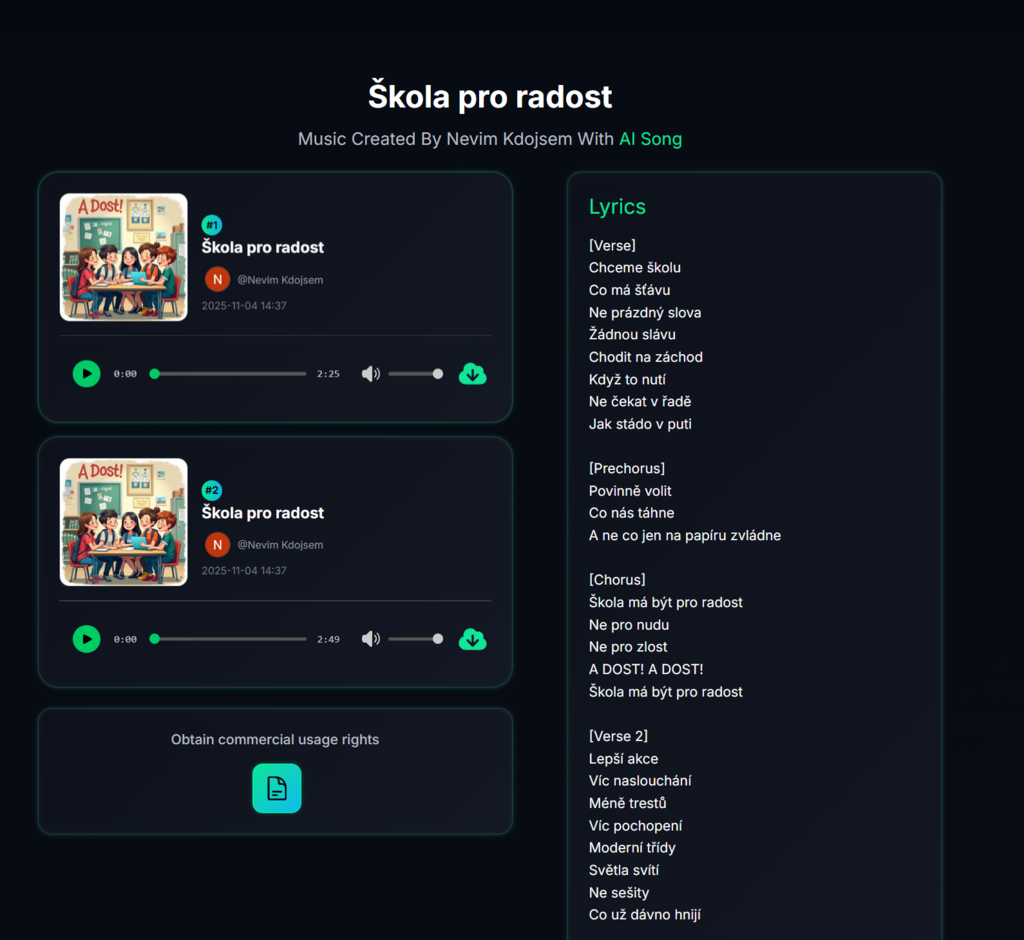
In my experience, reaching a satisfactory track often required several generations. The first output set direction; later ones refined it.
Edge cases can resist clarity
Highly specific genres or unconventional structures sometimes required simplification before the tool responded well.
These limits don’t negate usefulness, but they do define it.
A Broader Context for AI Music
Discussions around AI-generated music are ongoing, especially around originality and creative ownership. Publications such as MIT Technology Review have explored these themes in depth, often emphasizing that current tools are best understood as assistive rather than autonomous creators.
Reading those perspectives helped me approach AISong.ai with realistic expectations: as a collaborator for early ideas, not a substitute for musical judgment.
Reusable Prompt Templates
Short-form product content
Modern pop, positive tone, mid-tempo feel, clean rhythm section, subtle melody, early hook, instrumental, optimized for 30–40 second pacing.
Brand storytelling
Lo-fi inspired, warm texture, soft percussion, gentle bass, relaxed tempo, loop-friendly structure, calm and human tone.
High-energy announcement
Electronic pop, high energy, punchy drums, driving bass, clear build and release, confident mood, strong momentum.
Small adjustments—“less percussion,” “warmer tone,” “earlier drop”—often made meaningful differences.
Final Reflection
AISong.ai did not eliminate decision-making in my workflow. It changed when those decisions happened. By providing sound early, it allowed judgment to replace speculation. That alone made creative work feel lighter and more flexible.
It is not effortless, and it does not guarantee a perfect track. But as a tool for momentum—helping ideas move forward instead of stalling—it earns its place in a modern creative process.