Are “Weightless” Leather Sneakers the Final Death Blow to the Traditional Oxford Shoe?
For over a century, the resonant “clack” of a stacked leather heel on a marble floor was the auditory signature of corporate power. The traditional Oxford shoe, with its rigid leather sole, stiff upper, and agonizingly long break-in period, was the undisputed king of the executive wardrobe. It was a piece of footwear that demanded compliance from the wearer. You did not mold the shoe to your foot; your foot endured blisters and friction until it eventually molded to the shoe.
Today, however, that familiar clacking sound is rapidly disappearing from global financial districts, high-end airport lounges, and corporate boardrooms. In its place is absolute silence. The tectonic plates of men’s professional fashion have shifted dramatically, giving rise to an era dominated by the “weightless” leather sneaker. But is this just a lingering symptom of post-pandemic casual wear, or are we witnessing the permanent extinction of the traditional dress shoe?
To understand this shift, we must look past the surface of “casual Fridays” and examine the changing psychology of modern status.
Historically, rigid clothing signaled authority because it implied the wearer did not perform manual labor. The stiffness of a starched collar or a hard-soled shoe was a luxury in itself. But in the 21st century, the metrics of status have inverted. In a hyper-connected, relentlessly fast-paced global economy, the ultimate luxury is no longer formality; it is frictionless comfort. Modern executives, tech founders, and creatives view physical discomfort as an inefficiency. Time and energy are the most valuable commodities, and wasting either on a pair of shoes that causes pain is now viewed as profoundly outdated.
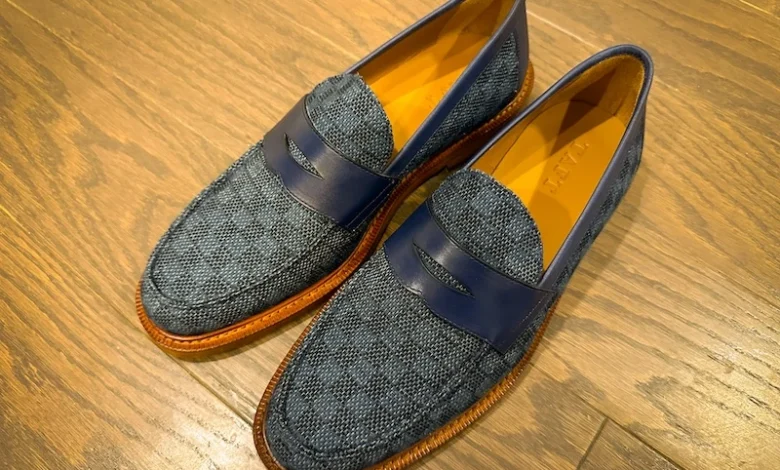
This ideological shift birthed the luxury hybrid sneaker. However, transitioning from a boardroom Oxford to a rubber-soled sneaker is not as simple as wearing gym shoes with a tailored suit—a look that often reads as clumsy or unrefined. The market demanded a shoe that possessed the visual elegance and sleek silhouette of a bench-made Italian loafer, but with the biomechanical ease and shock absorption of a marathon running shoe.
Achieving this required a revolution in material science and traditional cobbling. Luxury shoemakers realized that to build a weightless shoe, they couldn’t just change the sole; they had to completely rethink the upper. They began sourcing ultra-fine, hyper-pliable hides traditionally reserved for high-end driving gloves or luxury upholstery. The goal was to eliminate the rigid internal structuring of a dress shoe—the heavy toe boxes and stiff heel counters—and replace them with leather that drapes over the foot like a sock.
This obsession with unlined, zero-gravity comfort has led to incredible innovations in the luxury market. A prime example of this material mastery is the zegna triple stitch secondskin, a design that perfectly encapsulates how modern luxury houses are marrying the visual elegance of Italian craftsmanship with the effortless functionality of a slip-on. By engineering leather to move symbiotically with the human foot, these garments blur the line between apparel and anatomy.
Furthermore, the rise of the weightless sneaker aligns perfectly with the current economic trend of “quiet luxury.” In an era of economic uncertainty, loud logos and ostentatious displays of wealth are increasingly viewed as gauche. The ultra-light luxury sneaker thrives on anonymity. To the untrained eye, it is simply a minimal, clean shoe. But to those within the same socio-economic bracket, the absence of laces, the quality of the buttery leather, and the specific curvature of the sole are instantly recognizable signifiers of taste and capital. It is a subtle nod to the fact that the wearer has nothing to prove.
So, is the traditional Oxford entirely dead? Not quite. Just as the tuxedo still exists for weddings and galas, the hard-soled dress shoe will survive as a specialized garment for highly formalized, ceremonial events.
But as a daily uniform, its reign is over. The modern professional has tasted the biomechanical freedom of weightless leather, and there is simply no going back. We have entered an era where power is no longer projected through rigidity and discomfort, but through absolute, unbothered ease. The future of corporate footwear is silent, soft, and remarkably comfortable.