Boost Sales Results with AudioConvert’s High-Precision audio to text converter
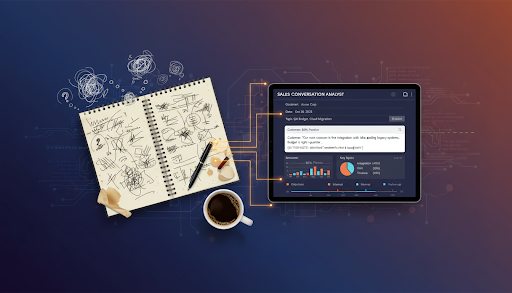
I’ve sat through enough sales post-mortems to know that the deal we lost isn’t usually because of a bad product, but because a crucial detail got buried in a messy, handwritten notebook. We walk into calls thinking we’ll remember every nuance, but the reality is much harsher, as our brains are designed to close the deal, not to act as a recording device. Shifting this documentation to a dedicated system isn’t just a technical fix; it is a strategic move for any team that values accuracy and wants to preserve the genuine voice of their customer without the filter of a tired representative’s memory.
Capturing What Sales Conversations Usually Lose
There is a specific kind of cognitive load that comes with managing a series of high-stakes discovery calls or stakeholder meetings. Every seasoned sales manager knows the frustration of a CRM entry that simply says “Customer interested, follow up next week,” which is essentially a blank space where a strategy should be. These brief summaries fail to capture objections, subtle concerns, or the underlying motivations driving a prospect’s hesitation. While a rep might remember the gist of the conversation immediately afterward, as the week progresses and multiple calls accumulate, even the sharpest memory begins to blur. Small but critical details—like a passing comment about budget limitations or a nuanced preference for one solution over another—can vanish entirely, leaving gaps in the data that hinder the next steps.
The Hidden Cost of Incomplete Call Records
This lack of detail is a structural failure that prevents the rest of the organization from supporting the deal or identifying the real roadblocks. When critical context disappears, teams are forced to guess, and guessing is expensive in sales.
Treating Every Call as Foundational Data
I have found that the most successful teams are moving toward a model where every conversation is treated as a dataset that must be captured in its raw, unvarnished state. Once memory fades, the opportunity to learn from that interaction is gone.
Letting Systems Remember What Humans Cannot
Automated documentation shifts the burden from human memory to the system itself. Instead of depending on a rep’s recollection five calls later, the conversation itself becomes the source of truth. I’ve seen teams implement this approach with remarkable results: junior reps can understand the flow of prior conversations without needing lengthy handovers, managers can identify performance patterns across multiple accounts, and product teams can spot recurring feature requests or pain points directly from transcripts. This not only increases efficiency but also reduces cognitive fatigue for individuals, allowing the sales team to focus on engagement and strategy rather than reconstruction. Over time, these automated records build a repository of institutional knowledge that no single rep could carry in their head, preserving insights that continue to inform decisions long after the initial call has ended.
Turning Transcripts Into Better Sales Execution
When you are juggling a dozen active leads, even small but vital details can slip away before they ever reach the CRM. This is where transcription changes not just documentation, but execution quality.
Bridging the Information Gap in CRM Notes
Integrating an audio to text converter into the post-call routine shifts attention from what the rep remembers to what the client actually said. I’ve seen CRM entries become dramatically more useful once exact phrasing replaces vague summaries, especially for pre-sales and technical teams downstream.
Freeing Reps From the Burden of Note-Taking
There is a constant mental tug-of-war when you try to listen and write at the same time. Reps who trust transcription tools stay present in the conversation, catching tone, hesitation, and emotion that no notebook can capture. The call becomes more human, not more mechanical.
Improving Coaching With Real Evidence
When managers review transcripts instead of recollections, feedback becomes specific. Instead of saying “you rushed the objection,” they can point to the exact moment it happened. Coaching feels less personal and more constructive when it is anchored in real language.
Scaling Sales Knowledge Beyond Individual Performance
The transition from being a strong individual contributor to a sales leader often exposes a painful truth: what works in someone’s head is hard to teach without evidence.
Building a Training Library From Real Calls
Shadowing calls is inefficient and awkward. A searchable archive of real transcripts gives new hires access to what actually works in the field today, not what sounded good in last year’s enablement deck.
Identifying What Top Performers Do Differently
When you compare transcripts side by side, patterns emerge. Top reps may pause longer after objections or frame budget discussions with specific transitions. These are not personality traits; they are behaviors that can be taught once they are visible.
Shortening the Ramp-Up Time for New Reps
Instead of overwhelming new hires with manuals, transcripts immerse them in real customer language from day one. They learn how objections sound, how positioning shifts, and how confidence is built across calls, which accelerates readiness far more effectively than slides ever could.
Supporting Collaboration in Complex Sales Environments
Modern sales is a team sport involving legal, product, leadership, and operations. The bottleneck is rarely effort; it is information transfer. Executives do not have time to listen to hour-long recordings just to understand a pricing constraint. Searchable transcripts and AI summaries keep everyone aligned without endless catch-up meetings.
Since many sales interactions now happen over video, managing large media files becomes part of the workflow. Compressing recordings with a video compressor before archiving ensures demos and meetings remain easy to share, while transcripts keep the content accessible even when time or bandwidth is limited.
Preserving Institutional Knowledge as Teams Change
People leave. Roles change. What should not disappear is the accumulated understanding of customers. When years of conversations are stored as text, handoffs become smoother, trust is preserved, and long-term accounts continue without disruption. New reps inherit context instead of starting from zero.
Ultimately, integrating transcription into sales workflows is about narrowing the gap between conversation and contract. When documentation becomes an automatic byproduct rather than a chore, teams build a living database of market intelligence that compounds in value over time.