Digital Cervical Range of Motion Systems: When Is the Right Time to Upgrade From Manual Tools?
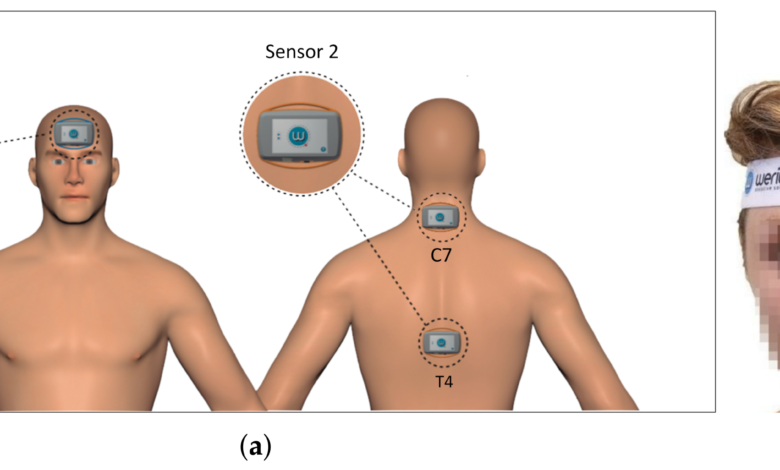
A clinician writes down 48 degrees of rotation. Two weeks later, the same patient measures 52. The number looks better, but is it really an improvement, or is it just measurement variation?
Manual cervical range of motion measurement has supported rehabilitation for decades. Goniometers and inclinometers are familiar, affordable, and easy to use. The challenge arises when expectations for precision, documentation, and consistency rise. The question shifts from whether manual tools work to whether they still provide enough clarity.
Clinical tolerance limits of manual cervical ROM measurement
Manual measurement carries known variability. Two clinicians can assess the same patient within minutes and record slightly different values. The difference may fall within acceptable tolerance, yet acceptable does not always mean clinically helpful.
Small changes do matter in cervical rehabilitation. A few degrees can influence progression decisions after surgery or in chronic cases. When measurement error overlaps with real improvement, interpretation becomes less certain. Sensitivity becomes more important than familiarity.
Documentation pressure from outcome-driven care models
Documentation now functions as evidence rather than simple record-keeping. Payers, audits, and internal quality reviews increasingly expect repeatable data that supports clinical reasoning.
Manual recording introduces subjectivity even when performed carefully. Values depend on positioning, instruction, and reading interpretation. Over time, this variability weakens confidence in long-term trends.
A digital cervical range of motion instrument becomes relevant when documentation expectations shift toward verifiable data. The transition reflects a change in accountability rather than a preference for technology.
Plateau detection and sensitivity to micro progress
Neck rehabilitation progresses slowly. Improvements can be subtle, inconsistent, and difficult to confirm. Manual tools struggle when changes are small but meaningful.
Clinicians rely on judgment to interpret whether progress is real. Judgement remains essential, but repeated uncertainty can delay progression. Some patients stay in the same phase longer because improvement cannot be confirmed with confidence.
Higher measurement sensitivity reduces hesitation and supports clearer progression timing.
High-frequency reassessment environments
Certain pathways require repeated measurement. Postoperative recovery, concussion management, persistent neck pain, and vestibular conditions all involve frequent reassessment.
Repetition introduces consistency drift. Even experienced clinicians adjust positioning slightly across a busy day. Measurement speed increases, and technique variation grows.
When reassessment volume rises, reliability becomes harder to maintain manually. Digital systems bring consistency, medico-legal defensibility, and data traceability through stabilized capture.
Measurement history becomes important when outcomes are questioned. Manual notes show values but don’t show how those values were produced.
Traceable data strengthens defensibility. Timestamped measurements, stored attempts, and repeatable protocols provide clearer evidence when decisions need explanation.
This is not limited to legal situations. Structured data also improves internal confidence when reviewing progress.
Multi-clinician environments and calibration consistency
Single clinician settings maintain a stable measurement style. Multi-clinician clinics face ongoing variation.
Each therapist introduces small differences in positioning, instruction, and interpretation. Training reduces variation but cannot remove it entirely. Trend data may reflect clinician differences rather than patient change.
Standardized digital measurement supports consistency across teams, locations, and rotating staff.
Integration with longitudinal outcome tracking
Cervical range of motion interacts with pain scores, disability indices, and functional measures. When ROM data remains isolated in notes, pattern recognition becomes difficult.
Structured measurement allows ROM trends to sit alongside other outcomes. Clinicians can observe relationships between movement, symptoms, and function more easily.
The benefit grows over time. Months of structured data provide insight that individual measurements cannot.
Signal quality in complex cervical cases
Complex cervical presentations involve movement quality, not only end-range angles. Compensation patterns and guarded movement influence interpretation.
Manual tools capture the final position but provide limited insight into how that position was reached. Substitutions may go unnoticed unless the clinician is highly attentive.
Digital capture can highlight irregular movement patterns and inconsistencies between attempts. This additional signal improves interpretation in chronic pain, whiplash, and vestibular-related cases.
Operational triggers that indicate upgrade readiness
Upgrade decisions often emerge from operational friction. Documentation begins to take longer than measurement. Clinicians repeat assessments because values feel uncertain. Discussions about inconsistency become more frequent.
Growing patient volume amplifies these signals. What once felt efficient begins to consume more cognitive effort. Remote monitoring needs may also shift priorities toward standardized measurement.
These indicators accumulate gradually until the limitation becomes visible.
Conclusion
At some point, uncertainty begins to cost more than familiarity. Measurements require repetition, progress becomes harder to confirm, and documentation demands more effort than the assessment itself.
The right time to upgrade doesn’t arrive as a single moment. It appears as a pattern.
Upgrading from manual tools reflects clinical evolution. When measurement clarity directly affects progression, communication, and confidence, a better signal becomes necessary. Clinics that recognize this shift early gain something more valuable than efficiency.