Edinburgh Castle and the Blarney Stone: Navigating the Emerald Landscapes and Scottish Highlands
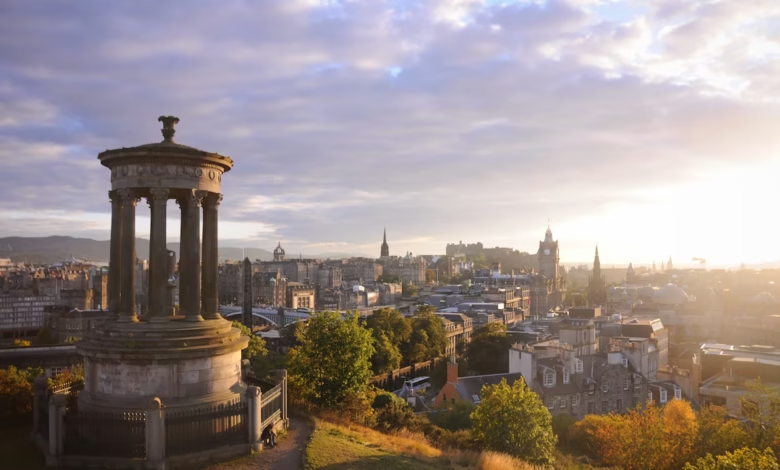
Stone Above the City
Edinburgh does not unfold gently. It rises.
The castle sits on volcanic rock that feels less constructed than revealed. Wind crosses the esplanade without interruption. Below, the city arranges itself in layers — closes descending steeply, Georgian façades holding their pale symmetry further north.
The stone of the castle does not appear polished. It absorbs light unevenly, carrying centuries in its surface rather than displaying them. From certain angles, the skyline feels almost compressed beneath it. Spires punctuate the horizon in careful intervals.
You stand near the edge and look outward. Hills gather beyond the city. The Firth holds its quiet stretch of water in the distance.
Height feels physical here.
Northbound Without Announcement
Somewhere along the route, while the London – Edinburgh train threads its way through fields and low towns before reaching the sharper contours of the north, the shift from southern plains to Scottish edge happens gradually rather than dramatically.
Inside the carriage, the rhythm remains steady. A coffee cup rests undisturbed. A laptop closes softly. Outside, farmland narrows. Stone walls appear between patches of green. The sky feels wider than expected.
Arrival in Edinburgh does not feel abrupt. The castle becomes visible only after the city gathers around you.
The journey stretches rather than divides.
Across Water, Toward Green
Further west, water separates landscapes before reconnecting them.
On the Irish side, fields appear softer, more saturated. Hedges replace stone boundaries. Villages gather around church spires that do not compete for height.
At some point, the train from Dublin to Cork carries you south through land that rolls gently rather than rises sharply. The countryside shifts in increments — pasture, river bend, clusters of trees that seem almost placed without intention.
Inside the carriage, conversation lowers and rises again without emphasis. Outside, green extends uninterrupted toward low hills.
The pace feels measured.
Blarney Without Spectacle
Blarney Castle does not dominate its landscape the way Edinburgh’s fortress does. It rises from greenery rather than above it. Ivy traces its stone. Narrow steps spiral upward within walls that feel older than the surrounding trees.
The Blarney Stone sits near the top, smaller than its reputation suggests. Visitors lean backward carefully to reach it. Below, gardens spread outward in softer patterns — paths curving rather than extending in straight lines.
The air feels damp, almost fragrant with moss. Sound remains close to the ground.
The castle here feels embedded rather than elevated.

Between Highlands and Hedgerows
In Scotland, the land opens into highlands that stretch in broad, wind-swept expanses. Hills rise in uneven ridges. Heather spreads across slopes in muted tones. The sky presses downward more frequently.
In Ireland, the landscape folds gently instead of lifting. Stone cottages sit near bends in the road. Rivers widen without dramatic descent.
Movement between these terrains does not emphasise contrast. It adjusts scale. Trains pass through both with the same steady vibration beneath the floor.
The difference lies in texture rather than altitude.
After the View Lowers
Later, the outlines begin to soften. The castle’s silhouette blends faintly with the tower of Blarney. Highland ridges overlap with rolling Irish pasture in recollection.
What remains is surface — stone worn by wind, grass shifting under cloud, rails extending through green country without interruption.
The journey does not conclude with one fortress or one stone. It continues.
Somewhere beyond the last station, cliffs still rise above water. Fields still stretch toward low horizons. And the line between them remains open, carrying height and softness forward in the same quiet motion.
Where Wind Stays Longer
In the hours after departure, what returns first is the wind — sharper along the castle rock, softer through Irish hedgerows, but present in both. It moves across stone and grass without preference, flattening nothing completely. The memory of height lingers differently than the memory of greenery, yet both feel suspended in the same wide air. Trains pass somewhere beyond the ridgeline, their motion barely audible against open landscape.
Between Elevation and Earth
Over time, the distinction between fortress and garden narrows. The steep path up to Edinburgh’s walls resembles the spiral climb inside Blarney’s tower in recollection. Heathered hills echo faintly in the softer folds of Cork countryside. What remains is ground underfoot — uneven, weathered, green or grey depending on light. And the corridor that links them continues quietly onward, holding stone and meadow within the same unhurried stretch of track.