How Desert Dust & Hard Water Affect Home Windows
Living in the desert has many advantages sunshine, beautiful landscapes, and dry weather, but it also comes with unique challenges for homeowners. One of the most overlooked issues is how desert dust and hard water impact home windows, often making a professional window cleaning service essential rather than optional.
Homeowners in desert areas like Henderson quickly discover that windows accumulate buildup faster than in other climates, leading to cloudy glass, stubborn mineral stains, and reduced natural light if not properly maintained.
Understanding Desert Dust: More Than Just Dirt
Desert dust is not the same as everyday household dust. It’s a complex mix of fine sand, soil particles, minerals, pollen, and pollutants carried by wind and storms.
Why Desert Dust Is So Problematic for Windows
Desert environments experience:
- Frequent high winds
- Minimal rainfall to naturally rinse surfaces
- Dry soil that easily becomes airborne
This allows dust to settle on windows almost daily. Over time, dust particles bond to the glass, especially when mixed with morning dew or irrigation overspray.
Abrasive Nature of Desert Dust
Many desert dust particles contain silica, a mineral that is extremely abrasive. When windows are wiped without proper cleaning methods:
- Micro-scratches form on the glass
- Protective coatings break down
- Glass becomes more prone to staining
These scratches may be invisible at first, but they create tiny grooves where even more dirt and minerals collect, accelerating deterioration.
The Role of Hard Water in Desert Areas
Hard water is water that contains high levels of dissolved minerals, primarily:
- Calcium
- Magnesium
- Lime
Desert regions often rely on groundwater or mineral-rich water sources, which means hard water is unavoidable for most homes.
How Hard Water Reaches Your Windows
Hard water comes into contact with windows through:
- Lawn and landscape irrigation
- Sprinkler overspray
- Rain mixed with mineral residue
- Window washing with untreated tap water
When hard water dries, it leaves behind mineral deposits that bond to the glass surface.
What Hard Water Stains Do to Your Windows
Stage 1: Light Mineral Spots
At first, hard water stains appear as:
- Small white or chalky spots
- A cloudy film in direct sunlight
At this stage, stains are usually removable with professional cleaning.
Stage 2: Etching Begins
If mineral deposits are not removed promptly, they begin to etch into the glass. This happens when minerals chemically react with the silica in the glass surface.
Once etching occurs:
- Regular cleaning no longer works
- The glass becomes permanently dull
- Light reflection is distorted
Stage 3: Permanent Damage
Advanced hard water damage leads to:
- Frosted or milky appearance
- Reduced visibility
- Costly glass restoration or replacement
At this point, even professional cleaning may not fully restore clarity.
How Desert Dust and Hard Water Work Together
The real problem begins when dust and hard water combine.
Here’s how it happens:
- Dust settles on windows
- Sprinklers or moisture wet the surface
- Hard water dries, trapping minerals and dust together
- The mixture hardens onto the glass
This creates a cement-like residue that is much harder to remove than dust or water stains alone. Over time, layers build up, making windows appear dirty even immediately after cleaning.
Impact on Natural Light and Home Comfort
Clean windows play a major role in how a home feels.
When desert buildup accumulates:
- Natural light is reduced
- Rooms appear darker and smaller
- Artificial lighting is used more often
This can subtly increase energy costs and reduce the overall comfort of your living space.
Long-Term Effects on Window Lifespan
Windows are a major investment, and environmental damage shortens their lifespan.
Damage to Glass
- Scratching from dust
- Etching from minerals
- Permanent discoloration
Damage to Frames and Seals
Hard water doesn’t just affect glass. It can:
- Stain window frames
- Dry out rubber seals
- Cause premature seal failure
Failed seals lead to condensation between panes, which often means full window replacement.
Common DIY Mistakes That Make Things Worse
Many homeowners try to solve the problem themselves but unknowingly cause more damage.
Using Paper Towels or Rough Cloths
These can grind dust particles into the glass, increasing scratches.
Cleaning in Direct Sunlight
Water evaporates too quickly, leaving more mineral residue behind.
Using Harsh Chemicals
Ammonia or abrasive cleaners can damage glass coatings and frames.
Why Professional Window Cleaning Matters in the Desert
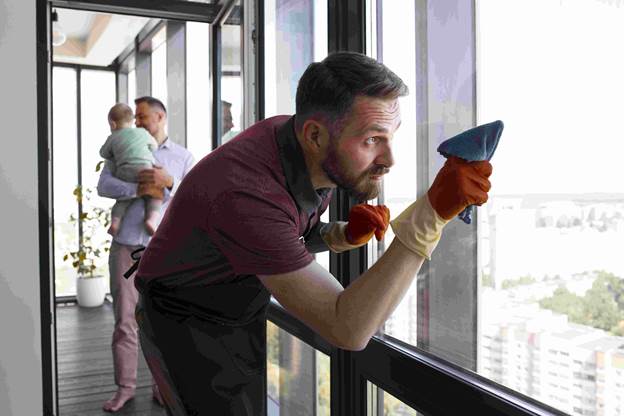
Professional window cleaning isn’t just about appearance, It’s about protection by giving complete cleaning service.
Experienced professionals:
- Use purified or deionized water to prevent mineral residue
- Apply proper techniques to avoid scratching
- Remove buildup before etching occurs
- Extend the life of your windows
Regular professional maintenance is far more affordable than glass restoration or replacement.
How Often Should Desert Homes Clean Their Windows?
While frequency varies, most desert homeowners benefit from:
- Residential homes: Every 3–4 months
- Homes with heavy irrigation exposure: Every 2–3 months
- Homes near construction or open land: More frequent cleanings
Consistent cleaning prevents mineral buildup from reaching damaging stages.
Protecting Your Windows Between Cleanings
Homeowners can reduce damage by:
- Adjusting sprinklers to avoid hitting windows
- Rinsing windows with filtered water when possible
- Avoiding dry wiping dusty glass
- Scheduling routine professional cleanings
These small steps significantly slow down long-term damage.
Final Thoughts
Desert dust and hard water are unavoidable realities of living in arid climates, but permanent window damage doesn’t have to be. Understanding how these elements affect your windows is the first step toward protecting your home, preserving natural light, and maintaining curb appeal.
With the right care and regular professional cleaning your windows can stay clear, bright, and damage-free for years to come.