How to Choose an Ultra Low Temperature Freezer Data Logger for FDA-Compliant Cold Chain Storage in the US
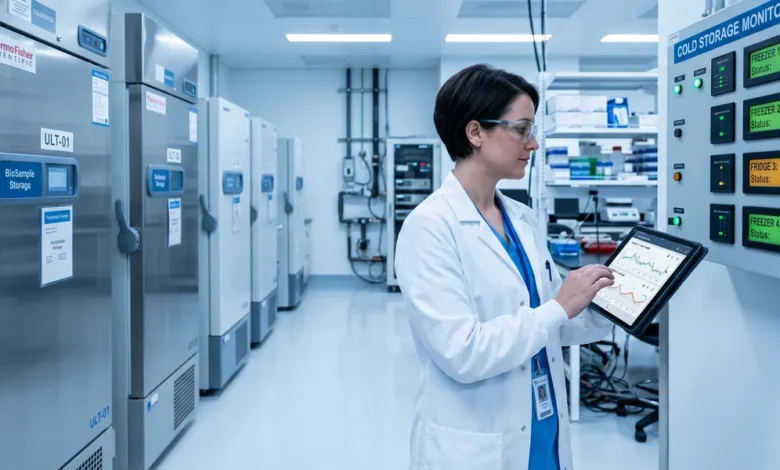
Facilities that store biological samples, vaccines, or pharmaceutical compounds at extreme low temperatures operate under conditions where a single monitoring failure can result in irreversible loss. Unlike standard cold storage environments, ultra low temperature freezers typically maintain conditions well below conventional freezing points, creating a range of operational and regulatory demands that standard monitoring equipment is not designed to meet. For quality managers, laboratory directors, and cold chain compliance officers in the United States, selecting the right monitoring equipment is less a purchasing decision and more a risk management one.
FDA regulations governing cold chain storage require documented, continuous temperature records with defined alarm thresholds, audit trails, and calibration records. These are not advisory guidelines — they are enforceable requirements that can affect facility licensing, product release, and inspection outcomes. As biologics storage and pharmaceutical cold chain activity continue to expand across the US, the pressure to maintain compliant, reliable monitoring systems has grown alongside it. Understanding what separates adequate monitoring from genuinely compliant and operationally sound monitoring is the starting point for making a defensible equipment decision.
What an Ultra Low Temperature Freezer Data Logger Actually Does in a Regulated Environment
An ultra low temperature freezer data logger is a purpose-built instrument that continuously records temperature conditions inside a freezer unit operating at extreme low ranges. It does more than log numbers — it creates the documented evidence trail that regulators expect to see when auditing cold chain storage operations. In FDA-regulated environments, that evidence trail must be continuous, tamper-evident, and traceable back to a calibrated standard. The distinction between a basic digital thermometer and a compliant data logger is significant: the former tells you what the temperature is; the latter creates a defensible record of what the temperature was, for how long, and under what conditions.
Facilities reviewing options can consult published category data on ultra low temperature freezer data logger equipment to compare device types by capability and application context. That kind of structured reference helps procurement teams and compliance officers evaluate whether a device is designed for incidental temperature checks or continuous, unattended monitoring — a distinction that matters considerably in regulated storage environments.
The Role of Continuous Logging in FDA Compliance
FDA 21 CFR Part 11 establishes requirements for electronic records and electronic signatures used in regulated environments, and temperature logs generated by data loggers fall within its scope when those records are used to support product release, quality decisions, or regulatory submissions. Continuous logging means the device captures temperature at defined intervals — typically short enough to detect transient excursions — without requiring manual intervention between readings. If a freezer door is left ajar for twenty minutes during a shift change, a continuous logger will capture that event. A manually checked log will not.
The requirement for continuous documentation is not simply about catching problems after they occur. It is about demonstrating to regulators that the storage system is under ongoing control. An unbroken data record, even one that shows a minor excursion that was addressed and documented, is a sign of operational maturity. Gaps in the record, by contrast, are often treated as more serious than the excursion itself, because they suggest a monitoring system that is either unreliable or improperly managed.
Key Technical Capabilities That Determine Regulatory Suitability
Not all data loggers sold as suitable for ultra low temperature applications are equally equipped to support FDA compliance. The technical specifications of a device determine whether it can function reliably under extreme conditions, generate records in acceptable formats, and integrate with the documentation systems that regulated facilities depend on. Evaluating these capabilities requires moving beyond marketing descriptions and examining what the device actually delivers under the conditions where it will be used.
Sensor Accuracy and Probe Design at Extreme Ranges
Standard temperature sensors are calibrated and validated within conventional ranges. When exposed to ultra low temperature conditions, some sensor types drift, respond slowly, or produce readings that are technically within their operational specification but insufficiently accurate for pharmaceutical or biological storage applications. Probe design matters significantly here — a sensor positioned poorly within a freezer cabinet may record conditions that do not reflect the temperature at the actual storage location of specimens or product.
For FDA purposes, the accuracy and calibration of monitoring equipment must be documented and verified at intervals appropriate to the application. This means selecting a logger whose sensor has been validated for performance at ultra low ranges, and whose calibration documentation is traceable to a recognized national standard such as those maintained by the National Institute of Standards and Technology. Without that traceability, calibration records may not satisfy audit requirements, regardless of how accurate the device appears to be in practice.
Alarm Systems and Excursion Response
A data logger without a reliable alarm system is a record-keeping device, not a monitoring system. In a regulated cold chain environment, alarm functionality must be configurable to match the specific storage requirements of the materials being stored, capable of notifying designated personnel without delay, and documented to demonstrate that alarm events were acknowledged and addressed. The alarm response process itself is part of what FDA inspectors evaluate — not just whether an alarm was generated, but whether the facility had a documented procedure for responding to it.
Alarm systems should support multiple notification pathways. A logger that only triggers a local audible alarm is inadequate for a facility where the storage area may be unoccupied at night or on weekends. Remote notification through email, SMS, or integration with a facility monitoring platform is a standard expectation in professionally managed cold chain environments. The ability to document alarm events, including the time of the alarm, the temperature at the point of the alarm, and the corrective action taken, is equally important for creating a complete compliance record.
Data Integrity and Audit Trail Requirements
FDA guidance on data integrity, consolidated in documents such as the agency’s Data Integrity and Compliance with Drug CGMP Guidance, establishes that records must be attributable, legible, contemporaneous, original, and accurate. These principles apply directly to temperature data generated by cold chain monitoring equipment. A data logger that allows records to be edited, deleted, or overwritten without a documented audit trail does not meet these standards, regardless of how accurate its sensor may be.
The audit trail requirement means that the logger must capture not just temperature readings but also any changes made to device settings, any instances where the device was disconnected or powered off, and any user interactions with the record. In practice, this rules out consumer-grade or entry-level industrial loggers that do not maintain a secured event log. It also has implications for how data is exported and stored — if records are moved from the logger to a PC or a cloud system, the transfer process must preserve the integrity of the original record and be documented as part of the chain of custody.
Software Compatibility and Record Storage
The software used to retrieve, store, and display data from a logger is not a peripheral concern — it is part of the monitoring system. If the software does not meet 21 CFR Part 11 requirements for access controls, audit trails, and record security, the data it contains may not be acceptable as a regulatory record. Facilities should evaluate logger software with the same rigor applied to the hardware, confirming that it supports role-based access, prevents unauthorized modification of records, and produces output in formats that can be retained for the duration required by applicable regulations.
Long-term record retention is a practical challenge in ultra low temperature storage environments, particularly for facilities holding biological materials with extended shelf lives or long research timelines. The monitoring system selected should be capable of supporting record retention requirements without placing an unsustainable burden on IT infrastructure or requiring frequent manual data migration.
Qualification, Validation, and Installation Considerations
Selecting a compliant logger is only part of the process. Installing it correctly and qualifying it for use in a specific environment is equally important, and it is a step that is frequently underestimated by facilities implementing monitoring for the first time or upgrading existing systems. FDA-regulated environments require that equipment used in critical processes be qualified — meaning that it has been demonstrated to operate as intended under the conditions where it will be used.
Installation Qualification and Ongoing Verification
Installation qualification documents that the logger has been installed according to the manufacturer’s specifications, that it is connected to appropriate power sources, and that its communication links — whether wired or wireless — function reliably in the actual facility environment. Operational qualification then demonstrates that the device performs within its stated accuracy and alarm thresholds under the temperature conditions it will encounter in service. These are not one-time activities. Periodic requalification and calibration are part of maintaining a compliant monitoring program over the life of the equipment.
Wireless loggers introduce additional considerations around signal reliability, particularly in facilities with dense equipment, thick insulation, or significant radio frequency interference. A logger that communicates reliably during initial installation may lose connectivity under loaded operating conditions. Validation should account for worst-case scenarios, including peak operational periods and the presence of other wireless equipment in the facility.
Concluding Considerations for Cold Chain Monitoring Decisions
Choosing monitoring equipment for ultra low temperature storage in an FDA-regulated environment is ultimately about risk distribution. A well-selected, properly qualified, and consistently maintained data logger reduces the risk of undetected excursions, supports defensible documentation in the event of an inspection, and provides the operational continuity that facilities storing high-value biological or pharmaceutical materials depend on. A poorly chosen or improperly implemented system does the opposite — it creates gaps in the record, introduces ambiguity into compliance reviews, and shifts operational risk toward the facility and the materials it holds.
The decision should not be driven by price alone, nor by feature lists that do not map to the actual regulatory and operational context of the facility. It should begin with a clear understanding of what the applicable regulations require, what the specific storage environment demands, and what level of documentation and alarm capability is necessary to maintain continuous compliance. From that foundation, the evaluation of specific devices becomes a more focused and tractable exercise.
Facilities that approach the selection process with that structured perspective — rather than treating it as a commodity procurement — tend to end up with monitoring systems that perform reliably, satisfy inspection requirements, and require less reactive management over time. That consistency is, in the end, what a compliant cold chain operation depends on.