Industrial Safety Sensor Solutions for Automation
The evolution of industrial safety sensor solutions for automation has become central to protecting workers, ensuring continuity of production and meeting stringent safety standards in modern industrial environments. This article examines the breadth of sensor technologies, safety light devices, controllers and integrated safety systems that together form comprehensive safety solutions for hazardous machinery and automated processes, and offers guidance on selection, implementation, testing and maintenance that preserve productivity while delivering demonstrable industrial safety.
Click here to read more about Industrial Safety Sensors Manufacturer -QJKH
What are industrial safety sensors and how do sensor technologies ensure industrial safety?
Industrial safety sensors are particular sensing devices made to catch hazardous conditions, deter unwanted entry to risky zones, and then set off control logic or safety mechanisms, so machine operation gets paused or altered in a way that helps protect workers. In industrial automation these sensors are an important safety layer that runs alongside control systems, safety interlock hardware, and safety switches, creating redundancies and supporting safety requirements. Sensor technologies like infrared sensing, proximity sensing, pressure sensing, thermal sensing, gas detection, and motion sensing keep an eye on surrounding conditions and the machine state. they deliver prompt detection and alarm or trigger signals back to the controllers, which then perform a safety response. this response, depending on the design, may cut the power, engage a safety relay, or send a safety stop command through the interlock. the overall effect is lowering risk. When teams choose the right sensing technology for the plant environment and the particular hazard, they can keep detection dependable, reduce nuisance activations, and preserve output while still following the relevant safety standards and certifications.
How do safety sensors detect hazards in automated machinery?
Safety sensors catch hazards in automated machinery by watching physical parameters then turning those readings into electronic signals, that later stand for safe or unsafe states. Proximity sensors along with position sensors notice where machine parts are, helping prevent unintended entry into perilous zones, by nudging a controller whenever a access panel or guard is lifted open. Pressure sensors track unusual hydraulic or pneumatic pressures which can hint at a component failure. Temperature sensors spot overheating, and that can come before fire risk or additional equipment damage. Gas sensors keep track of hazardous gas concentration, then they set off alarms and actuate venting systems when the levels are above a set point. Motion sensors and safety laser scanners watch for people or objects that travel inside defined detection areas, while safety light curtains build a light-based barrier that stops hazardous motion immediately when it is interrupted. All these types communicate with the control system using discrete safety outputs, safety relays, or standardized safety communication protocols, which enables a coordinated protection action, that isolates the dangerous machinery and guards worker safety in real time.
Which sensor technologies are best for hazardous environments?
Choosing sensor technologies for hazardous environments takes a bit of careful thought about the environmental conditions, possible contamination, corrosive atmospheres, electromagnetic interference and explosion risks. In practice infrared sensors and some optical devices can work very well when contactless detection is required, but they can have trouble in dusty or foggy situations unless they are built with environmental enclosures. Rugged proximity sensors, like inductive or capacitive types, are often favored for severe industrial setups, since they are less disturbed by dust, humidity and they usually give dependable detection for position and presence. Pressure sensors and temperature sensors, when they have the right ingress protection, and explosion proof certification, become essential where thermal spikes or pressure anomalies are real hazards. In zones with combustible gases, you really need certified gas sensors with intrinsic safety, or else flameproof housings, so the unit cannot become an ignition source. Safety laser scanners and safety light curtains made for industrial use often include reinforced housings, and diagnostic capabilities too, to keep working well under vibration, and when contamination is present. Bottom line, the best sensor technologies for hazardous environments are the ones specified with suitable protection ratings, they match the applicable safety standards, and they are compatible with the plant safety control systems, so detection stays reliable and maintenance effort stays low.
How do optical, motion sensors and proximity sensors differ in detection?
Optical sensors, motion sensors and proximity sensors feel different on a basic level because of how they convert a physical effect into a signal, how their response behaves over time, and which jobs they fit in better for industrial automation. Optical sensors, for example safety light curtains and infrared sensors, depend on light beams, visible infrared, or laser, to form detection zones and then notice when something blocks the beam or sends a reflection back. In practice they are strong for non-contact detection across a defined plane or distance and they show up a lot for access control and presence detection. Motion sensors are built for dynamic change and they might use passive infrared PIR, microwave, or ultrasonic ideas to spot moving objects or people inside an area; they work well for wide area monitoring where movement itself is the main danger. Proximity sensors, like inductive, capacitive, and magnetic kinds, look for whether something is near them, meaning nearby object presence or absence, and they do not really need the object to be moving. These are especially useful for position sensing and interlock tasks close to machines where accurate part detection, or guard related detection, has to be reliable. With all of these there are compromises involving sensitivity, how easily they get disturbed by environmental factors, their resolution, and their effective range. So choosing between them depends on whether the application wants detailed position feedback, general movement watching, or a protective optical barrier for worker safety.
How do safety light curtains and safety light devices protect workers in automation?
Safety light curtains and safety light devices give a pretty vital shield in automation, by setting up optical detection planes that when broken, immediately send a safety message to the controller to stop hazardous movement. These devices are laid out as emitter and receiver pairs that build adjacent beams across a doorway or an access point near dangerous machinery, like press brakes , stamping machines and robotic cells. They’re set up to match the needed resolution and protective height, for the exact application in question. So when a worker’s hand , arm, or body crosses the detection zone, the light curtain notes the interruption as a safety event and kicks in a protective action, usually pausing the equipment through a safety relay or a safety controller, in order to prevent injury. Since safety light curtains rely on non contact access protection, they help support smoother ergonomic workflows, and reduce the dependence on rigid physical barriers. At the same time, they can allow faster entry for maintenance or material handling, especially when matched with proper safety interlock strategies and access control systems. Once they’re integrated into control systems and set up following the safety standards, safety light curtains improve worker safety a lot, without adding extra limitations to output.
When should I choose safety light curtains vs laser scanners or safety scanners?
Picking between safety light curtains, safety laser scanners and the other safety scanners really depends on the access geometry, the needed detection profile , and how much flexibility you want when industrial automation gets dynamic. In many cases, safety light curtains work best for a defined and narrow access point where a vertical or horizontal protective plane is enough. They give good high-resolution detection for protection of finger , hand or body, and they stay relatively non intrusive in the work envelope.
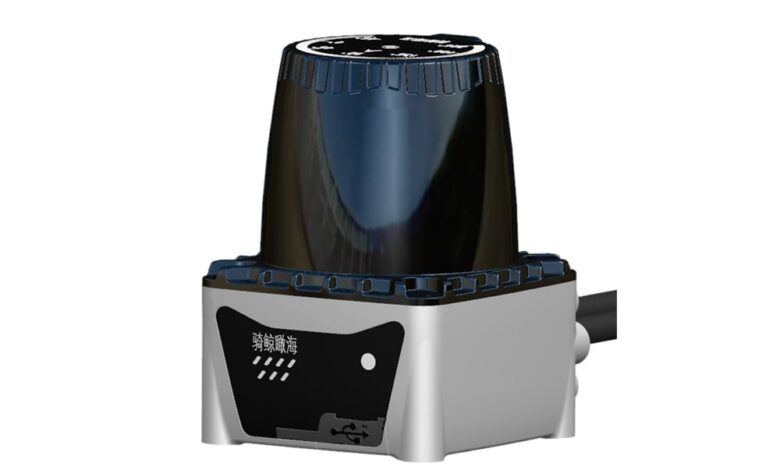
Safety laser scanners, or other safety scanners, are more suitable when you need area protection and also for mobile robot safety. The reason is that they can set up complex configurable detection zones, build multiple warning and protective fields, and keep adapting when the environment changes. Laser scanners are often the go to solution for perimeter guarding, mutual safety monitoring between automated guided vehicles, and collaborative spaces where you need dynamic mapping of obstacles.
So if your task is about shielding a simple access opening to hazardous machinery, a light curtain tends to be the most economical and reliable option. If the situation instead calls for flexible, sectorized safety zones or mobile coverage, safety laser scanners usually deliver better adaptability. The final choice should still include environmental conditions, the diagnostic coverage you require, how well it integrates with the controller, and compliance with the safety standards that apply, so the selected device satisfies both safety goals and the operational needs.
How are light curtain detection zones configured and tested?
Protective light curtain detection zones get set up by figuring out the protective height, the resolution, and the mounting distances around the hazardous point, then picking a unit with the right beam spacing and the protective area. Designers usually work out the required stand off distance from the danger, using the machine stopping time, the approach speed (frequently the highest human approach speed), the sensor response time, and the safety rules that state the minimum separation distances so contact does not happen before the machine is fully stopped. When commissioning, the installers test every light curtain by verifying the optical alignment, checking the muting and blanking behaviors, confirming the safety outputs actually reach the safety controller or the safety relay, and doing thorough functional trials so the beam interruption consistently causes the intended safety reaction. Ongoing validation and diagnostics matter too: most modern safety light devices include built in self tests and diagnostics that give status signals and fault codes, these then flow into the control system for continual watch, while manual checks, test logs, and maintenance documents help show compliance with safety standards and keep the long term dependability of the overall safety setup.
Can safety light systems improve productivity without compromising safety?
Safety light systems can improve productivity with out weakening safety, provided they get integrated in a sensible way into the automation cell. You also need to configure them so protection and operational efficiency are balanced, not traded. When fixed guarding gets replaced by safety light curtains or safety scanners , manufacturers can open up quicker access for material loading and upkeep, and they can shorten cycle times that used to be tied to physically operated gates. In addition , selective muting or blanking strategies can allow non hazardous items to pass through, while protective coverage stays active for people.
You then tie everything into controller logic and access control, for instance RFID based interlocks, so the sequencing stays automated and downtime is reduced. At the same time, safety interlocks and safety switches still stop dangerous motion whenever personnel are nearby. Beyond that, advanced diagnostics and condition monitoring help reduce un planned downtime through predictive maintenance and earlier detection of sensor degradation.
Overall, the outcome is a safety approach that keeps the required safety integrity levels and stays aligned with safety standards compliance, while still supporting better productivity and uptime in industrial automation.
What controllers and safety devices are required for compliant safety systems?
Compliant safety systems need controllers along with safety devices that are actually designed, and certified to work together, to reach the required safety integrity level and also to meet regulatory as well as industry standards. The main parts can include safety controllers or safety PLCs which take in signals from safety sensors and safety switches , then they run fail-safe logic and send safe outputs to drive actuators . There are also safety relays that give redundant, hardwired safety outputs for straightforward safety tasks. Safety interlocks are used to stop operation whenever guards are open . On top of that, there are accessory devices like safety-rated contactors and emergency stop circuits that close the loop when something urgent happens.
A lot of modern safety systems use modular safety equipment, which can be expanded or rearranged for different machine modules, so functional segregation gets easier and validation becomes less complicated . The controller has to support the communication protocols and diagnostic needs of the sensors, and it should offer clear fault handling plus event logging that helps with certification. Beyond the core control, access control devices matter too, including RFID-based safety interlocks for maintenance entry permission, and alarm systems that relay hazardous conditions to operators. Together, these elements make up a broader safety ecosystem, one that supports industrial safety while still allowing operational control.
How does a safety controller integrate with sensors and machinery?
A safety controller works with sensors and machinery by taking in safety inputs from devices like safety light curtains, proximity sensors, safety switches, pressure sensors and emergency stop buttons, and then checks those signals against a preset safety program or logic. After that it provides safe outputs that basically tell actuators to stop, hold, or operate with a reduced hazard level.
In practice the linking is done either with hardwired safety circuits for simpler setups, or through certified safety communication protocols when the system is more complex, so the controller can read sensor state, diagnostic details, and also do cross channel monitoring to catch faults. The controller also relies on redundancy, monitoring, and diagnostic routines to meet the targeted safety integrity level, plus it records events for traceability and later review.
For machinery control, the safety controller lines up with the machine control system, or the main controller, using defined interfaces, ensuring that safety actions such as disabling a drive or engaging a safety brake happen reliably, and fast enough, to reduce risk. This close integration helps deliver a cohesive safety solution that responds in a predictable way when something goes wrong, while also maintaining alignment with the relevant safety standards.
Which safety devices are necessary for modular industrial automation setups?
Modular industrial automation setups need a mix of adjustable safety devices that can be rearranged when production lines change, often using modular safety controllers or safety I/O modules. You also see safety-rated input devices in the package, like safety light curtains , safety laser scanners, safety switches , and proximity sensors that are designed for safety. On the output side, manufacturers typically include safety contactors and safe torque off drives, so the system can stop or limit motion when conditions demand it.
To keep module access secure, safety interlocks paired with mechanical access control or RFID-based access control give authorization, and safety relays or distributed safety modules add scalable coverage for each individual module. Some devices even support plug and play connections, plus standardized safety communication, so modules can be added or swapped with less revalidation effort. Their diagnostic features also help during troubleshooting, because the modular architecture tends to spread signals across different points.
In high-mix, low-volume production, modular safety solutions along with configurable safety software can cut down the time and cost tied to re-certification, while still keeping industrial safety consistent even as the machinery configuration evolves.
How to verify controller and device compatibility for certification?
Verifying controller and device compatibility for certification means checking that everything that’s part of it, meets the relevant safety standards, is properly rated for the safety integrity level that’s required, and that the interfaces plus diagnostics actually back the needed functional safety behaviors. The whole thing usually starts by going through the manufacturer docs, the safety datasheets and whatever certifications exist, so you can confirm that sensors , safety devices, and the controller are all listed under the same safety standard set. You also want to make sure the device safety functions fit with the rest of the system, not just that they “work”.
After that system designers typically run risk assessments, set out the required safety functions and define the target safety integrity levels. Then they document how the chosen controller and devices cover those needs using architecture choices, redundancy arrangements and diagnostics strategies, because that story matters to auditors. Compatibility testing then continues with functional tests, fault insertion tests and integration testing, to verify that signals and inputs reliably cause the expected outputs and that any failures will be detected , and addressed in the right way.
Finally maintaining traceability through design records, test results and validation documentation is essential, especially for third party certification, and to show compliance during audits.
Which sensor types address specific industrial automation detection needs?
Specific industrial automation detection needs are addressed by a palette of sensor types tailored to different hazard classes and control requirements. Pressure sensors detect hydraulic and pneumatic anomalies that can indicate leaks or impending failures; temperature sensors monitor thermal conditions to prevent overheating or thermal runaway; gas sensors detect hazardous gas concentrations to trigger ventilation and alarms; proximity sensors and position sensing devices provide feedback on moving parts, enabling precise control and interlock functions. Safety laser scanners and motion sensors offer area monitoring and dynamic detection for mobile equipment and pedestrian protection in warehouses. RFID-based sensors and access control devices manage authorization and ensure that only trained personnel can enable or access certain machine functions. Combining these sensors into a layered safety solution allows industrial automation systems to maintain high productivity while reducing risk across a variety of industrial applications.
When to use pressure sensors, temperature sensors or gas sensors?
Pressure sensors, temperature sensors and gas sensors should be used whenever the safety or reliability of industrial processes depends on maintaining specific physical or chemical parameters. Pressure sensors are essential for systems where fluid power and containment integrity are critical—such as hydraulic presses and pneumatic actuators—where overpressure or loss of pressure can create hazardous conditions. Temperature sensors are necessary in processes with thermal risks, like ovens, chemical reactors and motors where overheating can lead to equipment damage or fire. Gas sensors must be deployed in areas where combustible or toxic gases may be present, such as chemical plants, confined spaces, or storage areas for volatile materials, to provide early detection, alarm and trigger ventilation or shutdown procedures. Selecting the correct sensor with suitable ranges, response times and environmental ratings ensures timely detection and appropriate alarm actions that protect workers and equipment in industrial environments.
What applications benefit from proximity sensors and position sensing?
Applications that benefit from proximity sensors and position sensing include automated assembly lines, robotic cells, conveyor systems, packaging machinery and any machinery where precise detection of part presence, end-of-travel and guard positions is required. Proximity sensors enable non-contact detection of metal or non-metal objects, facilitating safe position sensing for machine interlocks and ensuring parts are present before initiating motion. Position sensing integrated into servomotors and linear actuators provides feedback to control systems for accurate motion control and safe stopping positions, contributing to both operational precision and worker safety. In pick-and-place operations, proximity sensors prevent collisions and ensure correct part orientation, while in palletizing and warehousing applications, position sensing combined with safety laser scanners supports safe navigation and obstacle avoidance for mobile robots and automated guided vehicles.
How do laser scanners and motion sensors support warehouse safety?
Laser scanners and motion sensors support warehouse safety by providing dynamic, configurable detection zones that protect personnel, equipment and automated vehicles. Safety laser scanners scan the environment with high-resolution laser beams to detect objects and persons within predefined fields, allowing them to establish warning and protective zones around automated guided vehicles, palletizers and robotic pick systems. When an object enters a warning zone, the system can slow vehicle speed or pause operations; when a protective field is penetrated, an immediate stop can be issued to prevent collisions. Motion sensors complement these capabilities by detecting general movement in aisles, loading docks or storage areas to control lighting, alarms and access systems that improve situational awareness. Together, these sensors reduce the likelihood of accidents, facilitate coexistence of humans and automated systems and maintain productivity through smart, graduated responses rather than blunt shutdowns.
How to design and implement safety solutions for a hazardous working environment?
Designing and implementing safety solutions for a hazardous working environment requires a methodical approach that begins with hazard assessment and risk analysis, proceeds through selection and integration of appropriate sensors and controllers, and culminates in thorough testing, validation and staff training. The process starts with identifying hazards associated with each machine and process, estimating risk by considering severity and frequency, and determining required risk reduction measures. Engineers then select sensor technologies—safety light curtains, safety laser scanners, proximity sensors, pressure sensors, temperature sensors and gas detectors—that match the detected hazards and environmental conditions, and design control strategies using safety controllers, safety relays and safety interlocks to achieve compliance with safety standards. Implementation includes mechanical mounting, environmental protection, wiring to the control systems, and configuration of detection zones and safety logic. Commissioning involves rigorous functional testing, diagnostic verification and documentation for certification. Finally, maintenance plans, alarm strategies and periodic revalidation ensure the solution remains effective throughout the lifecycle of the equipment.
What steps ensure hazard assessment and risk reduction with sensors?
To ensure hazard assessment and risk reduction with sensors, organizations should follow structured steps: perform a systematic hazard identification across all industrial applications and machinery; evaluate risk levels by combining the probability of occurrence with potential severity; define target safety integrity levels and select sensor technologies capable of delivering the necessary performance and reliability; design redundancy and diagnostic coverage to meet or exceed safety standard requirements; plan for proper sensor placement, environmental protection and fail-safe wiring to controllers and safety devices; implement verification tests including simulated faults and functional interruption checks; and establish maintenance, alarm and diagnostics regimes that detect degradation before it compromises safety. Documentation at every stage, including test records and risk assessments, supports certification and continuous improvement of industrial safety systems.
How to select modular safety solutions for changing production lines?
Selecting modular safety solutions for changing production lines involves prioritizing flexibility, compatibility and ease of reconfiguration. Choose safety controllers and modular safety I/O that allow plug-in expansion and support standardized safety protocols, enabling rapid integration of sensors and safety devices as modules are added or reconfigured. Employ safety devices with configurable parameters and fieldprogrammable safety functions to adapt detection zones and responses without major hardware changes. Use access control devices like RFID safety interlocks and standardized connectors to speed module swapping and maintain traceability. Ensure the chosen components are supported by diagnostics and software tools that simplify validation and provide clear status reporting to minimize downtime during changeovers. Modular safety solutions that align with the plant’s safety architecture reduce the time and cost of adapting to new product lines while maintaining compliance and worker safety.
What maintenance and alert strategies keep safety systems reliable?
Maintaining reliability of safety systems requires scheduled inspection, condition-based monitoring and automated alert strategies that detect early signs of failure. Regular maintenance should include cleaning and alignment checks for optical sensors like light curtains and laser scanners, verification of proximity sensor operation and calibration of pressure, temperature and gas sensors. Implement diagnostics that monitor sensor health, provide fault codes and report status to the controller, and configure alarm hierarchies that distinguish between warnings and critical faults so that appropriate responses—ranging from maintenance notifications to immediate shutdowns—are triggered. Logging events, periodic functional testing, and retraining personnel on test procedures ensure ongoing compliance with safety standards. Integrating predictive maintenance analytics with sensor diagnostics can further reduce unscheduled downtime and maintain the high availability of safety solutions in industrial automation environments.
How to balance safety solutions with industrial automation productivity?
Balancing safety solutions with industrial automation productivity requires integrating sensor-based safety measures that protect workers without creating unnecessary interruptions to production. This balance is achieved by selecting sensors and safety devices that provide the required protection level while offering configurable behaviors—such as muting, blanking, graduated warnings and staged slowdowns—so the system responds proportionally to risk. Tight integration between safety controllers and machine control systems enables coordinated sequencing that minimizes downtime, while diagnostics and condition monitoring reduce time spent on troubleshooting. Additionally, safety solutions designed for modularity and rapid reconfiguration allow production lines to adapt quickly to new requirements with minimal disruption. Establishing clear metrics for safety performance and productivity helps managers understand the trade-offs and continuously optimize both, ensuring that industrial safety enhances rather than hinders automation goals.
Can sensor-based safety systems reduce downtime and increase throughput?
Yes, sensor-based safety systems can reduce downtime and increase throughput when they are implemented with attention to both safety and operational efficiency. By replacing slow manual safety procedures and fixed guarding with automated detection systems—such as safety light curtains, safety scanners and proximity sensors—operators can interact with machinery more efficiently while the controller enforces safety boundaries automatically. Features like selective muting, configurable safety zones and predictive diagnostics reduce false stops and unplanned outages by allowing routine material handling actions without loss of protection and by identifying sensor degradation before it causes a fault. Moreover, integration with control systems enables intelligent sequencing and coordinated stops that shorten recovery times and maintain higher average throughput. Properly designed sensor-based safety systems therefore support both worker safety and productivity improvements in industrial automation.
What metrics measure safety system effectiveness in automated plants?
Measuring safety system effectiveness in automated plants requires metrics that capture both performance and compliance aspects. Key indicators include the number of safety incidents and near-misses, mean time between safety-related faults, frequency of false trips or nuisance stops, system availability and mean time to repair after a safety event. Additional metrics include the percentage of sensors passing periodic functional tests, diagnostic coverage rate, time-to-detect and time-to-respond for hazardous conditions, and compliance verification rates against required safety standards. Monitoring alarm trends and maintenance logs also reveals patterns that inform improvements. Collecting and analyzing these metrics enables organizations to quantify the impact of safety solutions on both worker protection and productivity, and to demonstrate continuous adherence to industrial safety requirements.
How to train staff to operate around sensor-based safety systems?
Training staff to operate around sensor-based safety systems should combine theoretical instruction on safety principles and standards with hands-on practical sessions that cover specific devices such as safety light curtains, safety switches, proximity sensors and safety laser scanners. Training programs must explain the function of each sensor and safety device, the criteria for safe operation, how the controller and safety devices interact, and the significance of alarms and diagnostic messages. Personnel should be trained in routine verification procedures, proper cleaning and maintenance practices, and the protocols for reporting faults and initiating emergency responses. Specialized training for maintenance staff should cover fault-finding, recalibration and compatibility checks for certification. Regular refresher courses and competency assessments, supported by clear documentation and access control procedures, ensure that workers understand how to work safely in environments where sensor-based safety systems are core to industrial automation and worker safety.