Jyokyo (状況): Meaning, Usage, and Cultural Significance in Japanese
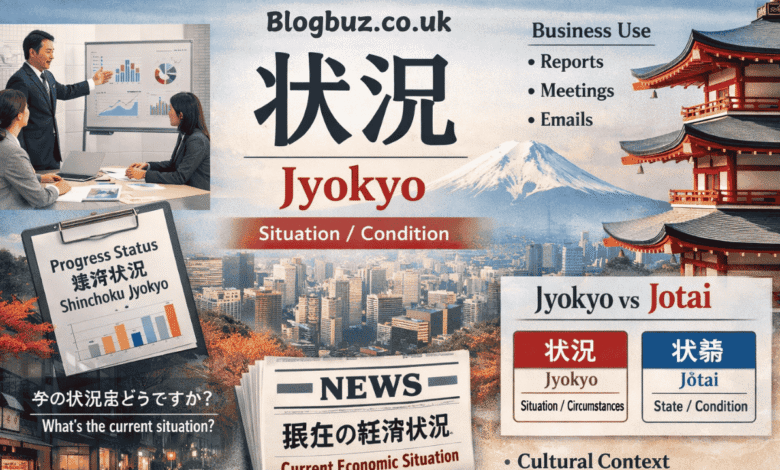
The word jyokyo (状況) is a commonly used Japanese term that plays an important role in daily conversation, business communication, and written Japanese. Although simple in appearance, jyokyo carries a wide range of meanings depending on context. Understanding this word is essential for anyone learning Japanese, working with Japanese companies, or studying Japanese culture. In this article, we’ll explore the meaning of jyokyo, its usage, examples, cultural context, and how it differs from similar Japanese words.
What Does Jyokyo Mean?
Jyokyo (状況) translates most commonly into English as:
- Situation
- Condition
- State of affairs
- Circumstances
It refers to the current state or condition of something, whether that’s a person, an event, a project, or a social issue.
Basic Definition:
Jyokyo (状況) = the overall condition or situation at a given time
It is a noun, often used in both formal and casual Japanese.
How Jyokyo Is Used in Japanese
Everyday Conversation
In daily speech, jyokyo is often used to describe what’s happening right now.
Examples:
- 今の状況はどうですか?
Ima no jyokyo wa dō desu ka?
→ “What’s the current situation?” - 状況が変わりました。
Jyokyo ga kawarimashita.
→ “The situation has changed.”
Business and Workplace Use
In professional environments, jyokyo is extremely common. It appears in:
- Project updates
- Reports
- Meetings
- Emails
Common business phrases:
- 進捗状況 (shinchoku jyokyo) – progress status
- 現在の状況 (genzai no jyokyo) – current situation
- 状況を確認する – to check the situation
- 状況を共有する – to share the status
Because Japanese business culture values clarity and awareness, jyokyo is a keyword in formal communication.
Jyokyo vs Similar Japanese Words
Understanding how jyokyo differs from similar terms improves fluency.
状況 (Jyokyo) vs 状態 (Jōtai)
| 状況 (jyokyo) | Situation, circumstances | External conditions |
| 状態 (jōtai) | State, condition | Physical or internal condition |
Example:
- 会社の状況 → company’s situation
- 体の状態 → physical condition
状況 vs 環境 (Kankyō)
- 状況 = what is happening now
- 環境 = environment or surroundings
Example:
- 経済状況 (economic situation)
- 仕事の環境 (work environment)
Cultural Importance of Jyokyo in Japan
Japanese communication often emphasizes context awareness, and jyokyo reflects this cultural value.
In Japan:
- Decisions are made based on the situation
- Direct confrontation is avoided
- Understanding the “jyokyo” helps maintain harmony
You’ll often hear phrases like:
- 状況次第です (It depends on the situation)
- 状況を見て判断します (We’ll decide based on the situation)
This reflects Japan’s flexible, context-sensitive communication style.
Common Collocations With Jyokyo
Here are some frequently used expressions that include jyokyo:
| 現在の状況 | Current situation |
| 厳しい状況 | Difficult situation |
| 状況判断 | Situation assessment |
| 緊急状況 | Emergency situation |
| 状況説明 | Situation explanation |
| 状況改善 | Situation improvement |
These phrases are commonly found in news articles, reports, and formal speeches.
Jyokyo in Written Japanese & Media
You’ll frequently see jyokyo in:
- News headlines
- Government announcements
- Corporate statements
- Academic writing
Example from news-style writing:
政府は現在の経済状況を慎重に分析している。
The government is carefully analyzing the current economic situation.
Because of its neutrality, jyokyo is preferred in formal writing.
Why Jyokyo Is Important for Japanese Learners
Learning jyokyo helps you:
- Sounds more natural in conversation
- Understand news and business Japanese
- Express conditions without emotional tone
- Communicate professionally
It’s considered a core vocabulary word in JLPT N3–N2 levels.
Final Thoughts
Jyokyo (状況) is a fundamental Japanese word that describes the state of things around us—whether personal, social, or professional. Its flexibility, neutrality, and frequent usage make it one of the most important terms for understanding Japanese communication.
You May Also Read: Qwen2的BLEU指标: Advancing Translation Quality with Enhanced Contextual Precision