Nitrogen Compressor, On-Site Nitrogen Generators and Portable Nitrogen Gas Solutions
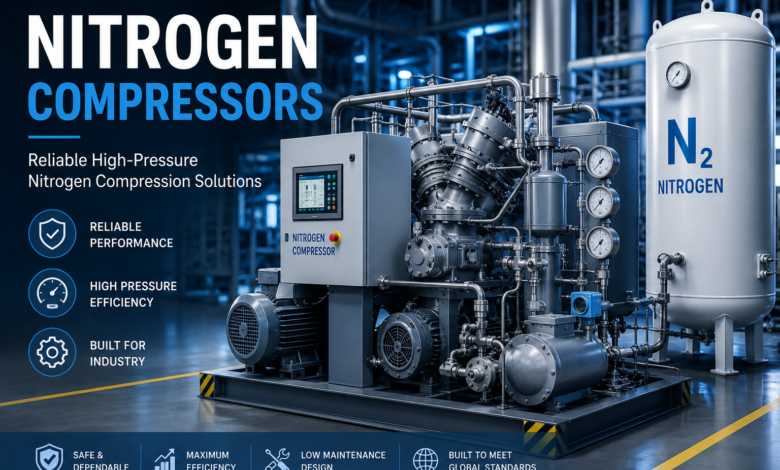
The following article provides a comprehensive examination of nitrogen compressors, on-site nitrogen generators, portable nitrogen gas options and associated compressor solutions used across industrial, laboratory and manufacturing environments. This detailed discussion covers the fundamentals of compression and gas generation, contrasts between membrane and PSA nitrogen generator technologies, sizing and purity considerations, air treatment and filtration requirements, operational cost savings versus bottled nitrogen or bulk delivery, the role of boosters and high pressure systems, and the engineering and certification criteria that should guide selection of an in-house or packaged nitrogen supply. The content emphasizes practical decision points for engineers and procurement professionals evaluating an optimized nitrogen gas supply, including rotary screw and reciprocate type of compressor options, booster compressor integration, storage tanks and maintenance to achieve reliable, high purity nitrogen suitable for demanding applications.
For more in-depth information you should view from Nitrogen Compressors Manufacturer&Supplier – PanGeng
What is a nitrogen compressor and how does it compress nitrogen gas?
A nitrogen compressor is a specialized gas compressor or compressor system designed to increase the pressure of nitrogen gas derived either from ambient air via an on-site nitrogen generator, from bottled nitrogen or from an external nitrogen gas supply, delivering the required pressure and flow to process points. Compression of nitrogen typically involves using rotary screw air compressors, reciprocate compressors or dedicated gas compressor designs depending on required pressure, flow and purity. In many on-site nitrogen generation packages, a rotary screw air compressor supplies compressed air to a pressure swing adsorption (PSA) nitrogen generator or a membrane nitrogen generator; the air is first treated to remove oil, carbon and moisture using a series of filters and dryers. The compressor raises the inlet pressure to the necessary level for efficient separation or membrane permeation, enabling the production of N2 at a target purity level. For high pressure applications, a booster or nitrogen booster — sometimes a dedicated booster compressor — is employed to take the gas from intermediate storage or generator output and compress it to high pressure for pneumatic systems, cylinders, or specific manufacturing processes where high pressure N2 is required.
How does a gas compressor differ from a standard air compressor?
While a standard air compressor commonly refers to equipment designed to compress ambient air for pneumatic tools and general compressed air networks, a gas compressor, and more specifically a nitrogen compressor, may be designed or configured to handle specific gas chemistries, purity requirements and pressure ranges that exceed those typical of general compressed air. Gas compressors for nitrogen often incorporate specialized seals, materials and oil-free options to avoid contamination that would compromise high purity nitrogen, and they may be engineered to operate continuously with different duty cycles and discharge pressures. Rotary screw air compressors are widely used to supply the compressed air feed for nitrogen gas generators, but where the final product is required as nitrogen, additional compression stages, booster compressors or heavy-duty reciprocate compressors might be selected to achieve higher pressure while maintaining purity and minimizing entrainment of carbon and oil. The selection of a type of compressor is therefore influenced by whether the primary role is to produce compressed air or to produce and compress nitrogen gas for an in-house gas supply.
What pressure and flow rates can I expect from a nitrogen compressor?
Pressure and flow rates from a nitrogen compressor vary widely depending on the configuration: small portable nitrogen gas generators and compressor packages may produce flows suitable for laboratory applications at moderate pressures, while larger on-site nitrogen generation systems paired with rotary screw compressors and booster compressors can deliver high flow rates measured in scfm or Nm3/h at pressures from typical generator outputs up to high pressure ranges required for cylinder filling or high pressure pneumatic systems. Typical PSA nitrogen generator outputs range from a few scfm to hundreds or thousands of scfm, with purity levels adjustable up to 99.999% for high purity nitrogen applications, and membrane systems offering robust flow at lower purity and lower cost per scfm. When specifying a compressor for an on-site nitrogen package, engineers must determine the required flow and discharge pressure, accounting for header losses, storage tank size and peak demand, and should expect that booster compressors will be necessary where pressures above the generator’s native output are required to support high pressure filling or specialized processes.
When should I choose a booster compressor for higher pressure needs?
A booster compressor is recommended when the downstream process requires pressures beyond the nominal output of the nitrogen generator or initial compressor; common use cases include filling nitrogen cylinders to high pressure, supplying high pressure pneumatic actuators in manufacturing, or creating a high pressure N2 blanket for specialty processes. Integration of a booster compressor allows an on-site nitrogen generation package to remain efficient at producing gas at generator-optimized pressures while enabling intermittent or continuous operation at high pressure through the booster, often in conjunction with a high pressure tank to manage peak demand. Selection of a nitrogen booster should consider the compressor type, whether a dedicated booster compressor or a multi-stage reciprocating design, compatibility with high purity nitrogen requirements, and safety engineering to manage risks associated with high pressure systems, including appropriate relief devices, cabinet design, ISO certifications and adherence to local codes.
How do nitrogen generator options (PSA vs membrane) compare to on-site nitrogen generators?
On site nitrogen generation is usually done with two well proven routes: a pressure swing adsorption, PSA nitrogen generator, and membrane nitrogen generator systems. Both ways let you make nitrogen inside the facility and they reduce dependence on bottled nitrogen, or on delivered bulk, plus cylinder inventories. With a PSA unit you run a pressure swing adsorption cycle over carbon molecular sieve beds, which will take in oxygen more readily, leaving nitrogen behind, so you can reach high purity levels, and in critical use cases you can sometimes see up to 99.999% purity. By comparison membrane systems depend on selective permeation through polymer fibers, separating oxygen from nitrogen as gas passes through, and they generally deliver less purity when you push high flow, but they come in a simpler, more compact setup. Deciding between PSA versus membrane generators really depends on what you need for purity, required flow, available footprint, capital expense, energy efficiency and how much maintenance you can handle for that particular use.
PSA nitrogen generator and membrane nitrogen generator are both used to produce nitrogen from air, but they work in a pretty different way, and in practice you will see differences in energy use , purity , and how flexibly you can run them. People often say “nitrogen generator technology” but the mechanism is not the same.
1) How each system separates nitrogen
– PSA nitrogen generator (Pressure Swing Adsorption):
It compresses ambient air and then passes it through an adsorbent bed. The adsorbent holds oxygen (and other trace gases) more strongly than nitrogen, so the gas leaving the bed becomes nitrogen-rich. Then the system changes pressure to “release” the captured gases and reset the cycle. So it’s a cycle with adsorption, regeneration, and regeneration again.
– Membrane nitrogen generator (Polymer membrane separation):
It feeds compressed air to a polymer membrane. Oxygen tends to permeate through the membrane faster than nitrogen, so oxygen-enriched gas vents out while the remaining stream is nitrogen-richer. Here the process is more steady-state, you don’t rely on a pressure-swing regeneration step like PSA does.
2) Typical purity and consistency
– PSA:
Usually better for higher nitrogen purity needs. Because adsorption can be tuned and cycled, PSA can often reach higher purity levels with stable performance for many industrial uses.
– Membrane:
Typically targets moderate nitrogen purity. Membranes often deliver consistent nitrogen output, but the achievable purity is usually lower than what many PSA systems offer.
3) Flow capacity and system behavior
– PSA:
Output purity and flow can depend on the cycle timing, bed size, and operating pressure. Changes in demand may affect how quickly the unit adjusts, though many systems are designed for varying usage patterns.
– Membrane:
Output flow is often related to membrane area and feed pressure. Membranes generally respond in a more immediate way to setpoint changes, but the purity can shift with operating conditions such as feed pressure and flow rate.
4) Energy efficiency and operating cost drivers
– PSA:
It generally needs power for compression plus energy for cycling and bed regeneration. In many cases PSA energy use per unit nitrogen can be quite reasonable, but it becomes strongly dependent on target purity and how much the system runs.
– Membrane:
It also needs air compression, yet it avoids the adsorbent regeneration cycle. That said, membrane systems still have a power cost for compression, and the cost balance depends on how high a purity you ask for, because pushing purity higher can reduce nitrogen recovery and increase operating cost.
5) Nitrogen recovery and waste stream character
– PSA:
The “waste” side is tied to the regeneration step. You effectively expel the adsorbed oxygen during the pressure change.
– Membrane:
The oxygen-enriched portion is continuously vented with the permeate side. So you get a more continuous waste vent stream rather than a distinct purge moment.
6) Maintenance and longevity
– PSA:
Maintenance includes monitoring valves, pressure control, and the adsorbent performance over time. Also air pretreatment is important because moisture and particulates can reduce adsorbent life.
– Membrane:
Maintenance often focuses on keeping the membrane clean and protected. Pretreatment is still important to control dust, oil, and moisture because fouling can reduce permeation performance.
7) Where each technology is commonly chosen
– Choose PSA when: you need higher nitrogen purity, better performance at tighter purity specifications, or you have an application that tolerates a cyclical design.
– Choose membrane when: you want simpler operation, often lower capital complexity, and you are comfortable with moderate purity requirements and continuous operation characteristics.
If you tell me your required nitrogen flow rate, target purity (for example 95% vs 99.9%), and whether you need continuous or intermittent supply, I can narrow down which technology usually fits better.
PSA nitrogen generators work with pressure swing adsorption and carbon molecular sieve beds. The beds do this cyclic thing where oxygen gets adsorbed at higher pressure, then it gets desorbed at lower pressure or a vacuum level. That sequence lets the system produce high purity nitrogen, with tighter control over the purity target.
Membrane nitrogen generators, in contrast, use bundles of hollow fibers. In these fibers oxygen and other fast-permeating gases move through the membrane more quickly than nitrogen does. As a result, the retentate side comes out nitrogen enriched, rather than fully “separated” in the same rigorous way.
So generally PSA is the better option when high purity nitrogen is the priority, including 99.999% and even ultra-high purity grades. Membrane systems tend to fit applications that can live with moderate purity. They also usually have less initial complexity and a more portable footprint.
One more point, PSA units often need a dryer and very clean compressed air, with careful control of particulates and oil, because the adsorbent beds are not forgiving. Membrane setups can sometimes handle different inlet conditions but they still depend on filtration to avoid carbon buildup and oil fouling in the fibers.
How do purity, flow and efficiency compare between generator types?
Purity, flow, and efficiency end up being the main performance trade-offs between PSA and membrane generators, but in practice it feels a bit messier. PSA systems are usually better at delivering high purity nitrogen with steady control so the process stays inside the tight specifications, even if the energy use per unit of nitrogen depends heavily on details like the feed compressor, the adsorption cycle timing, and the purge strategy. A lot of PSA packages include some kind of vacuum handling, or a purge optimization, to help push the overall efficiency up.
Membrane generators usually give lower nitrogen purity, yet they can still manage a high flow rate with simpler upkeep and, often, less upfront capital cost. Their real-world output depends on feed pressure and temperature, and also on how clean the feed stays, because contamination can quietly reduce performance. In other words, they tend to fit well when you want continuous production at moderate purity, where the system can run without too much disruption and maintain good overall efficiency.
When engineers pick between PSA and membrane options, they need to look at the required purity level first, for example whether you truly need ultra-high purity nitrogen like 99.999%, then the target flow rate (scfm or Nm3/h). After that it’s worth comparing total cost of ownership, including energy consumption and maintenance effort, and also checking long-term reliability of the package under your operating conditions.
Can a portable package or tank replace an on-site nitrogen generator?
A portable package, or tank arrangement, including bottled nitrogen, and portable nitrogen gas generators, can be a kind flexible interim, or just backup, answer. It may not fully replace the long-term advantages of an on-site nitrogen generator for many facilities, though. These portable setups tend to work well for temporary projects, remote sites that see low average demand, or as contingency supply while maintenance is happening. They also help you avoid the energy bills and the up-front capital expense that comes with permanent on-site generation.
Still, if you run continuous manufacturing, or if the process truly needs a substantive nitrogen supply, on-site nitrogen generation is usually the better deal over time. It also lowers logistical risk compared to delivered cylinders and it improves overall supply reliability. You can further strengthen this by integrating a storage tank with a generator, or by maintaining a supplemental set, of nitrogen cylinders, so you get redundancy and peak shaving. That way you support operational continuity while keeping a more cost-efficient generation approach.
How do I size a nitrogen compressor or nitrogen generator for my nitrogen supply needs?
Sizing a nitrogen compressor or nitrogen generator needs careful calcs for the needed flow, pressure and purity, plus some thought about later expansions, duty cycles, and those little system inefficiencies that add up. When you size it well, the nitrogen supply stays steady, while the compressor system costs and the ongoing operating expense can be kept in check, including the filters and the on-site nitrogen generation package itself. Engineers often run thorough checks for steady-state and peak demand, they include piping and header losses too, and they look at how much storage tank capacity is available in order to smooth out swings. The choice between compressor styles, like rotary screw air compressors for continuous generation, or reciprocating plus booster compressors for higher pressure and intermittent needs, has to match the calculated scfm, the pressure swing adsorption or membrane performance curves you are targeting, and the actual purity level required by the process.
What calcs decide the required scfm flow and the pressure for my process?
Figure out the required flow plus pressure starts with a fairly methodical analysis of every end-use point that uses nitrogen. You take the volumetric demand and convert it into standard cubic feet per minute, which is scfm, or into Nm3/h. Then you add up the steady-state flow and the peak flow components, using diversity and utilization factors where they make sense, becouse in real operation not all users hit maximum at the same time.
For pressure, you set the requirement based on the most demanding downstream process need. After that, you include allowances for pressure losses across filters, regulators, and piping, so the delivered pressure actually stays at the process setpoint across the full range of operating conditions. The team also has to think about compressor inlet and discharge conditions, and about storage tank sizing, so it can buffer the peaks when demand spikes. Finally, you decide whether a booster compressor will be used for intermittent high pressure demand.
Once those pieces are in place, the calculations guide the required compressor capacity, the generator flow rating, and the sizing of filters and dryers to maintain both performance and purity targets.
How do purity requirements (e.g., high purity nitrogen) affect system sizing?
Purity requirements have a direct impact on system sizing because higher purity nitrogen often needs a larger or more sophisticated PSA setups, slower cycle times, or extra purge volumes, and then the upstream compressor has to supply higher feed air flow. Getting high purity nitrogen like 99.999% increases demands across the compressed air treatment chain, the carbon molecular sieve capacity, and even the control system that manages the adsorption cycles; so the feed compressor must be sized to deliver enough flow and pressure while still keeping consistent dew point and oil free conditions. Membrane systems, when used for moderate purity, may need less feed pressure but often higher flow rates to reach the same nitrogen output, and that ends up affecting compressor selection and energy use. Because of this, the purity level is a key parameter in specifying compressor and generator capacity, to keep reliable continuous production at the required specification.
Should I include a booster or a storage tank in the package for peak demand ?
Including a booster and a storage tank in the nitrogen package is a common engineering strategy, but the details get a little nuanced, for peak demand and overall reliability. The storage tank gives the nitrogen generator a chance to run nearer to its optimal regime, while the system still covers brief surges using stored inventory. That way the generator does not have to keep chasing load swings, which can reduce cycle inefficiencies and limit frequent compressor starts. In parallel a booster compressor can raise the tank pressure up to the higher pressure needs of the process, so the generator is not pushed into continuously high discharge pressure. That continuous high pressure can be less efficient, and it may shorten component service life over time.
Whether you include these parts should depend on peak-to-average demand ratios, the response time you need when demand jumps, the actual high pressure requirements at the point of use, and the economic trade-offs between added capital cost and the operational savings you get from reduced wear and steadier operation.
What air treatment and filtration do compressor solutions require for reliable nitrogen gas?
Air treatment and filtration are critical to producing reliable, high purity nitrogen from any on-site nitrogen generation system. Compressed air must be properly dried, filtered and treated to remove particulates, oil, carbon and moisture prior to entering PSA or membrane systems; failure to do so can degrade adsorbents, foul membranes, increase maintenance and compromise purity. A typical treatment train includes particulate filters, coalescing filters to remove oil aerosols, activated carbon filters to remove vapors, and dryers (refrigerated or desiccant) to achieve the necessary dew point. The selection of filter micron ratings and carbon bed sizing should be guided by manufacturer recommendations and by the expected contamination profile of the compressed air, taking into account the type of compressor—rotary screw compressors often require downstream filtration to remove oil carryover, while oil-free compressor offerings may reduce but not eliminate the need for filtration.
Which filters and dryers are necessary for compressed air before a nitrogen generator?
Before a nitrogen generator, compressed air should pass through a sequence of filters and a dryer appropriate to the generator technology and the desired purity level. Recommended components typically include a particulate pre-filter to protect downstream equipment, a coalescing filter to remove liquid aerosols and oil droplets, an activated carbon filter to adsorb oil vapors and volatile organics, and an appropriate dryer—often a desiccant dryer for PSA systems to achieve very low dew points, while membrane systems may sometimes accept higher inlet dew points but still benefit from dryers to limit moisture exposure. Filter elements should be selected in consultation with the nitrogen generator manufacturer and should meet ISO air quality class specifications for particulate, oil and dew point to maintain the integrity of carbon molecular sieve beds and membrane fibers.
How does carbon and oil contamination impact membrane and PSA systems?
Carbon and oil contamination can severely degrade both membrane fibers and PSA carbon molecular sieve beds, reducing performance, shortening service life and increasing maintenance and operating costs. Oil molecules and carbon-based contaminants can coat adsorbent surfaces or block membrane pores, diminishing oxygen adsorption efficiency in PSA systems and reducing selectivity and flow in membrane modules. Over time, contaminated adsorbents lose capacity, necessitating replacement, while fouled membranes may require module replacement. Effective air treatment, including high-efficiency coalescing filters and activated carbon adsorption, is essential to prevent such damage and to ensure the long-term efficiency and reliability of on-site nitrogen generation equipment.
What maintenance schedule keeps filters and air treatment performing optimally?
An effective maintenance schedule for filters and air treatment should be proactive and aligned with the operating hours and environmental conditions of the compressor system. Routine checks include scheduled replacement of particulate and coalescing filter elements, periodic replacement or regeneration of desiccant in dryers, monitoring of pressure differentials across filters to indicate loading, and testing for oil and moisture content downstream to verify filter performance. Carbon filters and adsorption beds should be replaced per manufacturer guidance or when testing indicates breakthrough of oil or hydrocarbons. In addition, periodic inspection and service on rotary screw air compressors, including oil changes and separator maintenance, is critical to reduce contamination risk and to maintain overall compressor efficiency and uptime for the on-site nitrogen generation package.
How do on-site nitrogen generators reduce operating costs and improve supply reliability?
On-site nitrogen generators can substantially reduce operating costs compared to bottled nitrogen and bulk tank delivery by eliminating recurrent delivery charges, cylinder handling and logistics, and by enabling automated, in-house production that scales with demand. The cost savings often derive from lower cost per unit of nitrogen produced over the lifecycle of the system, reduced downtime associated with cylinder changeouts or delivery delays, and improved safety and inventory control. On-site nitrogen generation also improves supply reliability by removing dependence on external gas suppliers and transportation networks; generating nitrogen in-house ensures consistent availability for critical manufacturing and laboratory processes, mitigates supply chain disruptions, and supports operational uptime in environments where uninterrupted nitrogen supply is essential.
What are the savings compared to delivered cylinder or bulk tank nitrogen?
Savings compared to delivered cylinder or bulk tank nitrogen depend on consumption volume, purity requirements and local delivery costs, but in many manufacturing and laboratory settings, an on-site nitrogen generation system pays back by reducing the per-unit cost of nitrogen and eliminating delivery logistics. Facilities with moderate to high consumption typically realize the most substantial cost savings, as the capital expense of a PSA or membrane nitrogen generator and the associated compressor is amortized over time, with ongoing costs limited to electricity, filter maintenance and occasional adsorbent replacement. For low-volume or highly mobile operations, bottled nitrogen or portable tanks may remain economically viable, but for continuous operations the total cost of ownership favors on-site generation when assessed over a multi-year horizon.
How does on-site production improve uptime and eliminate supply chain risks?
On-site production eliminates many supply chain risks associated with delivered nitrogen by providing immediate, controllable access to nitrogen gas independent of transport schedules, supplier outages or market fluctuations. This in-house capability reduces the administrative overhead of managing cylinder inventories, delivery contracts and emergency procurements, thereby improving uptime and process resilience. For critical manufacturing, food packaging, chemical processing and electronics applications where interrupted nitrogen supply can cause costly downtime or product loss, an on-site nitrogen generator integrated with appropriate storage and booster capability offers operational assurance and continuity that bottled nitrogen solutions cannot match.
What roles do booster compressors and high pressure systems play in nitrogen applications?
Booster compressors and high pressure systems help make on site nitrogen generation packages usable for specialized needs, like cylinder filling, pressure blanketing, and process instruments that ask for a higher pressure level. The booster lifts the pressure that the generator produces (or that is kept in a tank) up to the required high pressure, while keeping the generator efficient at its best operating point. Putting in boosters is a major design detail for places that want steady efficient base generation but also need intermittent delivery at elevated pressure, and proper engineering matters so the system stays safe, compatible with high purity demands, and aligned with the standards and certifications that apply.
So when is a nitrogen booster needed for high pressure applications?
A nitrogen booster is needed whenever the process or cylinder filling pressure goes beyond the native discharge pressure of the nitrogen generator, or the storage tank. Typical cases include, filling nitrogen cylinders up to the normal cylinder pressures, supplying high-pressure pneumatic actuators, or meeting defined pressures for specialized manufacturing steps. By using a booster compressor, the generator can keep working at medium levels more efficiently, and the booster is doing the energy-heavy compression only when it is required. This tends to optimize overall system efficiency, and it also reduces the demand for oversized continuous-duty compressors.
How do booster compressors get integrated with tanks and on-site nitrogen generators?
Booster compressors are often placed after a storage tank or after the nitrogen generator in general, they pull nitrogen from the generator outlet at the same output pressure and then compress it up to the needed higher pressure. This layout lets the nitrogen generator feed continuously into a tank at its best working point, while the booster only comes online when it is necessary to fill high pressure cylinders or to cover process points that ask for sudden high pressure bursts. In practice the integration is not just piping, it also means synchronized control logic, proper non-return valves and pressure relief systems, plus continuous monitoring, so you can avoid any backflow contamination and keep the intended purity level. An engineer should plan it all so there are fail safes, and so routine servicing can be done without stopping a critical supply line.
For high pressure N2 systems, key safety and engineering considerations include the following
– Pressure boundary and rated components: Use valves, regulators, hoses, compressors, vessels, and fittings that are rated for the maximum operating pressure plus appropriate margins, then verify pressure class documentation before installation.
– Leak prevention and detection: Because nitrogen is an asphyxiant, control leakage with proper fittings, clean assembly practices, and leak checking methods appropriate for your environment.
– Overpressure protection: Install pressure relief valves or rupture devices sized for the credible worst case, then route relief discharge to a safe location with adequate ventilation.
– Backflow prevention: Add check valves (and where needed isolation valves) so pressure cannot migrate in the wrong direction, especially around boosters, manifolds, and storage headers.
– Control logic and interlocks: Use interlocks for start stop conditions, high pressure limits, compressor trip settings, and safe shutdown sequences that account for sensor failures and loss of utilities.
– Purity and contamination control: Maintain cleanliness, avoid reactive lubricants or incompatible materials, prevent ingress of air moisture, and manage filters and dryers if your process needs targeted nitrogen purity.
– Oxygen displacement awareness: Even when the gas is “inert,” nitrogen release can lower oxygen in enclosed areas, so require oxygen monitoring, ventilation design, and clear access rules.
– Thermal and mechanical hazards: Consider compressor heat buildup, gas temperature rise, vibration, and fatigue from cycling. Include temperature limits, motor overload protection, and inspections based on duty cycle.
– Storage and cylinder handling: Apply safe cylinder manifold practices, restraint, correct regulator use, and periodic inspection of vessels. Ensure cylinders are secured and valves are protected.
– Maintenance planning: Provide isolation points, depressurization procedures, lockout tagout, and maintenance access that allows safe work without breaking supply integrity longer than allowed.
– Commissioning and documentation: During startup, perform pressure tests, verify relief valve setpoints, test alarms and trips, and record as-built settings and maintenance intervals.
If you tell me your typical pressures (operating and relief), whether the system is inside or outdoors, and the size of the storage, I can tailor the main risks and the usual design checks to your setup.
High pressure nitrogen systems need strict safety and engineering controls, including pressure relief valves, certified high pressure piping, correct wall thickness and fittings, compliance with ISO requirements and local pressure vessel regulations, plus careful leak detection and ventilation strategies. Engineers have to make sure the materials, together with seals, are compatible with nitrogen, and that the controls stop any overpressure events from happening. Extra focus should go to the dangers tied to oxygen displacement inside enclosed spaces, sudden high pressure gas release, and the effects of contamination when the nitrogen is at high pressure. Certification matters, and so does documentation for purity guarantees, along with staying aligned to maker testing procedures and ISO standards, so the high pressure N2 system runs safely and reliably.
What factors should I consider when choosing a packaged or custom nitrogen compressor solution?
Picking between a packaged, or a customized nitrogen compressor setup depends on a few things people often forget to list clearly. You have to look at how much room there is, whether you need it to move around, and how hard it is to install. Then there’s the purity level you need, the actual flow requirements, how easily it can be serviced, and whether the supplier has solid credentials. Packaged systems usually win on speed because installation is straightforward, air treatment is already designed in, and the integration with a generator tends to be pre planned. They also tend to be easier to qualify for ISO or similar certifications. Custom solutions however give flexibility for unusual site conditions, specialized high pressure demands, or tying into existing compressed air infrastructure without having to redesign everything.
You also need to consider long term efficiency, what maintenance intervals you should expect, how strong the manufacturer support really is, and where the unit ends up, like in a cabinet, on a skid, or inside a room. Finally, you must compare the immediate capital price with the total cost of ownership, including energy consumption plus the cost of filter and adsorbent replacement.
How do limited space, portability, and installation complexity affect choosing a packaged system?
Space and portability really steer the decision, like a facility can lean toward a compact membrane nitrogen generator or go for a bigger PSA package, plus dedicated rotary screw compressors and tanks. Portable sets tend to work well for moving work, or temporary deployment, while fixed skid mounted or cabineted units fit industrial use, where the goal is permanent high volume nitrogen. But the real hinge is installation reality, things like ventilation, foundation support for the heavy-duty compression equipment, electrical capacity, and how close the supply is to the points of use. Those factors decide if a packaged solution is truly practical. Otherwise, a custom installed compressor system may be needed, with engineered ducting, filtration and controls matched to the site. In the end engineers should weigh local limits, along with service access, before they lock in a package.
For suppliers, what certifications, purity assurances, and test evidence should I ask for?
Engineers should push suppliers to give actual written purity guarantees, plus performance curves that make the relationship between flow and purity pretty clear. Also ask for third party testing or certifications, for example ISO standards for air quality and pressure equipment directives where that applies. Don’t stop there, you also want proof that factory acceptance testing was done, with filter and generator performance documentation included. At delivery, request a detailed operations and maintenance plan that makes sense in real day to day use.
For high purity applications it helps to demand validation that the nitrogen generator can steadily reach the target purity, like 99.999% , and then secure certificates of conformance covering the materials, the filters, and the carbon molecular sieve media.
Beyond the paperwork, verification of manufacturer support matters, including local service capability, since that is essential for long term reliability.
How can an engineer help choose the correct compressed air, filtration setup, and generator pairing?
An seasoned engineer, brings quantitative analysis and practical insight to specify the best compressed air feed, filtration train, and generator combination by working out scfm and pressure needs, modeling how purity effects generator sizing, and recommending the right compressor style, like rotary screw or reciprocate units, for the duty cycle. Engineers also look at the air quality requirements, suggest filter micron ratings and dryer styles, plan storage and booster integration for those peak demands, and make sure everything fits the relevant codes and safety margins. Their work includes running lifecycle cost analysis, setting maintenance intervals that keep efficiency steady, and coordinating with manufacturers so the selected on-site nitrogen generation package actually meets the facility operational, purity, and reliability objectives.