How Learning Chinese Actually Boosts Your Child’s Math Skills: The Science Behind It
For decades, parents and educators have treated math and languages as completely separate disciplines. Conventional wisdom suggests that a child is either an analytical “left-brained” math whiz or a creative “right-brained” linguistic natural.
However, modern cognitive science is shattering this old dichotomy.
Remarkable research reveals an unexpected crossover: learning Mandarin Chinese drastically improves a child’s mathematical ability. Far from just a communication tool, Chinese acts as a rigorous cognitive workout that wires the developing brain to process numerical logic, geometric spatial relationships, and abstract patterns with greater ease.
The Surprising Connection Between Mandarin Characters and Mathematical Logic
The mathematical advantage of Chinese begins with how numbers are constructed in the language. In English, counting past ten introduces highly irregular words like “eleven,” “twelve,” and “thirteen.” These words hide the underlying base-10 structure of our number system, forcing young children to rely on rote memorization before they can truly grasp place value.
In contrast, Mandarin numbers are built with absolute algorithmic consistency.
- Eleven is 十一 (shí yī), which literally translates to “ten-one.”
- Twelve is 十二 (shí èr), or “ten-two.”
- Twenty is 二十 (èr shí), or “two-tens.”
- Twenty-five is 二十五 (èr shí wǔ), or “two-tens-five.”
This clean, predictable vocabulary means that Chinese-speaking children understand the base-10 system and place-value concepts much faster than their Western peers. Because the language reflects the math perfectly, mental math operations like addition and carrying digits become intuitive rather than confusing.
4 Ways Chinese Language Training Improves Brain Development
Beyond basic counting, regular engagement with the Chinese language restructures how a child’s brain handles complex information. Here are four foundational ways this training supercharges cognitive development:
Enhancing Spatial Memory through Character Writing
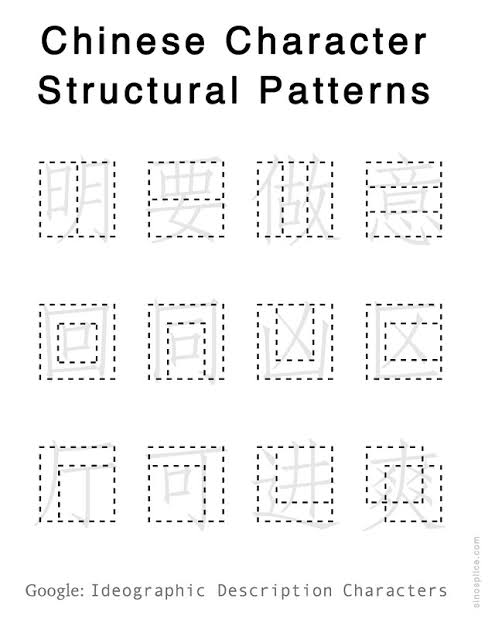
Unlike Western scripts that utilize linear sequences of letters, Chinese characters are intricate, two-dimensional geometric structures. They are built out of individual strokes arranged precisely within a square framework.
When children practice writing characters, they aren’t just memorizing lines; they are calculating visual proportions, tracking symmetry, and analyzing spatial relationships. This practice directly stimulates the parietal lobe—the exact region of the brain responsible for spatial memory, coordinate geometry, and the mental rotation of shapes.
Why Tonal Languages Improve Auditory Processing
Mandarin is a tonal language, meaning a single syllable like ma can mean four entirely different things depending on whether it is spoken with a high-flat, rising, dipping, or falling pitch. Distinguishing between these subtle frequencies forces the auditory cortex to work at an advanced level.
Neuroscientists have discovered that this heightened pitch sensitivity improves a child’s “audio-sequential memory”—the ability to listen to, store, and accurately track sequences of sounds. In mathematics, this translates directly into a better capacity to follow sequential multi-step instructions and remember lengthy arithmetic formulas.
- Double-Hemisphere Brain Activation: Brain scans reveal that while English speakers process language primarily in the left hemisphere, Chinese speakers actively engage both hemispheres simultaneously. The left hemisphere decodes the grammatical meaning, while the right hemisphere processes the spatial characters and musical tones. This holistic activation builds denser neural pathways.
- Rapid Pattern Recognition: Characters are built using semantic components called radicals. Recognizing how these radicals repeat, nest, and shift across different words trains the brain to spot hidden patterns. This skill is highly transferable to algebra and algorithmic logic.
Why WuKong Education Integrates Math and Language in Their Curriculum
Understanding this deep cognitive overlap is exactly what drives the educational philosophy at WuKong Education. Rather than keeping subjects isolated in separate silos, WuKong, World’s #1 Online K-12 Chinese Program, designs its Mandarin programs to leverage and naturally trigger a child’s logical reasoning faculties.
By utilizing highly visual character-mapping exercises, spatial stroke-order tracing, and interactive problem-solving dynamics, WuKong’s curriculum ensures that students aren’t just mimicking sounds. They are building structural thinking skills. This method transforms language acquisition into an elite cognitive catalyst that enhances performance in both language arts and advanced stem tracks.
Simple Steps to Start Your Child’s Cognitive Development Journey
You don’t need to completely overhaul your child’s schedule to start unlocking these mathematical and linguistic benefits. Introducing structured, steady exposure is key:
- Start with Auditory Immersion Early: Introduce native Mandarin sounds, songs, and tonal rhymes during early childhood when the brain’s neuroplasticity is at its highest point.
- Utilize Character Grid Practice: When introducing written characters, always use traditional quad-divided grids. This helps your child actively analyze visual quadrants, reinforcing geometric and spatial tracking skills.
- Opt for Interactive, Live Instruction: Passive screens do not build executive function. Choose interactive programs where native-speaking teachers guide children through real-time dialogue and gamified pattern-matching puzzles.
Conclusion: Why Mandarin is the Ultimate “Brain Food” for Growing Kids
When choosing extracurricular activities for your child, it is easy to feel torn between cognitive STEM programs and creative arts or languages. The beautiful reality of Chinese language training is that you do not have to choose.
By challenging the brain with spatial character structures, logical numerical sequences, and rigorous tonal processing, Mandarin functions as the ultimate “brain food.” It provides a profound cognitive foundation that sharpens mathematical logic, enhances memory retention, and gives your child the mental agility required to excel across all academic disciplines.