Surviving the Content Flood: Why Verification is the Key to Digital Longevity in 2025

The internet is currently undergoing its most significant transformation since the invention of the search engine. We have moved from an era of information scarcity to an era of infinite information abundance. With the click of a button, anyone can generate thousands of articles, social media posts, and emails. The cost of creating content has plummeted to zero.
But in economics, when supply becomes infinite, value approaches zero.
For digital publishers, bloggers, and business owners, this presents a terrifying reality. The web is being flooded with “gray goo”—mediocre, hallucinated, or repetitive text generated by language models. Search engines and social platforms are scrambling to filter this noise. In this new landscape, the ability to prove the authenticity and quality of your writing is not just a “nice-to-have”; it is a survival mechanism.
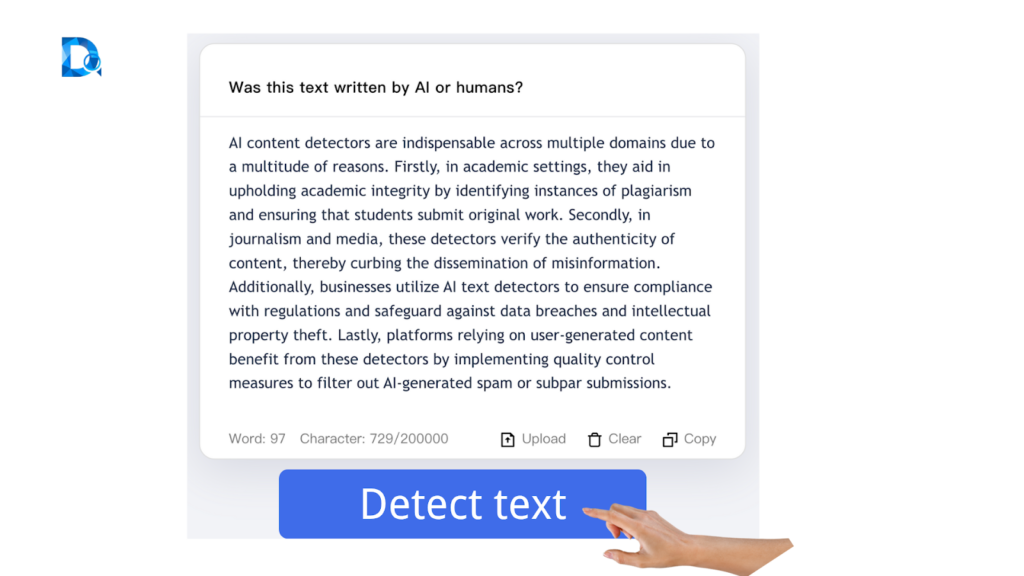
This is where the role of an ai detector shifts from a simple checking tool to a strategic asset. It is no longer just about “catching” AI; it is about certifying quality. It is the gatekeeper that ensures your digital assets remain valuable, rankable, and engaging in a world drowning in synthetic noise.
The SEO Reality: Google, E-E-A-T, and the “Human” Signal
There is a misconception that search engines will penalize you simply for using AI. The reality is more nuanced, yet more dangerous. Search engines like Google prioritize content that demonstrates E-E-A-T (Experience, Expertise, Authoritativeness, and Trustworthiness).
The key letter here is the first “E”: Experience.
Large Language Models (LLMs) have zero life experience. They cannot try a new restaurant, struggle with a specific coding bug, or feel the emotion of a personal tragedy. They predict the next likely word based on training data. As a result, raw AI content often reads as “flat”—it lacks the specific, gritty details that signal to search algorithms that a real person is behind the keyboard.
If your website is filled with detectable, low-perplexity AI content, you are sending a signal to search engines that your site lacks unique value. This can lead to a slow death in rankings. By integrating a professional ai content detector into your publishing workflow, you can identify which pieces of content lack that “human spark” before they go live, saving your site from algorithmic devaluation.
The “Bounce Rate” Trap: Why Readers Leave
Beyond algorithms, there is the human element. Readers are becoming increasingly sophisticated at spotting AI-generated text. We all know the signs: the overuse of transition words like “Furthermore,” the repetitive sentence structures, the lack of strong opinions, and the vague, surface-level summaries.
When a human reader encounters this, they get bored. They stop reading. They click the “Back” button.
In the world of web analytics, this increases your “Bounce Rate” and decreases “Time on Page.” These are critical user signals. Even if you trick the algorithm initially, poor user engagement will eventually tank your visibility.
Using an ai detector acts as a proxy for reader engagement. High AI scores often correlate with low engagement potential. If a tool flags your introduction as 100% AI, it’s a warning sign that your hook is too generic. It pushes you to rewrite it with a punchy, human voice that keeps readers glued to the screen.
Protecting Your Marketing Budget
For businesses that outsource content creation, the risk is financial. You might be paying freelancers or agencies premium rates for original, thought-leadership articles.
If those freelancers are simply prompting a chatbot and sending you the raw output, you are burning money. You are paying for a commodity that you could have generated yourself for free.
Implementing a mandatory scan with an ai content detector for all deliverables is the only way to ensure quality control. It forces your contributors to do the actual work of research, synthesis, and creative writing. It sends a message to your vendors: “We value authentic insight, and we check for it.” This simple step can drastically improve the ROI of your content marketing budget.
How to “Future-Proof” Your Content Strategy
So, how do you build a content strategy that survives the AI era? You need to move from “Creation” to “Curation and Verification.”
1. The Audit
Take a look at your top-performing pages. Run them through an ai detector. If your best traffic drivers are flagged as AI (perhaps due to recent updates or rewrites), prioritize them for a “Human Refresh.” Add personal anecdotes, updated statistics, and unique images to anchor them in reality.
2. The Hybrid Standard
Accept that AI is part of the workflow, but set a standard for the final output. A healthy workflow might look like this:
- Ideation: AI allowed.
- Drafting: Hybrid allowed.
- Final Polish: Human required.
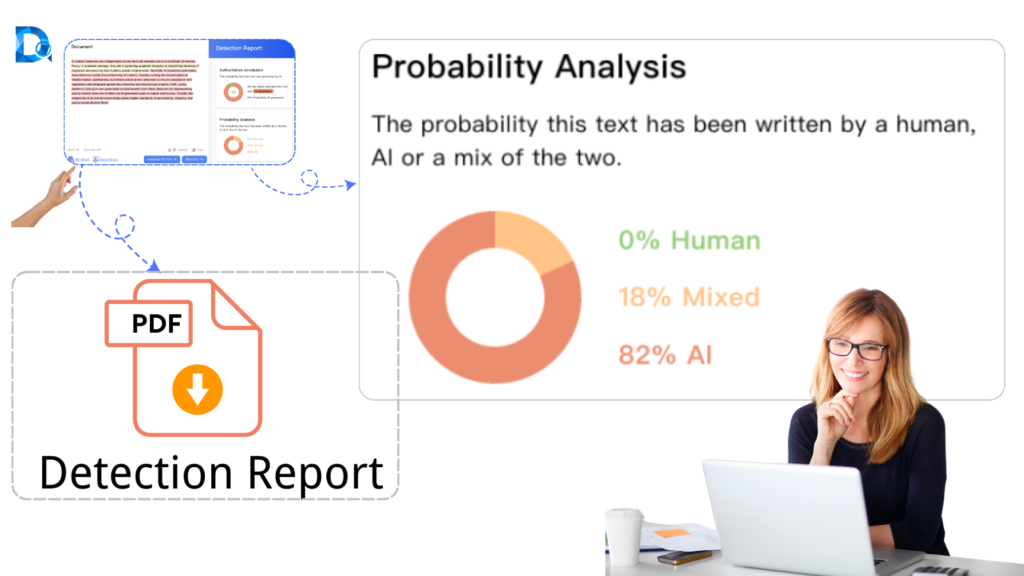
- Verification: Must pass the detection scan with a “Human” or “Low AI” probability score.
3. The “Un-Googleable” Detail
When the detection tool highlights a paragraph as “AI-sounding,” your fix shouldn’t just be to swap synonyms. Your fix should be to add an “un-Googleable” detail—something that isn’t general knowledge. A specific quote, a counter-intuitive observation, or a direct reference to a current event. This breaks the predictive pattern of AI and proves authenticity.
The Ethics of Transparency
As we move forward, audiences will demand transparency. We are already seeing media outlets and brands adding disclaimers like “Written by Human” or “AI-Assisted.”
Being able to stand behind your content is a competitive advantage. In a few years, “Organic Content” might be marketed like “Organic Food”—a premium product free from synthetic fillers.
By using verification tools now, you are building the infrastructure for that future. You are training your team (and yourself) to write in a way that is distinct, valuable, and unmistakably human.
Conclusion: Quality is the Only Moat
In the age of AI, quantity is easy. Quality is hard. And because it is hard, it is valuable.
The flood of AI content is not a threat to great writers or smart businesses; it is an opportunity. It lowers the bar for mediocrity but raises the premium on authenticity. If you can prove that your content provides genuine human insight, you will win the trust of both your readers and the search engines.
Don’t leave your digital reputation to chance. Make the ai content detector the final checkpoint in your creative process. By ensuring that every word you publish carries the weight of human intent, you secure your place in the digital future—no matter how crowded it gets.