The Ultimate Room-by-Room Guide to Styling Bungalow Furniture & Accessories in a US Home
American homeowners are increasingly returning to interior styles that feel grounded and livable rather than trend-driven or overly curated. The bungalow aesthetic, with its roots in early twentieth-century American residential architecture, offers a coherent and durable design framework that suits the scale, layout, and lifestyle of most single-family homes across the country. Unlike design movements that prioritize visual novelty, this approach centers on functionality, material honesty, and room-to-room consistency. For homeowners, designers, and buyers who are assembling or refreshing an interior, understanding how bungalow-style furniture and accessories work in practice — across specific rooms and use cases — is more useful than broad stylistic advice.
This guide works through each major room of a US home, explaining the decisions that shape a coherent bungalow interior rather than offering isolated decorating suggestions. The emphasis throughout is on how furniture selection, accessory placement, and material choices interact to produce a result that holds together over time.
What Defines the Bungalow Aesthetic and Why It Applies So Naturally to American Homes
The bungalow style emerged in the United States during the late nineteenth and early twentieth centuries, shaped heavily by the Arts and Crafts movement and adapted to suit modest, practical residential living. It was never an aspirational or luxury aesthetic — it was built around craftspeople, working families, and homes where rooms served clear daily purposes. The design vocabulary includes natural materials like wood, leather, cotton, and stone; handcrafted or hand-finished surfaces; warm earth tones; and furniture that prioritizes structural integrity over decorative excess.
When people look at bungalow furniture & accessories today, they are often drawn to the way these pieces integrate into rooms without dominating them. A well-chosen bungalow sofa, for instance, sits low to the ground with clean lines and durable upholstery — it occupies space confidently without demanding visual attention. This quality makes the aesthetic especially practical for American homes, which tend to feature open floor plans, combined living and dining areas, and rooms that transition between multiple daily functions.
The range of what qualifies as bungalow furniture & accessories is broad enough to accommodate different household needs and regional climates. Pieces range from solid-wood dining tables and upholstered armchairs to ceramic lamp bases, woven textiles, and hand-thrown pottery. Resources like the Smithsonian Institution’s documentation of the Arts and Crafts movement provide useful historical context for understanding why specific material and form choices became central to this style and why they continue to function well in residential settings.
Importantly, bungalow interiors do not require period-correct reproduction pieces. The underlying logic — materials that age well, forms that serve function, accessories that add warmth without clutter — translates naturally into contemporary purchasing decisions.
Understanding Scale and Room Proportion
One of the more practical challenges when working with bungalow-style furniture is matching the scale of individual pieces to the room they occupy. Bungalow furniture is generally built with generous proportions — broad armrests, thick wooden frames, substantial seat depths — which means a single oversized piece can overwhelm a smaller room, while an under-scaled room arrangement can make a larger space feel sparse and disconnected.
Rooms in older American bungalow homes tend to be more compartmentalized than modern open-plan layouts, and this affects how furniture groupings should be structured. In a smaller living room, one large anchor piece — typically a sofa or a substantial upholstered chair — works better than multiple mid-sized items competing for visual weight. In larger contemporary spaces, the same logic applies in reverse: grouping bungalow furniture into defined conversation areas or functional zones prevents the room from feeling unresolved.
Styling the Living Room with Consistency and Warmth
The living room in a bungalow-influenced home carries most of the visible design weight. It is the room where material choices, furniture forms, and accessory decisions either align into a coherent whole or reveal inconsistencies. Getting the living room right tends to establish a standard that carries through the rest of the house.
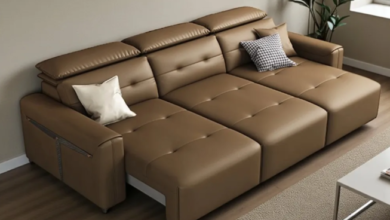
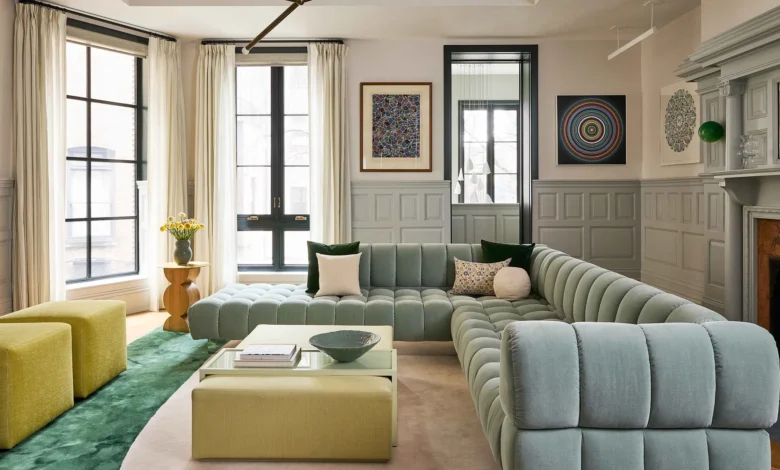
The foundation of a well-styled bungalow living room is a strong furniture grouping anchored by a sofa or settee in a natural fabric — linen, cotton duck, or leather are all appropriate. Upholstery color should sit within the warm neutral range: tawny browns, muted greens, dusty reds, or oatmeal tones. These colors connect naturally to the wood tones that will appear throughout the space on furniture frames, flooring, and accessory items.
Choosing Accessories That Add Function Without Visual Noise
Bungalow accessories in the living room should serve a practical or structural purpose. Table lamps with ceramic or hammered-metal bases, woven throws, hand-thrown pottery on open shelving, and framed botanical or architectural prints all belong in this category. What does not belong is decorative clutter — items placed for novelty rather than for the warmth or texture they contribute to the room.
Rugs are particularly important in the bungalow living room because they define the furniture grouping and introduce pattern and texture simultaneously. Flat-woven or low-pile rugs in geometric or botanical patterns — consistent with the Arts and Crafts design heritage — perform this function well. They also hold up under heavy use without deteriorating in ways that would require replacement within a short period.
The Dining Room: Durability and Daily Use
Dining rooms in bungalow interiors are among the most functional and least fussy spaces in the home. The furniture here is expected to withstand daily use, accommodate extended family gatherings, and remain structurally sound over many years. This is one context where the material quality embedded in the bungalow tradition delivers genuine long-term value.
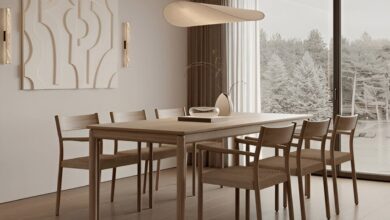
A solid hardwood dining table — typically oak, maple, or walnut — forms the center of the room. The construction should prioritize joinery over surface decoration: mortise-and-tenon joints, hand-sanded surfaces, and a finish that allows the wood grain to show through. Matching chairs should be sturdy and comfortable for extended sittings, with upholstered seats in leather or a durable woven fabric.
Sideboard, Storage, and Accessory Decisions
Storage furniture in a bungalow dining room does practical work without becoming a focal point. A low sideboard or buffet table in the same wood family as the dining table provides storage for linens and serving pieces while offering a surface for accessories — a ceramic bowl, a pair of candlesticks, or a simple plant. The goal is to avoid filling surfaces with items that require constant rearrangement or that compete with the dining table as the room’s anchor.
Window treatments in the dining room should be simple and allow natural light. Woven Roman shades or simple linen panels in a neutral tone align with the aesthetic without drawing attention away from the furniture.
Bedrooms: Rest, Materiality, and Quiet Consistency
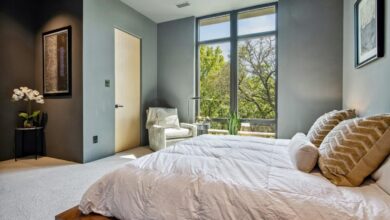
Bungalow-style bedrooms operate on a narrower palette than other rooms in the house. The goal is quiet and consistency rather than expressive design. Furniture selections are straightforward: a solid wood bed frame with a headboard that anchors the room without dominating it, a pair of matching nightstands, and a dresser or armoire that provides adequate storage without occupying excess floor space.
Natural textiles are essential here. Cotton percale or linen bedding in warm whites, soft creams, or subdued earth tones sits easily within the bungalow framework. Heavy cotton or wool blankets folded at the foot of the bed add texture without introducing pattern complexity. The layering of these textiles is what distinguishes a finished bungalow bedroom from a room that simply contains bungalow-adjacent furniture.
Lighting and Accessory Choices in the Bedroom
Bedside lighting in a bungalow bedroom tends toward ceramic or hammered-metal table lamps with opaque or semi-opaque shades that produce warm, diffused light. Overhead fixtures, if present, should be simple — a mission-style flush mount or a basic pendant with a fabric shade. The room should feel settled and unhurried, which means accessories are kept to a minimum: a small tray for personal items, one or two framed pieces on the walls, and perhaps a woven basket for storage.
Wall color plays a supporting role rather than a statement function. Muted sage greens, warm taupes, dusty blues, and off-whites all work within the bungalow palette and age gracefully across changing seasons and light conditions.
Home Office and Utility Spaces: Function Without Compromise
As more American households incorporate dedicated home office or study spaces, the question of how to apply the bungalow aesthetic to work-oriented rooms becomes relevant. The approach here is the same as elsewhere: function first, consistent materials, no visual excess.
A solid wood desk with adequate surface area and storage — drawers, a lower shelf, or a combination — anchors the home office. Paired with an upholstered task chair that shares the material language of the rest of the house, the setup maintains the design continuity that makes bungalow interiors feel unified rather than assembled from separate design decisions.
Built-in shelving or a freestanding bookcase in the same wood tone as the desk allows for organized storage of books, binders, and accessories without requiring secondary furniture purchases. Open shelves also allow for a controlled display of objects — books, small pottery pieces, framed prints — that reinforce the overall aesthetic.
Maintaining Design Consistency Across Rooms
One of the most common challenges in furnishing and accessorizing a home is maintaining visual consistency as individual rooms accumulate furniture and objects over time. In bungalow interiors, this challenge is addressed by adhering to a narrow set of shared materials and tones across every room rather than allowing each space to develop independently.
Wood tones should align across rooms — not necessarily identical, but within the same warm-to-medium range. Upholstery fabrics should come from the same general family. Accessory materials — ceramic, metal, woven natural fibers — should appear in consistent proportions throughout the house. When these elements align, individual rooms feel related to each other without feeling repetitive.
Bungalow furniture & accessories support this kind of consistency naturally because the design tradition itself was built around a coherent material and formal vocabulary. Pieces from this aesthetic family tend to work together even when sourced from different makers or purchased at different times, which makes the style particularly practical for homeowners who furnish a home incrementally.
Concluding Thoughts on the Bungalow Approach to Home Interiors
The bungalow interior is not a trend that requires periodic updating or a style that depends on accumulation to make an impression. It is a framework built on material quality, functional form, and room-to-room coherence — qualities that produce interiors that remain livable and visually settled over long periods.
For homeowners who are furnishing a new home, renovating an existing one, or simply trying to bring more consistency to an interior that has grown disorganized over time, the bungalow approach offers a practical and grounded path forward. The decisions involved are not complicated: choose materials that age well, select furniture that fits the scale of each room, and limit accessories to items that contribute warmth or function rather than noise.
The room-by-room logic outlined in this guide is intended to give those decisions a reliable structure. When each room is considered in relation to the whole — sharing materials, tones, and a consistent sense of purpose — the result is a home that feels considered without feeling designed.