What Lies Beneath: Can You Really Visit a Sunken Ghost Town Without Getting Wet?
When you sit on the shoreline of the Devils Fork State Park campground, looking out over the water, the view is one of absolute tranquility. The water is a startling, Caribbean blue-green, clear enough to see the rocks resting on the bottom ten feet down. The Blue Ridge Mountains rise sharply from the water’s edge, creating a green amphitheater that feels ancient and untouched.
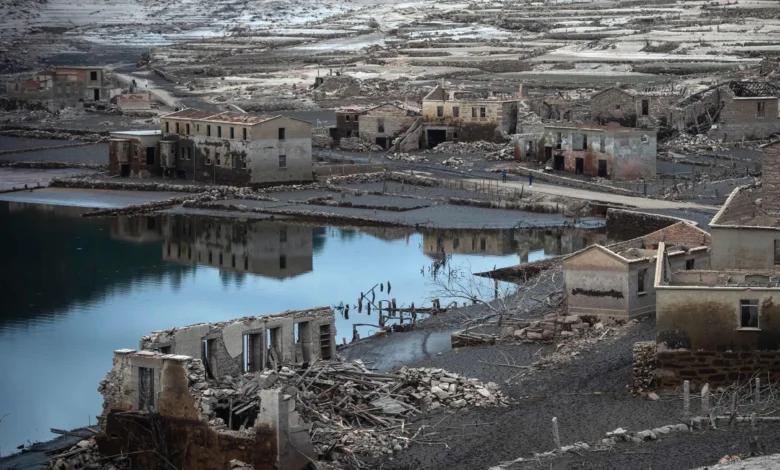
But the tranquility is a deception. The lake is not ancient. In fact, it is younger than many of the people camping on its banks. And directly beneath your kayak, hundreds of feet down in the cold, dark pressure of the deep, lies the skeleton of a world that was drowned on purpose.
Lake Jocassee is a reservoir, created in 1973 by Duke Power as part of the Keowee-Toxaway Hydroelectric Project. To create this “battery” for nuclear power, engineers built a 385-foot dam and flooded the Jocassee Valley. But unlike other reservoirs where the land was scrubbed clean, the Jocassee Valley was, in many ways, frozen in time.
The Valley Before the Flood
Before 1973, the Jocassee Valley was a vibrant, if isolated, community. It was home to a summer retreat known as the Attakulla Lodge, a place where locals gathered for square dances and RC Colas. There was the Mount Carmel Baptist Church, which served the families who farmed the fertile river bottom. There were bridges, roads, and homesteads.
When the decision was made to inundate the valley, the residents were bought out, and the graves from the church cemetery were exhumed and moved to higher ground. But the structures themselves? Many were left behind.
The most famous of these is the Attakulla Lodge. It sits roughly 300 feet below the surface, preserved by the cold, oxygen-poor water. While the wooden upper structures have largely disintegrated over fifty years, the stone foundation and the chimney remain standing—a ghostly hearth waiting for a fire that will never be lit again.
The Underwater Museum
For the technical diver, Jocassee is a holy grail. It is one of the few places in the Southeast where you can dive deep enough to experience nitrogen narcosis while touring a man-made ruin.
One of the most haunting sites is the Mount Carmel Cemetery plot. While the bodies are gone, the headstones were often left or replaced with markers, and the iron fences that marked the family plots still stand. Divers report an eerie sensation swimming through the gates of a cemetery where the “sky” is 130 feet of emerald water.
There is also “The Wall,” a sheer rock face that was once a mountain cliff, now a drop-off for divers. And there is the bridge—a concrete span that once carried traffic over the river, now sitting uselessly in the gloom, crossed only by trout and bass.
The Mystery of the Movie Set
The submerged history isn’t all agricultural and residential. There is a slice of Hollywood down there, too.
In 1972, just months before the floodgates closed, the valley was used as the set for the film Deliverance. While the movie is infamous for its darker themes, it serves as the final visual record of the river as it once was. Legend has it that there are still pieces of production equipment or set props that were abandoned in the rush to leave before the water rose, though most of these claims remain unverified campfire lore.
Seeing Without Diving
You don’t need a dry suit and a trimix certification to experience this history. The clarity of Lake Jocassee—often boasting visibility of 20 to 50 feet—means that on calm days, boaters can drift over the shallower ruins near the shoreline and see the foundations of old homesteads.
Modern fish finders and sonar units have also changed the game. Anglers trolling for trophy brown trout often watch their screens light up with the distinct, hard angles of man-made structures rising from the mud. It is a jarring reminder that the fish are swimming through someone’s former living room.
Conclusion
Knowing what lies beneath changes the way you experience the lake above. It adds a gravity to the beauty. As you paddle out toward the waterfalls or set up your tent at Devils Fork, you aren’t just visiting a state park; you are visiting a watery tomb of Appalachian history.
The cold water that keeps the trout happy is the same cold water preserving the memories of the Jocassee Valley. It is a place of dualities: fire and water, mountain and deep, past and present. Whether you are swimming over the ghost of a bridge or listening to the loons call across the surface, Exploring Lake Jocassee for Campers is as much about imagining what you can’t see as it is about enjoying what you can. The next time you look at that perfect, glassy surface, remember: there is a whole town holding its breath down there.