Why the World’s Most Underrated Business Capital Deserves a Second Look
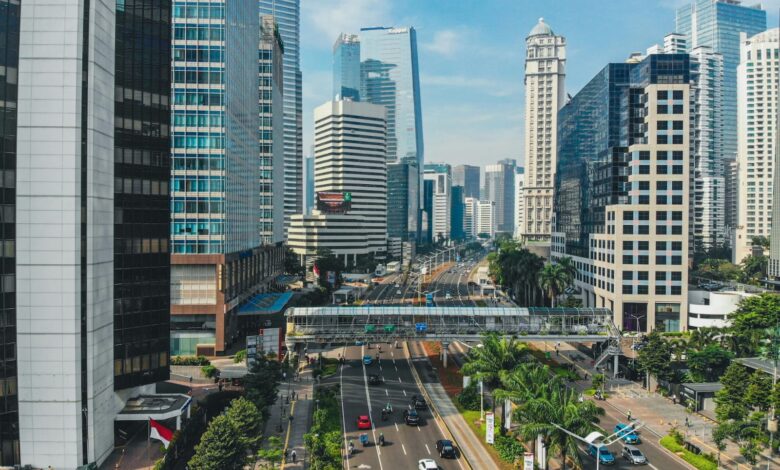
Ask a room of international investors where they’re watching in Southeast Asia. You’ll hear the same names: Singapore, Ho Chi Minh City, Bangkok, Kuala Lumpur. Jakarta, if it comes up at all, arrives with a qualifier such as “too complex,” “too congested,” “we’re monitoring it.”
That hesitation is understandable. It is also, quietly, a reason why certain people are getting very rich.
Jakarta is the economic engine of the world’s fourth most populous nation. Its greater metro area holds over thirty million people. It has sustained growth through conditions that broke far more celebrated markets. The city is loud, dense, gridlocked, and bureaucratically demanding. It is also absolutely alive with commercial energy that most outsiders never get close enough to feel.
The people who do get close tend not to leave.
The fundamentals are hard to argue with. Indonesia’s middle class has been expanding for two decades. Consumer spending is rising. Digital adoption in e-commerce, fintech, and logistics has accelerated faster than almost anywhere in the region. The startup ecosystem has produced multiple unicorns and a generation of operators who know exactly what they’re doing.
Capital has noticed. Deal flow has intensified. The question is no longer whether Jakarta matters. It’s whether you can afford to keep treating it as tomorrow’s problem.
What makes the city genuinely hard for outsiders isn’t the opportunity. That part is legible from a spreadsheet. It’s the texture of operating there.
Jakarta rewards relationship capital above almost everything else. Decisions resolved by a contract in New York or a platform in London are resolved here through networks and trust. That social architecture takes time to understand, and longer to enter.
Executives who parachute in, execute, and depart have a consistent track record of underperformance. Those who stay, who invest in the city rather than merely extract from it, find that the same infrastructure that slowed them down becomes their deepest competitive moat.
Staying requires somewhere to live. And in Jakarta, where you live is a business decision.
The city’s geography is not incidental. SCBD, Sudirman, and Kuningan form the core of the financial district. Proximity to that corridor is a daily calculation in a city where traffic can turn a short distance into an hour-long ordeal. Professionals learn this quickly: a well-located address isn’t a luxury, it’s an operating advantage.
Those on new postings or project-based assignments still test the market before committing. They will find that the options available for an apartment for rent in Jakarta have grown substantially. The stock now matches the expectations of internationally mobile professionals across a wide range of budgets.
For those thinking in longer horizons, the ownership case starts to look compelling. Jakarta’s premium apartment segment, concentrated around the central business district, has historically tracked the city’s economic growth with a lag. Values that look reasonable today have a way of looking prescient in retrospect.
The executives who committed to the city a decade ago are now sitting on assets that have appreciated considerably. The market for an apartment for sale in Jakarta reflects this maturation. Options range from functional city pads to flagship residences, all against a backdrop that analysts consider structurally undersupplied relative to demand.
None of this dismisses the city’s real challenges. Infrastructure gaps exist. Regulatory complexity is genuine. The learning curve for any foreign operator is steep.
But markets without friction don’t produce outsized returns. The friction, for those patient enough to work through it, is precisely the barrier keeping the opportunity from being competed away.
The room that doesn’t mention Jakarta is leaving a gap. Someone else will fill it.