7 Critical Factors Engineers Consider Before Crane Lifting a Wind Turbine
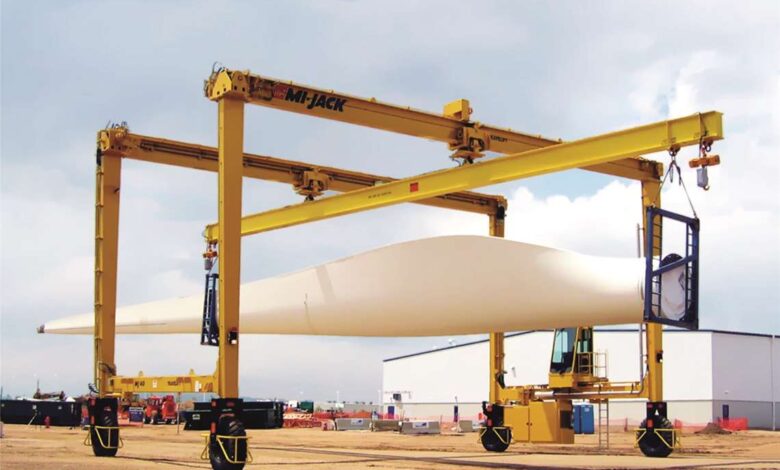
Wind turbine installation and maintenance projects move on tight schedules. Delays at the lift stage are among the most costly disruptions a project team can face, and many of those delays trace back to decisions that should have been made before the crane ever arrived on site. The engineering work that happens in the planning phase — load calculations, site surveys, crane selection, rigging design — determines whether a lift proceeds safely and on time or gets postponed due to conditions no one accounted for in advance.
Engineers working on wind energy projects understand that a turbine lift is not a single event. It is the result of dozens of coordinated decisions, each carrying real consequences for personnel safety, equipment integrity, and project timelines. The seven factors outlined here reflect what experienced lift planners actually examine before committing to a lift operation — not as a checklist, but as interconnected variables that must be understood together.
1. Structural Load Analysis and Lift Point Engineering
Before any crane lifting wind turbine operation begins, engineers conduct a thorough structural load analysis to understand exactly how forces will be distributed across the component being lifted. Wind turbine components — nacelles, tower sections, rotor assemblies — are large, often asymmetric structures with weight distributed unevenly across their frames. Lifting them without precise load data creates risks that cannot be managed after the fact.
For those planning or overseeing these operations, reviewing how experienced operators approach crane lifting wind turbine projects provides useful context for understanding what preparatory engineering should look like in practice.
Why Lift Point Location Changes Everything
The lift points — the locations where rigging attaches to the component — must align with the structural integrity of the component itself. Placing a lift point at a location not designed to bear that load can cause localized deformation, compromise fastener integrity, or create secondary stress on adjacent systems. Engineers review manufacturer specifications and structural drawings to confirm that lift points are both correctly positioned and rated for the expected load under dynamic conditions, not just static weight.
2. Crane Selection Relative to Reach and Rated Capacity
Crane selection is not simply a matter of picking the largest available unit. Engineers evaluate crane capacity in relation to the actual lift radius — the horizontal distance between the crane’s center of rotation and the load — because capacity decreases as radius increases. A crane that can lift a given weight at a short radius may not be rated to do so at the extended radius required by site geometry.
The Role of Load Charts in Decision-Making
Load charts provided by crane manufacturers define the relationship between radius, boom configuration, and rated capacity. Engineers use these charts to confirm that the selected crane configuration can safely handle the load at every point in the lift path, including mid-swing positions where geometry changes. This matters particularly for wind turbine hub and nacelle lifts, where the component must be placed at elevation with precision while the crane maintains capacity at or above the calculated load throughout the operation.
3. Site Bearing Capacity and Ground Conditions
A crane’s rated capacity assumes that the crane itself is properly supported. Ground conditions that cannot support the crane’s outrigger loads will cause instability regardless of the crane’s rated capacity on paper. Engineers assess soil bearing capacity at the proposed crane position before a lift plan is finalized, and this assessment directly influences where the crane can be set up and whether ground improvement measures are needed.
Mat and Cribbing Requirements
On sites with soft or variable soils — common at wind farm locations, which are often in rural, undeveloped terrain — engineers specify crane mats or cribbing to distribute outrigger loads across a larger surface area. The selection of mat size and material is based on the crane’s maximum outrigger load, the soil’s bearing capacity, and the duration of the lift operation. Underspecifying this element is a common source of preventable incidents, particularly on sites where soil conditions vary across a small area.
4. Wind Speed Thresholds and Weather Planning
Wind is the most variable and least controllable factor in any wind turbine lift. The same environment that makes a site suitable for energy generation creates real operational challenges for crane work. Engineers establish wind speed limits for each phase of the lift — component pickup, boom swing, component positioning — because these limits differ based on component geometry, weight, and height above ground.
Rotor and Blade Lifts Require Tighter Wind Criteria
Rotor assemblies and individual blades present a large surface area relative to their weight, which makes them particularly sensitive to wind loading. Even moderate wind speeds can generate side forces that exceed rigging capacity or cause uncontrolled pendulum motion. Engineers working on rotor lifts often reference guidance from standards bodies such as the Occupational Safety and Health Administration alongside manufacturer documentation to establish defensible wind limits. Weather monitoring protocols and lift hold criteria are incorporated into the lift plan to ensure that decisions are made on real-time data, not assumptions.
5. Rigging Design and Hardware Compatibility
Rigging is the physical connection between the crane and the load, and its design must account for geometry, component characteristics, and the forces introduced during the lift. Engineers specify rigging hardware — slings, shackles, spreader bars, hooks — based on the calculated load, the lift angle, and the attachment points on the component. Hardware that is technically rated for the weight but not configured for the lift geometry can still fail under the actual forces generated during the operation.
Sling Angles and Their Effect on Rated Load
When slings are used at angles other than vertical, the tension in each sling leg increases beyond the direct load weight. As the angle between sling legs increases, so does the force each leg must carry. Engineers account for this when specifying sling capacity, ensuring that the selected hardware remains within rated limits under the actual geometry of the lift. This calculation is especially important for long horizontal components like tower sections, where spreader bars are used to manage lift geometry and protect the component’s surface finish and structural integrity.
6. Exclusion Zones and Personnel Safety Planning
Lift operations create hazard zones that extend well beyond the immediate footprint of the crane and the load path. Engineers define exclusion zones — areas that must remain clear of personnel during the lift — based on the load weight, the potential swing radius, and the consequences of a dropped load or rigging failure. These zones are not arbitrary buffers; they are calculated based on what would happen if something went wrong.
Communication Protocols During Lift Execution
Clear communication between the crane operator, lift supervisor, and rigging crew is essential to safe execution. Engineers specify communication methods as part of the lift plan, including signal protocols, radio channels, and the authority structure for calling a hold or abort. On wind turbine lifts, where components are elevated to significant heights and the crane operator may not have direct line of sight to the load, pre-agreed signals and designated spotters are not optional elements — they are fundamental to safe execution.
7. Sequencing and Crane Positioning for Multi-Pick Projects
Most wind turbine installations involve multiple sequential lifts: foundation anchor frames, tower sections, nacelles, and rotor assemblies. The order of these lifts and the positioning of the crane for each one must be planned together, because decisions made for an early lift can constrain what is possible for later ones. Engineers develop lift sequences that account for crane travel paths, repositioning time, and the state of the structure after each component is placed.
How Repositioning Costs Affect Project Scheduling
Repositioning a large crane mid-project is time-consuming and, depending on site conditions, may require additional ground preparation. Engineers plan crane positions to minimize unnecessary repositioning while ensuring that each lift can be performed safely within the crane’s rated capacity at the required radius. Projects that skip this level of sequencing planning often encounter delays mid-installation when a crane position that worked for one lift does not work for the next, and ground conditions or site access limit alternatives.
Bringing These Factors Together Before the Lift Begins
The quality of a wind turbine lift is determined before any equipment is mobilized. Engineers who approach these projects with rigor — working through load analysis, crane selection, site conditions, weather criteria, rigging design, safety planning, and lift sequencing as an integrated set of decisions — are the ones who execute lifts that go as planned. Each of the seven factors described here is interconnected. A decision made about crane positioning affects rigging geometry. Wind criteria affect scheduling. Ground conditions affect crane selection. None of these variables can be treated in isolation.
For project owners, site managers, and procurement teams, understanding what rigorous lift engineering looks like helps set appropriate expectations for timelines, documentation requirements, and the level of detail that responsible crane operators will bring to the planning process. A lift that proceeds without this level of preparation may appear to save time in the short term, but the risks that accumulate from shortcuts in engineering are real and often consequential. The investment in proper pre-lift analysis is not overhead — it is the foundation on which safe, reliable execution depends.