University of Metaphysics vs University of Metaphysical Sciences: A Clear, Evidence-Based Comparison
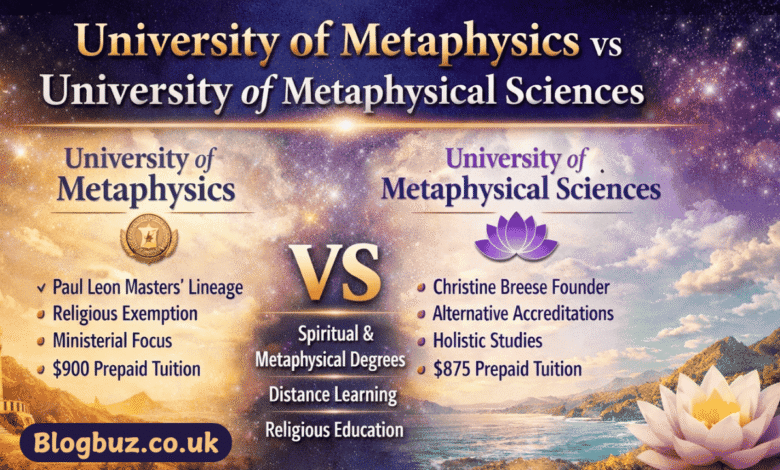
Confusion between the University of Metaphysics vs University of Metaphysical Sciences is common. The names are similar, both offer distance learning in metaphysical and spiritual studies, and both award bachelor’s, master’s, and doctoral-level credentials. Yet they are different organizations with distinct structures, histories, and positions on accreditation, religious status, and outcomes. This in-depth guide breaks down the facts so you can decide which (if either) fits your goals.
Overview of the Two Institutions
University of Metaphysics
- Operates under the umbrella of the International Metaphysical Ministry
- Publicly associates its roots with the teachings of Paul Leon Masters.
- Describes itself as a religious, non-secular educational institution
- Emphasizes religious exemption rather than conventional accreditation
- Offers self-paced, correspondence/online study with ministerial and metaphysical focus
University of Metaphysical Sciences
- Operated by Wisdom of the Heart
- Founded by Christine Breese
- Also frames itself as religious/spiritual education
- Mentions professional association “accreditations” while clearly stating these are not U.S. Department of Education recognized
- Self-paced, distance learning with a structured metaphysical curriculum
Why People Mix Them Up
- Nearly identical names
- Similar subject matter (metaphysics, spirituality, consciousness studies)
- Distance learning format
- Bachelor’s → Master’s → Doctoral pathways
- Religious framing instead of secular higher-education positioning
But under the hood, the legal framing, accreditation language, pricing models, and historical lineage differ.
Accreditation, Recognition, and Religious Status (The Most Important Difference)
If you’re researching University of Metaphysics vs University of Metaphysical Sciences accreditation, this is the section that matters most.
University of Metaphysics
- States that metaphysical education is religious in nature
- Relies on religious exemption to issue degrees
- Does not present itself as accredited by agencies recognized by the U.S. Department of Education
- Positions degrees primarily for ministerial/spiritual contexts
University of Metaphysical Sciences
- References accreditation through groups such as the American Association of Drugless Practitioners and the American Alternative Medical Association
- Explicitly clarifies that these are not USDOE-recognized accreditors
- State dState degrees are not transferable to secular universities and are not eligible for federal financial aid. It operates under a religious-exempt model
Key takeaway:
Neither institution is positioned as a conventional, regionally or nationally accredited university in the U.S. higher-education system. Both clearly frame their programs as religious/spiritual education rather than secular academic degrees.
Programs and Curriculum Style
Both schools provide:
- Self-paced study
- No live lectures required
- Written course materials and exams/assignments
- Spiritual counseling, metaphysical philosophy, consciousness studies, meditation, and ministerial themes
- Degree progression from bachelor’s to doctorate
Differences in tone:
- The University of Metaphysics places greater emphasis on ministerial training and the lineage of metaphysical ministry.
- University of Metaphysical Sciences presents a broader metaphysical psychology / holistic studies flavor alongside ministry.
Tuition and Pricing Structure
Cost is often a deciding factor when choosing between the University of Metaphysics vs University of Metaphysical Sciences cost.
| Headline full price (as advertised) | ~$900 prepaid scholarship | ~$875 paid in full |
| Payment plans | ~$90 down + monthly plan | Multi-year payment plans |
| What tuition covers | Degree level enrolled | Often described as covering multiple degree levels in sequence |
| Financial aid | No federal aid | No federal aid |
Both market themselves as very low-cost compared to traditional universities.
Founders, Lineage, and Organizational Background
- University of Metaphysics is historically connected to Paul Leon Masters through the International Metaphysical Ministry tradition.
- University of Metaphysical Sciences is the creation of Christine Breese and is operated via Wisdom of the Heart in California.
This difference in lineage influences course voice, philosophy, and branding.
Who These Degrees Are (and Are Not) For
A good fit if you want:
- Personal spiritual growth
- Ministerial ordination in a metaphysical context
- A structured path through metaphysical philosophy
- Credentials within spiritual, counseling, or metaphysical communities
- Low-cost, self-paced study without admissions barriers
Not a good fit if you need:
- A degree for corporate HR screening
- Entry into licensed professions
- Transfer credits to traditional colleges
- Immigration credential evaluation as a standard university degree
- Federal student aid eligibility
Public Perception and Due Diligence
When comparing University of Metaphysics vs University of Metaphysical Sciences reviews, you’ll find:
- Students who value the spiritual curriculum and affordability
- Confusion from outsiders who assume these are conventional universities
- Debate online about the meaning of “doctorate” in religious-exempt contexts
Smart due diligence steps:
- Ask how you intend to use the degree
- Verify your state/country rules for using the title “Dr.”
- Read each school’s accreditation and exemption pages carefully
- Review refund policies and completion requirements
- Distinguish spiritual education from secular credentialing
Side-by-Side Summary
| Parent body | International Metaphysical Ministry | Wisdom of the Heart |
| Founder lineage | Paul Leon Masters | Christine Breese |
| Framing | Ministerial / religious metaphysics | Metaphysical psychology / spiritual studies |
| Accreditation stance | Religious exemption | Religious exemption + professional associations |
| Transferability | Not positioned for it | Explicitly says not transferable |
| Tuition | ~$900 prepaid | ~$875 prepaid |
| Format | Self-paced | Self-paced |
Final Verdict: University of Metaphysics vs University of Metaphysical Sciences
The right choice depends on why you want the degree.
- If you resonate with the metaphysical ministry lineage and Sedona-based tradition, University of Metaphysics may feel aligned.
- If you prefer a broader metaphysical studies presentation with references to holistic practitioner associations, the University of Metaphysical Sciences may be a better fit.
But the most important conclusion is this:
These institutions operate in the realm of religious/spiritual education, not conventional, accredited higher education.
Understanding that distinction upfront prevents the confusion that drives most searches for University of Metaphysics vs University of Metaphysical Sciences.
Frequently Asked Questions
Are these real universities?
They are legally operating religious educational institutions, not regionally accredited secular universities.
Can I use the degree professionally?
In spiritual, counseling, or ministerial contexts—often yes. In licensed or corporate contexts, usually no.
Why are they so affordable?
No campus, no faculty overhead in the traditional sense, and self-paced materials.
Which is better?
“Better” depends entirely on whether you want ministerial lineage (UOM) or broader metaphysical studies framing (UMS).
Conclusion: University of Metaphysics vs University of Metaphysical Sciences
When choosing between the University of Metaphysics and the University of Metaphysical Sciences, it’s important to align your educational goals with the institution’s focus. Both offer self-paced, distance learning in metaphysical and spiritual studies, providing bachelor’s to doctoral-level degrees. However, the differences lie in their foundational lineage, curriculum tone, and religious framing.
You May Also Read: David Scoma Florida: Academic Mind, Author, and Spiritual Thinker