Augmented Reality in Product Packaging Marketing
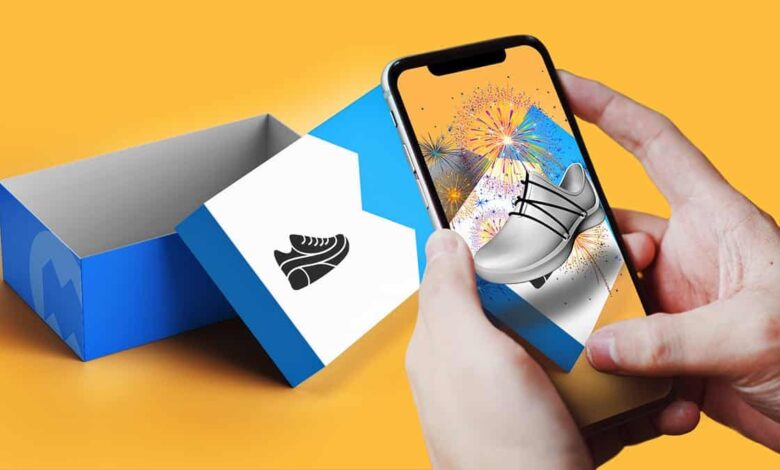
Picture this: A customer opens a package from your brand. They decide to open it and remove a sleek box from inside. But instead of putting it away, they reach for their smartphone. They hold the camera over the box, and suddenly, the static packaging starts to move. A video message from your founder begins to play. Before their eyes, they watch a 3D model of the product turn. An exclusive discount code hovers over the lid. This isn’t science fiction. Welcome to the wizardry of Augmented Reality in Product Packaging Marketing!
In an age where digital and physical are merging, brands are constantly seeking new ways to engage consumers. Attention spans are getting shorter, and the fight for engagement is difficult. And that is what Augmented Reality (AR) offers, by turning your single biggest physical asset into a digital hub for engagement. It is the connector between a physical good and boundless opportunities offered by the online environment.
Why AR? The Need for Deeper Engagement
Packaging has a job to do, and that’s to stave off the sort of spoilage Marvin Gaye sang about. It safeguards the product, showcases branding and shows info. But it is static. After the customer reads the box, it’s pretty much done marketing its job.
AR changes this entirely. It turns your packaging into content, not just a container. By incorporating AR triggers in your design, you continue the life of that customer interaction. The box serves as a gateway to private video content, tutorials, games or social sharing filters.
For people in the modern age, including Gen Z and Millennials, this type of interactive feature is fascinating to them. They want experiences, not products alone. When you add AR, what you’re providing is a “moment” outside of the purchase. It results in a feeling of discovery and delight that transforms a mundane unboxing into something shareable.
How It Works: Marrying Print and Pixels
Believe it or not, the basics of Augmented Reality in Product Packaging Marketing are actually quite simple. It usually operates through a smartphone app. This could be your brand’s current e-commerce app, a social media camera filter, or a standalone AR platform.
A custom logo, a QR code, or other unique mark on the package serves as the trigger. When the user points their smartphone camera at this marker, the AR app superimposes virtual content onto the live image of the box. The effect might be modest, like a pop-up video; it might be elaborate, such as a 3D animation that looks as if it’s sitting on your table.
The appeal of this technology is that it doesn’t require a user to purchase a special headset or learn some fussy system. It employs the things people are already carrying in their pockets all the time. This low barrier to entry overall makes AR a viable and dynamic alternative for brands, big, small and everything in between.
Elevating the Unboxing Experience
We’ve talked a lot about how important the unboxing experience is. It is your brand’s first point of physical contact with a customer. AR kicks that experience up a notch.
When a customer purchases a product and scans the packaging — whether it’s retail packaging in the form of a rigid box or a simple cardboard box — an augmented reality message appears thanking them for their purchase. In that instant, the experience feels personal and thoughtfully designed. It creates an emotional connection that paper and ink alone cannot achieve.
Imagine someone buying an expensive watch. They bring it home, open the beautifully crafted rigid box, and scan the retail packaging. Instantly, a video appears showing watchmakers carefully hand-assembling the timepiece. Suddenly, the product is no longer just an object — it carries a story. It has soul.
For social media, this “wow factor” is extraordinarily potent. People love to exchange special experiences. AR unboxing is Instagrammable by nature. It also promotes user-generated content, which, apparently, is the most trusted form of marketing at the moment. Your customers market for you, just by sharing the magic of your packaging.
Practical Applications Beyond the “Wow”
As enjoyable as the novelty of AR is, its use cases are very practical in terms of marketing and sales. Consider these use cases:
- · Instructions and Assembly: Some products have limited space available for packaging. AR can project interactive 3D assembly instructions directly on top of the product—helping clarify and limit customer-service calls.
- · Authentication and Use Prevention: AR-markers can be used in luxury brand goods for security. Accompanied by a scannable box that verifies the product to shield you and your brand from counterfeit products.
- · Trial and Visualisation: For beauty or home decor brands, AR across packaging can allow customers to “try on” a shade of lipstick or see how a piece of furniture looks in their room without fully purchasing the item.
- · Exclusive Content and Loyalty: A scan of the box could lead to a special loyalty reward, a percentage off the next purchase or an invitation to a private online community. This creates repeat business and reinforces the customer relationship.
Role of the Packaging Manufacturer
Implementing AR as part of your packaging approach is more than a good idea. It is a matter of proper technique in the physicality of doing it. The AR markers have to be clearly printed and in exactly the right colour. That can mess up the experience if a logo is too blurry in the viewfinder or if the colours are off and the trigger doesn’t work.
This is when only a high-quality packaging company can get you through. You need a partner who can provide high-quality printing at resolutions of 1440dpi, unit after unit. The physical box is the key to unlock the digital door. If the key is poorly crafted, the door remains closed.
The brands with the most aspirational new ideas look to leaders like this who understand these technically-driven requests. For example, the Blue Box Packaging custom boxes are not only structurally stable and appealing, but they also look absolutely fantastic thanks to their high print accuracy or precision. When it is necessary to interact digitally with a surface, you need the uniformity that only comes via professional manufacture. A sharp printed image, a colour contrast and a decent substrate are all key to successful AR campaigns.
Designing for the Digital Layer
When designing an AR campaign, both the physical and digital components should be considered in the design process. The packaging also has to be something eye-catching on a shelf. But it also has to work in the AR trigger without feeling like a tacked-on afterthought.
An unobtrusive icon informing users to “Scan with our app” would be integrated within the design. The marker itself — maybe it’s your logo — must be high-contrast and sufficiently recognisable by the software. Your graphic designers should work together with the AR developers on this.
Additionally, the digital content needs to be comparable in value to what is included on extended packaging. If your professional packaging services have brought to life an exquisite rigid box with foil stamping, and the AR video looks grainy and cheaply made, well then it falls flat. The virtual magic has to be as luxe as the box in the customer’s hands.
How to Get Ahead in a Competitive Industry
The USA marketplace is filled with options. As a box packaging supplier in USA, you recognise that consumers are constantly overwhelmed with options. Standing out requires innovation. In packaging, AR is still somewhat of a…well, it’s not uncharted territory but more like the wild west. Though it is expanding quickly, it’s not yet everywhere. Which is to say, by adopting it now, you have the opportunity to stand as a leader, and in mind of those customers as pioneers.
When idiots adopt, they get the “newness value”. A sharing point: Consumers are more inclined to play with and share an AR experience because it feels cool and is new. * By the time AR is standardised, your brand will already be established as an innovator in the space.
Moreover, AR provides valuable data. You can see how many users have scanned their packages, what content they have seen and for how long they engaged. For marketers, this data is gold. It offers customer behaviour data that was unavailable from physical packaging.
Sustainability and Digital Efficiency
There’s a fascinating interplay here between AR and sustainability. If you shift instructional content, user manuals, and marketing materials all to the digital space, you can reduce the paper and inserts inside your box. This enables much easier and environmentally friendly customised packaging.
Instead of printing a thick manual, an AR scan can call upon a digital version that is updatable at any time. This minimises waste and also makes the packaging more user-friendly. It fits the attitudes of eco-minded consumers who like it when brands try to leave a smaller environmental footprint.
Mix sustainable materials with the latest in digital tech, and you have a hell of a brand story. You’re telling your customers that you care about the planet, and that you take pride in providing them with a high-end, contemporary experience. It’s this overarching vision that sets leading players in their industry.
Conclusion: The Future is Interactive
The era of passive packaging is coming to an end. People do not want to buy only a product anymore; they want to live a story. They’re in search of interaction, personalisation, and surprise.
AR in Packaging Product Marketing does all of that and more. It makes an inanimate thing into a dynamic marketing channel. It creates stronger relationships, fosters social sharing and offers users a value. It bridges the physical box and the digital world.
The biggest difference for any successful AR campaign is the quality of that physical packaging itself. A technology is only as capable as the canvas it’s printed on. That’s why it is crucial to entrust a reliable manufacturer.
For businesses willing to delve into this remarkable frontier, Blue Box Packaging comes forth with custom packaging solutions tailored to be the fulcrum. With the power of augmented reality, you can now make that unboxing experience truly unforgettable by combining their brilliant box construction with high precision and the immersiveness of digital technology. The future of packaging is not only here, but it is also interactive. Are you ready to give life to your boxes?