How Does Vinted Make Money? A Complete Breakdown of Vinted’s Business Model
Vinted has become one of the largest online marketplaces for second-hand fashion in Europe and beyond. With millions of users buying and selling pre-owned clothing every day, many people wonder: how does Vinted make money if it doesn’t charge sellers commission fees? Unlike platforms such as eBay, Depop, or Poshmark, Vinted promotes itself as a “no selling fees” marketplace. Sellers can list items for free and keep 100% of the selling price. So where does the revenue come from? In this in-depth guide, we’ll break down exactly how Vinted makes money, explore its business model, analyze its revenue streams, and explain why this approach has helped the company grow into a billion-euro business.
What Is Vinted?
Vinted is an online peer-to-peer marketplace that enables users to purchase, sell, and exchange second-hand apparel and accessories, and lifestyle items. Founded in 2008 in Lithuania, the platform has expanded to over 20 countries and serves tens of millions of registered users globally.
The company’s mission is to make second-hand fashion the first choice worldwide. By eliminating traditional seller fees, Vinted has created a marketplace that encourages more people to list items, increasing supply and driving buyer engagement.
But a free-to-sell marketplace still needs revenue to operate. Let’s explore how that works.
How Does Vinted Make Money?
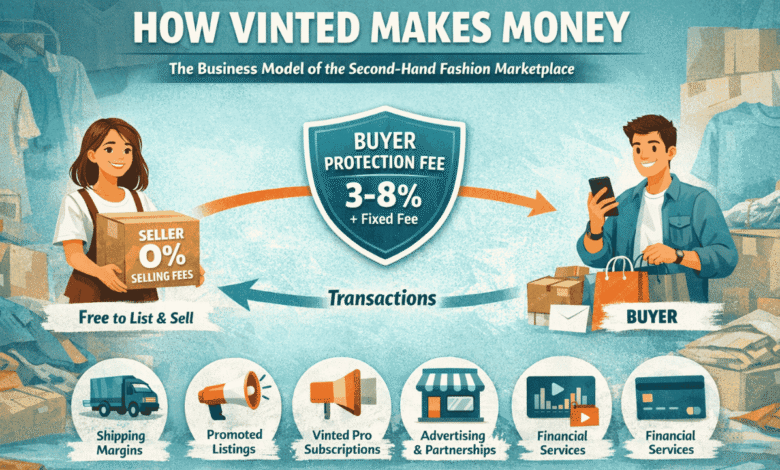
Vinted generates revenue through multiple income streams, with its Buyer Protection Fee being the primary driver. In addition, the company earns money from promoted listings, shipping partnerships, subscriptions, advertising, and more.
Here are the main ways Vinted makes money:
- Buyer Protection Fees
- Shipping and logistics margins
- Paid promotional features for sellers
- Vinted Pro subscriptions
- Advertising and brand partnerships
- Value-added financial services
Let’s examine each in detail.
Buyer Protection Fee (Primary Revenue Source)
The main answer to the question “how does Vinted make money?” is simple: Vinted charges buyers, not sellers.
What Is the Buyer Protection Fee?
When someone purchases an item on Vinted, they pay a mandatory Buyer Protection Fee in addition to the listed price. This fee typically consists of:
- A small fixed fee (varies by country)
- A percentage of the item’s selling price
Although exact numbers vary by market, the fee often ranges from 3% to 8% of the transaction value, plus a fixed amount.
What Does the Buyer Protection Cover?
The fee covers several services, including:
- Secure payment processing
- Fraud prevention
- Transaction monitoring
- Customer support
- Refund handling
- Dispute resolution
- Money-back guarantee if the item doesn’t arrive or isn’t as described
By positioning the fee as “protection,” Vinted justifies the additional charge while maintaining trust within the marketplace.
Why This Model Works
This structure gives Vinted a powerful advantage:
- Sellers are attracted by zero selling fees.
- More sellers mean more listings.
- More listings attract more buyers.
- Buyers fund the platform through protection fees.
With millions of transactions occurring regularly, even a small percentage fee generates substantial revenue.
Shipping and Logistics Margins
Another important source of Vinted’s revenue comes from shipping partnerships.
How Shipping Works on Vinted
When a buyer purchases an item, they also pay for shipping. Vinted integrates directly with major courier services and offers prepaid shipping labels at negotiated rates.
Here’s how Vinted benefits:
- Vinted negotiates discounted bulk shipping rates with logistics providers.
- Buyers pay a slightly higher rate.
- Vinted keeps the margin between the negotiated cost and the charged price.
This creates a scalable revenue stream tied directly to transaction volume.
Why Shipping Margins Matter
Shipping is essential for every transaction. Because it’s unavoidable, this revenue stream is consistent and predictable. As transaction volume grows, so does Vinted’s shipping income.
Paid Promotional Features for Sellers
Although Vinted doesn’t charge sellers commission fees, it does offer optional paid promotional tools.
These features help sellers increase visibility and sell items faster.
Bumping Listings
Sellers can pay to “bump” an item to the top of search results. This increases exposure and improves the chances of a sale.
Closet Spotlight
This feature promotes an entire seller’s wardrobe, showcasing all their items to more buyers for a set period.
Why This Strategy Works
- Selling remains free.
- Casual sellers aren’t pressured.
- Power sellers pay for increased exposure.
- Revenue increases without damaging the brand’s “no selling fees” message.
This freemium approach balances user growth with monetization.
Vinted Pro (Subscription Model)
In select markets, Vinted offers Vinted Pro, a subscription-based service aimed at professional sellers and small businesses.
What Vinted Pro Offers
- Business accounts
- Bulk listing tools
- Advanced analytics
- Streamlined inventory management
- Professional storefront features
Instead of charging per sale, Vinted may charge a monthly subscription fee for Pro users.
This creates recurring revenue and supports sellers who operate at scale.
Advertising and Brand Partnerships
Vinted also generates revenue from advertising and brand collaborations.
In-App Advertising
Brands may pay to:
- Promote sustainable fashion campaigns
- Run sponsored placements
- Feature targeted promotions
Strategic Partnerships
Vinted partners with companies in:
- Logistics
- Payments
- Sustainability initiatives
- Circular fashion campaigns
Although advertising is not its primary source of income, it provides incremental revenue and diversifies its income streams.
Financial and Payment Services
As a marketplace that processes millions of transactions, Vinted also benefits from financial infrastructure.
Possible revenue elements include:
- Payment processing margins
- Currency conversion fees
- Cross-border transaction optimization
- Wallet services
While less visible to users, these backend financial efficiencies contribute to overall profitability.
Why Doesn’t Vinted Charge Seller Fees?
Most marketplaces charge sellers a commission, often between 10% and 20%. So why does Vinted take a different approach?
Lower Barrier to Entry
Zero selling fees encourage:
- More listings
- Casual participation
- Decluttering users
- Increased inventory diversity
Competitive Advantage
Compared to competitors:
- eBay charges seller fees.
- Depop charges transaction fees.
- Poshmark takes significant commission percentages.
Vinted differentiates itself by being seller-friendly.
Volume Over Margin
Instead of high seller commissions, Vinted focuses on:
- High transaction volume
- Scalable buyer fees
- Low-cost operations
- Operational efficiency
This volume-driven strategy has proven effective.
Vinted’s Financial Growth
Vinted has experienced rapid growth over the past few years.
Key growth factors include:
- Expansion into multiple European markets
- Increased demand for second-hand fashion
- Sustainability trends
- Economic pressure is driving resale adoption
- Improved operational efficiency
The resale fashion market is growing rapidly, and Vinted is well-positioned within that trend.
As transaction volume increases, Buyer Protection Fees scale proportionally — making the model highly sustainable.
How Vinted’s Business Model Compares to Competitors
To fully understand how Vinted makes money, it helps to compare its model to others.
| Vinted | Buyers | Buyer Protection Fee |
| eBay | Sellers | Final value fees |
| Depop | Sellers | Transaction fees |
| Poshmark | Sellers | Commission per sale |
Vinted’s approach is unique because it shifts monetization away from sellers.
This makes the platform attractive to everyday users who want to declutter without losing profit to commissions.
Is Vinted Profitable?
Vinted has reported strong financial performance over the past few years. Its ability to combine:
- Lean operations
- Scalable digital infrastructure
- High transaction volume
- Multiple revenue streams
has contributed to improving profitability.
The company’s buyer-focused monetization strategy appears sustainable, especially as second-hand fashion becomes mainstream.
Why Vinted’s Model Is Sustainable
Several factors make Vinted’s revenue model resilient:
Trust-Based Monetization
Buyer Protection Fees directly support secure transactions.
Scalable Infrastructure
Digital marketplaces have low marginal costs per transaction.
Growing Resale Market
Second-hand fashion continues to expand globally.
Network Effects
More buyers are attracted to more vendors, and the reverse is also true.
Optional Upselling
Promoted listings and subscriptions generate additional revenue without alienating users.
Future Revenue Opportunities for Vinted
Looking ahead, Vinted could expand monetization through:
- Premium buyer memberships
- Expanded logistics services
- Cross-border trade optimization
- Integrated payment solutions
- AI-powered seller tools
- Sustainability certification services
As the circular economy grows, Vinted is positioned to capture additional value.
Frequently Asked Questions (FAQs)
Does Vinted charge sellers fees?
No. Standard sellers do not pay listing fees or commission fees. They keep 100% of the selling price.
Why do buyers pay extra on Vinted?
Buyers pay a Buyer Protection Fee that covers secure payment processing, support, and refund guarantees.
Is Vinted’s Buyer Protection mandatory?
Yes. The Buyer Protection Fee applies to every transaction.
How does Vinted make money without commissions?
Vinted earns money primarily through Buyer Protection Fees, shipping margins, promoted listings, subscriptions, and advertising.
Is Vinted profitable?
Vinted has demonstrated strong financial growth in recent years, supported by scalable operations and increasing transaction volume.
Final Thoughts: How Does Vinted Make Money?
So, how does Vinted make money?
The platform has built a clever, scalable revenue model centered on buyer-funded protection fees rather than seller commissions. By removing barriers to sellers, Vinted attracts a massive volume of inventory. Buyers fund the platform through small protection fees attached to each purchase.
You May Also Read: RYMA LTD: Company Overview, History, Business Activities, and Dissolution Details