The Complete US Buyer’s Guide to Turnkey Packaging Solutions: What to Demand From Your Provider
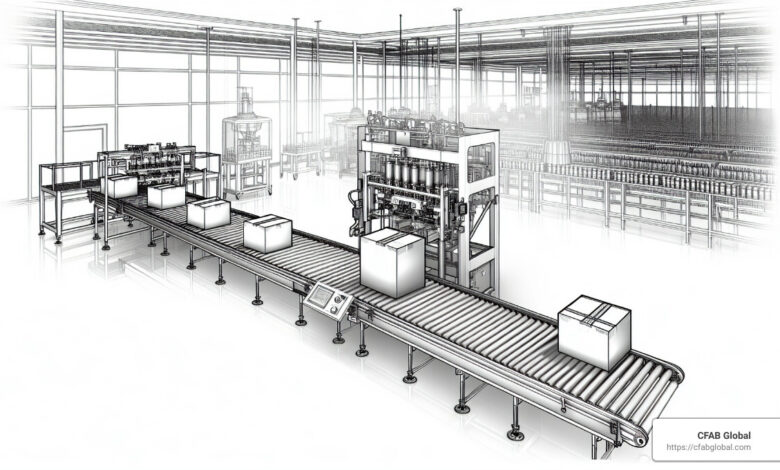
Packaging operations sit at a critical intersection of production efficiency, regulatory compliance, and product integrity. For manufacturers, distributors, and contract packagers operating across the United States, the decision to move toward an integrated packaging system is rarely made in isolation. It follows a series of operational failures, cost pressures, or capacity constraints that make piecemeal approaches no longer viable.
What changes the conversation is not the appeal of a new technology or vendor pitch — it is the recognition that fragmented packaging infrastructure introduces compounding risk. When equipment, materials, labor, and process design are sourced from disconnected suppliers, no single party owns the outcome. That gap in accountability is where most packaging problems originate.
This guide is written for operations managers, procurement directors, plant engineers, and business owners who are evaluating whether a fully integrated packaging approach makes sense for their facility — and what they should actually be looking for when they engage a provider.
What Turnkey Packaging Solutions Actually Mean in Practice
A turnkey packaging solution refers to a complete, end-to-end packaging system designed, supplied, installed, and commissioned by a single provider or tightly coordinated team. The term “turnkey” has a specific operational meaning: the client receives a functioning system ready to run, rather than a collection of components that still require integration, calibration, and process design after delivery.
For buyers evaluating their options, this Turnkey Packaging Solutions guide outlines what a structured, provider-led system looks like across real facility environments — from line design through commissioning and operator training.
The distinction matters because many providers market themselves as turnkey without actually delivering integrated responsibility. A vendor who supplies equipment but leaves process validation, line balancing, and staff training to the buyer is not delivering a turnkey outcome — they are delivering equipment with a services label attached.
The Difference Between a Vendor and an Integrated Provider
A vendor sells products or equipment. An integrated provider takes responsibility for the entire system performing as specified. That difference is not semantic — it has direct consequences for how risk is distributed when something goes wrong.
In a traditional vendor relationship, a buyer might source filling equipment from one company, labeling systems from another, and conveyance infrastructure from a third. Each vendor is accountable for their individual component but not for how those components perform together. When throughput falls short of targets, each vendor points to another part of the line as the source of the problem. Resolution is slow, expensive, and often incomplete.
An integrated provider assumes responsibility for the combined output of the system. This structure creates a direct incentive for the provider to design each element with system-level performance in mind from the beginning, rather than treating integration as someone else’s problem.
Scope Definition as a Risk Management Tool
One of the most important early conversations in any turnkey engagement is scope definition — not as a contracting formality, but as a genuine operational planning exercise. A clearly defined scope establishes what the provider is responsible for delivering and what success looks like in measurable terms.
Without scope clarity, buyers often find that critical functions fall into gray zones. Who is responsible for utility connections? Who owns the validation documentation? Who trains the operators? These questions, left unanswered until implementation, become the source of the most expensive project delays.
A qualified provider will insist on defining scope thoroughly before committing to a delivery timeline, because they understand that ambiguous scope is a risk to their own delivery performance. If a provider is reluctant to formalize scope in detail, that reluctance itself is a signal worth noting.
How Integrated Line Design Affects Long-Term Operating Cost
Packaging line design is one of the most consequential decisions a manufacturing operation will make — not because of its immediate capital cost, but because the design determines the operating cost and flexibility of the line for years after installation. Poorly designed lines are difficult to adapt, prone to bottlenecks, and costly to maintain. Well-designed lines perform consistently and can absorb reasonable changes in product format or volume without requiring wholesale reconfiguration.
The design process in a true turnkey engagement begins with the client’s production requirements — throughput targets, product characteristics, format range, and downstream distribution needs — and works backward to determine what equipment, layout, and control architecture will reliably meet those requirements.
Bottleneck Engineering and Throughput Consistency
Every packaging line has a bottleneck — a point in the process where capacity is most constrained. In well-engineered systems, that bottleneck is identified intentionally and managed through buffer design, upstream and downstream speed matching, and appropriate accumulation. In poorly designed systems, the bottleneck emerges unexpectedly and becomes a persistent drag on output.
The distinction between managed and unmanaged bottlenecks is significant. An unmanaged bottleneck forces operators to make real-time decisions about line speed, reject handling, and product flow that were not planned for in the original design. Over time, those ad hoc decisions accumulate into inconsistent output, increased product loss, and elevated labor demand — all of which represent real cost.
A provider with genuine line design capability will address bottleneck risk during the engineering phase, not after installation. This requires experience with how similar lines perform under real production conditions, not just theoretical throughput calculations.
Format Flexibility and Future Capacity Needs
Most operations do not run a single product indefinitely. Product lines evolve, formats change, and volume requirements shift over time. A packaging line that cannot accommodate reasonable variation without significant mechanical intervention becomes a constraint on business flexibility.
During the design phase, buyers should be explicit about the range of products and formats the line may be expected to handle across its useful life. Providers who engage seriously with this question will design changeover capability, tooling provisions, and control flexibility into the original system rather than leaving format adaptation as a future problem. Those who treat format flexibility as an upgrade to be addressed later are structuring a relationship that will require ongoing capital expenditure to maintain basic operational adaptability.
Equipment Selection, Qualification, and the Commissioning Standard
Equipment selection within a turnkey packaging system is not simply a matter of choosing components that meet individual specifications. It requires selecting equipment that performs reliably within the specific context of the line — accounting for upstream and downstream interactions, environmental conditions, product characteristics, and operator capability.
The qualification process, often referenced in regulated industries through frameworks such as those outlined by the U.S. Food and Drug Administration for equipment validation, establishes documented evidence that equipment performs as intended under defined conditions. Even outside regulated industries, a structured qualification process reduces commissioning risk and creates a baseline for maintenance and troubleshooting.
Why Commissioning Is Not the Same as Installation
Installation places equipment in its operating environment and connects it to utilities. Commissioning verifies that the installed system performs according to its design specifications under real production conditions. These are not the same activity, and conflating them is one of the more common mistakes buyers make when accepting delivery of a new line.
A thorough commissioning process includes mechanical verification, control system validation, trial production runs at varying speeds and formats, and documentation of any adjustments required to achieve specified performance. It also includes operator training conducted on the actual production system, not on a demonstration unit or through generic instruction.
Buyers should request a commissioning protocol in advance and confirm that sign-off on commissioning is tied to demonstrated performance, not simply to equipment startup.
Post-Installation Support and Ongoing Reliability
A turnkey packaging solution does not end at commissioning. The initial period of production — typically the first several months of operation — is when design assumptions are tested against real-world conditions. During this period, access to responsive technical support is critical. Problems that emerge early, addressed promptly, rarely become systemic. Problems that are left unresolved tend to compound.
Buyers should clarify what post-installation support is included in the engagement and what the response protocol looks like for technical issues. This includes remote diagnostics capability, spare parts availability, and the process for accessing engineering support when line adjustments are needed.
Evaluating Provider Capability Before You Commit
The decision to engage a turnkey packaging provider is not reversible in the short term. Once a provider has designed and begun implementing a system, switching mid-project is expensive and operationally disruptive. The evaluation process before commitment is therefore one of the most important investments a buyer can make.
Provider evaluation should focus on demonstrated capability in three areas: system-level engineering experience, project management discipline, and post-installation accountability. Each of these can be assessed through specific questions and requests during the qualification process.
References, Site Visits, and Operational Evidence
The most reliable evidence of a provider’s capability is a functioning installation that has been operating for at least one year under real production conditions. Buyers should request references from clients with comparable product types, line complexity, and volume requirements — and should conduct site visits where possible.
A site visit to an existing installation reveals things that no proposal document can: how well the line was integrated, how clean and organized the installation is, how knowledgeable the operators are, and how the client characterizes their experience with the provider’s responsiveness to post-installation issues.
• Ask references specifically about how the provider handled problems that emerged during commissioning or early production — the response to difficulty is more informative than the absence of it.
• Confirm that the provider’s engineering team, not a subcontracted third party, will be responsible for your system design and commissioning.
• Request documentation from a comparable completed project to assess the quality and completeness of their deliverables.
• Clarify how scope changes are managed and priced if production requirements shift during the implementation period.
• Understand the contractual structure for performance guarantees and what recourse exists if throughput or reliability targets are not achieved post-commissioning.
Concluding Perspective: What a Serious Provider Will and Will Not Do
The market for turnkey packaging solutions in the United States includes providers with genuinely integrated capability and providers who use the term without the operational infrastructure to support it. Distinguishing between the two requires moving past proposal language and into substantive evaluation of how the provider operates — how they design, how they manage projects, and how they respond when systems do not perform as expected.
A serious provider will engage your production requirements with rigor before proposing a system. They will define scope clearly, commit to documented performance standards, and treat commissioning as a demonstration of capability rather than a formality. They will have references they are confident in and installations they are willing for you to visit.
What a serious provider will not do is overstate flexibility, understate complexity, or leave integration responsibility undefined. They will not commit to timelines that cannot be supported by their actual project capacity, and they will not treat post-installation support as an afterthought.
For operations teams facing real packaging infrastructure decisions, the framework is straightforward: hold providers accountable for system-level outcomes, not component-level delivery. Demand scope clarity before contracts are signed. Verify capability through operational evidence, not sales presentations. And treat the post-commissioning relationship as an ongoing part of the engagement, not a phase that ends when the line starts running.
Packaging infrastructure built on that foundation will perform consistently, adapt to operational change, and support production goals across a reasonable equipment life cycle. That outcome is achievable — but only when the selection process is treated with the same discipline that the production environment demands.