How to Get Skins in Rust: A Player-Friendly Guide
Getting skins in Rust is part customization, part collecting, and part understanding where different cosmetics come from, so players who want to compare weapons, armor, doors, boxes, and deployables often start with here Rust Skins while deciding which designs actually fit their wipe routine, base layout, and PvP loadout.
What Rust Skins Are Used For
Rust skins change the appearance of in-game items without changing their core performance. A skinned AK does not deal more damage, a skinned metal facemask does not add protection, and a decorated box does not store more loot. The value is visual and practical in a different way: skins help players build a recognizable style, organize storage, match team kits, or make frequently used gear feel more personal.
| Skin Type | Common Use in Rust |
| Weapon skins | Used for PvP kits, raid weapons, roaming setups, and personal loadout style |
| Armor and clothing skins | Used for coordinated outfits, clan kits, snow or desert themes, and roleplay looks |
| Door and building skins | Used for base design, room themes, stronger visual identity, and easier navigation |
| Box and deployable skins | Used for storage organization, loot rooms, vending areas, and cleaner base management |
Main Ways to Get Skins in Rust
Players can get Rust skins through official game-related systems, marketplace purchases, trading, drops when available, and community-driven skin discovery. The exact options can vary depending on the item, the platform, and current availability. Some skins are easy to find because many players list them, while others may have fewer listings or stronger collector demand.
Buying Skins
Buying is the most direct method because it lets you choose a specific item instead of waiting for chance. Before purchasing, check that the skin applies to the exact item you want. Rust has many weapon, clothing, armor, door, box, tool, and deployable cosmetics, and similar names can sometimes confuse newer players. Current market data matters more than old videos or outdated price screenshots.
| Method | What to Check First | Best For |
| Marketplace purchase | Current listings, item compatibility, demand, and fees | Players who want a specific skin quickly |
| Steam inventory trading | Trade restrictions, item value, and whether both sides match fairly | Players comfortable comparing skins and negotiating |
| Game-related drops | Availability, event rules, account requirements, and claim windows | Players who follow Rust events and creator campaigns |
| Workshop discovery | Community interest, item type, theme, and whether the design is accepted | Players who like following upcoming skin concepts |
Trading for Skins
Trading can be useful if you already have Rust items in your Steam inventory and want to exchange them for different cosmetics. This approach requires patience because values can shift and demand is not the same for every skin. A clean, popular weapon skin may attract more interest than a niche deployable, but collector-focused items can behave differently depending on scarcity and reputation.
Getting Skins Through Drops and Events
Some Rust skins may become available through promotional drops, creator campaigns, or event-based systems. These are usually tied to specific conditions, such as watching eligible content or claiming within a limited window. Availability is not constant, so players should always check current requirements instead of assuming an older drop is still active.
- Confirm that the drop or event is currently active before spending time on it.
- Check whether the skin is tied to an account, platform, creator, or claim deadline.
- Do not rely on old videos unless the requirements are still confirmed.
Choosing Skins That Fit Your Playstyle
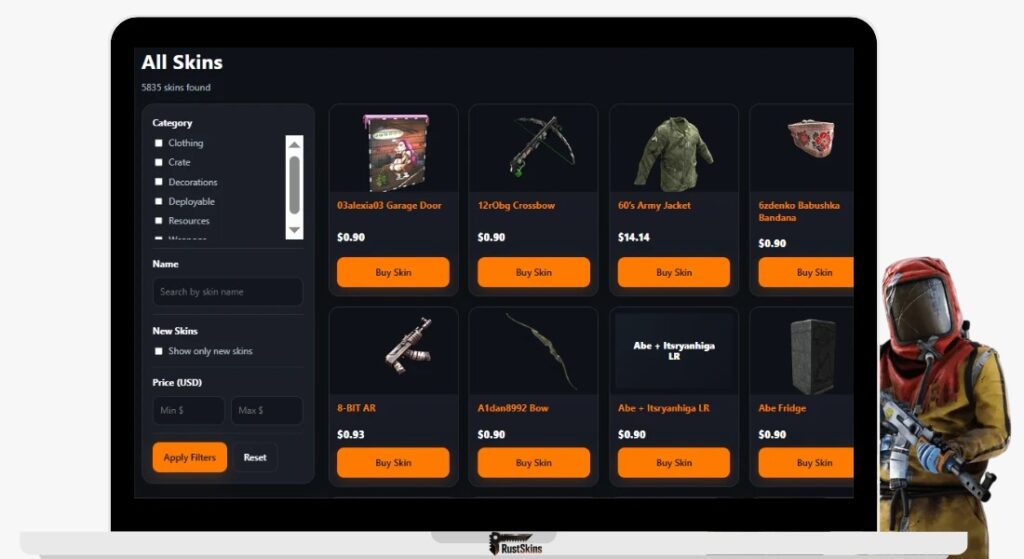
A PvP-focused player will usually get more value from weapon, facemask, chestplate, hoodie, and pants skins because those items appear often during roaming and raids. A builder or base designer may prefer doors, garage doors, rugs, boxes, and signs because they shape the look of the base every day. Farmers may care more about tool skins and simple clothing sets that feel recognizable without being distracting.
Market and Inventory Considerations
Rust skins can sit in a Steam inventory, be used in-game, and in many cases be compared with current market listings. However, market value is never fixed. Demand may rise or fall because of player trends, item popularity, visual style, or general trading activity. Treat any purchase as a cosmetic decision first, and only consider potential resale as a secondary factor.
| Before Getting a Skin | Why It Matters |
| Item compatibility | The skin must match the exact Rust item you want to customize |
| In-game visibility | Some designs look different in first person, shadows, snow, desert, or base lighting |
| Current demand | Demand affects how easy the skin may be to buy, trade, or resell |
| Personal use | A skin you actually use during wipes often feels more worthwhile than one left unused |
How to Avoid Bad Skin Decisions
Avoid buying only because a skin is trending in a video or looks rare in a thumbnail. Check the actual item, compare current listings, and think about how often you will use it. New players sometimes spend on flashy weapons while ignoring practical base skins that would improve daily storage, navigation, and team organization across an entire wipe.
Final Thoughts
Getting skins in Rust is easiest when you know what role the cosmetic will play in your game. Buy specific skins when you know what you want, trade carefully when values make sense, follow drops only when they are currently active, and use community discovery to learn what styles are popular. The smartest skin choices are the ones that match your real habits, whether that means a clean raid kit, a readable loot room, or a base theme that makes your wipe feel more personal.
FAQ About Getting Skins in Rust
Can you get Rust skins for free?
Sometimes skins may be available through active drops or event-related campaigns, but availability changes. Always check current requirements and claim windows before assuming a free skin can still be obtained.
Do Rust skins affect gameplay stats?
No. Rust skins are cosmetic. They do not increase damage, armor protection, storage capacity, farming speed, or crafting performance.
What is the safest way to choose a skin?
Choose based on item compatibility, current market data, in-game appearance, and how often you will use the item during normal wipes.
Are weapon skins better than base skins?
Not always. Weapon skins are more visible during PvP, but door, box, and deployable skins can be more useful for players who spend a lot of time building, sorting, or managing a base.
Can Rust skins be traded?
Many Rust skins can be managed through a Steam inventory, but trading conditions, restrictions, and value depend on the item and current market situation.