What a Student Performance Report Actually Tells You (And What Most Teachers Miss)
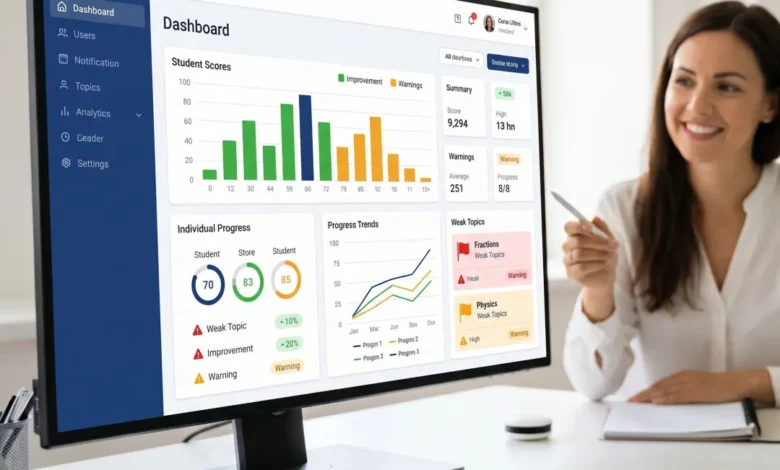
Most schools generate performance data regularly. At the end of a term, after an assessment cycle, or as part of a broader review process, educators receive summaries of how students are doing. These documents exist in nearly every educational setting, from primary classrooms to post-secondary institutions. Yet despite how common they are, the way these reports get read — and acted on — varies significantly from one teacher to the next.
The problem is not a lack of data. It is a lack of clarity about what the data is actually measuring and what it is not. A report can confirm that a student scored below average on three consecutive assessments without explaining why. It can flag a pattern without identifying its source. And it can lead a well-meaning educator to draw conclusions that are technically supported by the numbers but practically unhelpful for the student.
This gap between what reports contain and what teachers extract from them is worth examining closely. It affects how interventions are designed, how resources are allocated, and ultimately how students progress through their education.
What a Student Performance Report Is Actually Measuring
A student performance report is a structured record of a learner’s demonstrated outcomes across specific competencies, assessments, or time periods. It captures what a student produced under measured conditions — not what they are capable of in general. This is a meaningful distinction that gets overlooked more often than it should.
Performance reports are typically built from a combination of test scores, assignment completion rates, participation data, and in some systems, behavioral or attendance indicators. When aggregated, these elements produce a picture of consistency and output. What they do not produce, on their own, is a picture of understanding.
The Difference Between Output and Comprehension
A student who consistently completes assignments on time and scores in the mid-range may appear stable on paper. But mid-range performance sustained over months can indicate a student who has learned to navigate the system without deeply engaging with the content. Conversely, a student with inconsistent scores might be wrestling with genuine comprehension challenges in some areas while demonstrating real strength in others.
Reports flatten these nuances unless they are designed specifically to capture them. Most standard performance reports are not. They present aggregated scores rather than skill-level breakdowns, which means the diagnostic value is limited unless the reader knows how to look beyond the surface numbers.
What Attendance and Submission Data Signals
Many performance reports include non-academic indicators like attendance frequency and assignment submission rates. These are often treated as secondary data — noted but not heavily analyzed. In practice, they can be among the most informative data points in the report.
A pattern of late submissions clustered around specific weeks may reflect external pressures in a student’s life rather than academic disengagement. Irregular attendance that correlates with lower scores in particular subjects, but not others, may suggest subject-specific anxiety or scheduling conflicts. Without reading these indicators in relation to each other, educators miss the operational context that makes the academic data meaningful.
How Most Educators Read These Reports — and Where It Goes Wrong
The most common approach to reviewing a student performance report is comparative: a teacher looks at a student’s scores relative to the class average, flags those who fall below a threshold, and focuses intervention efforts there. This approach is logical and practical under time pressure, but it introduces several blind spots that affect the quality of support students receive.
The Threshold Problem
Threshold-based reading of performance data creates a binary that does not reflect how learning actually works. A student performing just above the intervention threshold receives no additional attention, even if their trajectory is declining. A student just below it receives support, even if they are already recovering. The fixed cutoff treats performance as a static position rather than a direction of travel.
Trend data — how a student’s performance has moved over time — is far more informative than any single point score. Reports that include longitudinal comparisons allow educators to identify students whose performance is deteriorating gradually, which is often harder to notice than a sudden drop but more predictive of long-term difficulty.
Reading Groups Instead of Individuals
There is also a tendency to interpret performance reports at the cohort level first and the individual level second. This is understandable given the number of students a teacher manages, but it produces responses that are designed for the average case rather than the specific student. A student whose struggles are rooted in a particular foundational gap will not benefit from a general review session aimed at the whole class, even if they appear in the same score range as peers who need something quite different.
Reports that break performance down by skill domain or learning objective — rather than presenting only a total score — give educators the specificity needed to match support to actual need. According to research published through educational assessment bodies, including those aligned with frameworks like OECD’s student achievement research, targeted feedback tied to specific competencies produces more measurable improvement than generalized remediation efforts.
What the Report Cannot Tell You Without Additional Context
Performance reports are retrospective documents. They describe what happened within a defined measurement window. They do not explain why it happened, and they do not predict what will happen next without additional interpretive work. Treating them as complete diagnostic tools, rather than starting points for inquiry, is one of the most consistent errors in how they are applied.
The Role of Non-Academic Factors
A student’s learning environment outside the classroom — home stability, access to resources, language background, health — will affect academic performance in ways that a report cannot capture directly. A consistent pattern of low performance may reflect persistent environmental challenges rather than a skill deficit. Without conversation with the student and, where appropriate, their family, the data in a report remains incomplete.
This does not make the report less useful. It makes it the beginning of an inquiry rather than the end of one. Educators who treat a declining student performance report as a question to be answered — rather than a verdict to be acted on — tend to produce more effective and appropriate responses.
When Strong Performance Masks Disengagement
High scores are rarely scrutinized the way low scores are. But a student who consistently performs well can still be disengaged, unchallenged, or operating well below their actual capacity. Reports do not surface students who are coasting because coasting does not produce scores that trigger concern.
This is a structural gap in how most performance tracking systems are designed. The focus is on identifying students who are struggling, not on identifying students who could be doing significantly more with the right kind of challenge or support. For schools trying to develop student potential — not just manage academic risk — this represents a real limitation in relying solely on standard report formats.
Making Better Use of the Data That Already Exists
The information contained in a student performance report becomes more useful when it is read systematically rather than reactively. This means establishing consistent habits around how reports are reviewed, what questions are asked of the data, and when additional information is needed before conclusions are drawn.
A few practices shift the quality of interpretation significantly:
• Reviewing performance trends across at least three assessment points before drawing conclusions about a student’s trajectory, since single-point data is too easily distorted by circumstantial factors like illness or assessment anxiety.
• Cross-referencing academic scores with attendance and submission patterns to identify whether performance issues are consistent across all conditions or specific to certain circumstances.
• Breaking down scores by subject domain or competency area rather than treating a composite score as the primary unit of analysis, which allows for more targeted support decisions.
• Using above-threshold performers as a monitoring group rather than a resolved one, particularly when scores have been stable for an extended period without any clear upward movement.
• Treating the report as a prompt for conversation with the student, not as a substitute for it, especially when patterns are unclear or inconsistent.
Closing: The Report Is a Tool, Not a Conclusion
A student performance report is only as useful as the thinking applied to it. On its own, it captures a partial view of a student’s academic experience — structured, measurable, and time-bound, but not complete. The educators who get the most from these documents are the ones who approach them with genuine curiosity rather than administrative efficiency.
That means looking at what the data patterns suggest about underlying causes, not just surface outcomes. It means considering what the report cannot show and building that context through direct engagement with students. And it means resisting the pull toward threshold-based, reactive responses when the data calls for something more considered.
Performance reports will continue to be a central part of how schools monitor and respond to student progress. The question is not whether to use them — it is whether educators are reading them carefully enough to make them worth using at all. The gap between generating data and acting on it meaningfully is where most of the real work happens, and it is a gap worth closing deliberately.