HEPA vs Activated Carbon Filters: What They Remove and Why Air Purifiers Often Need Both
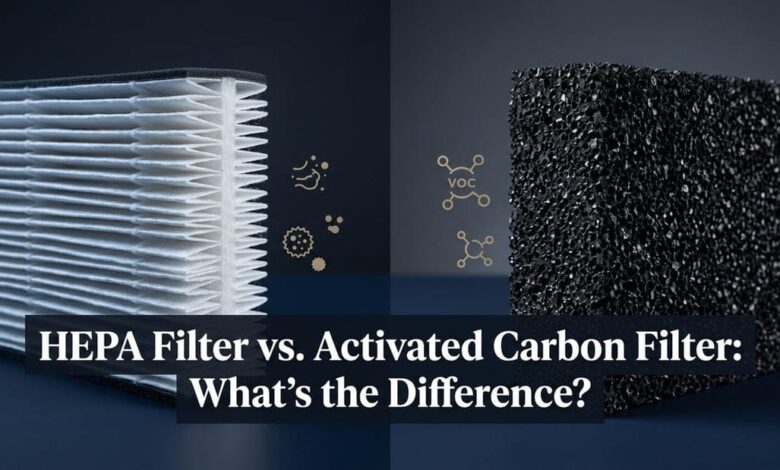
Choosing an air purifier can be confusing because many product listings use terms like “True HEPA,” “activated carbon,” “multi-stage filtration,” and “odor removal” in the same description. These features are related, but they do not do the same job. A HEPA filter is designed mainly for airborne particles, while activated carbon is used mainly for odors, gases, and certain chemical pollutants. Understanding the difference helps homeowners, retailers, and appliance brands choose the right filter structure for real indoor air concerns.
Why One Filter Cannot Solve Every Air Quality Problem
Indoor air contains different types of pollutants. Some are solid or liquid particles floating in the air, while others are gases or vapors that cannot be captured in the same way. Dust, pollen, mold spores, pet dander, and smoke particles behave differently from cooking odors, chemical fumes, and volatile organic compounds.
This is why many modern air purifiers use more than one filtration layer. A single material may perform well in one area but poorly in another. Particle filtration and gas adsorption are two different functions, and a good purifier often needs both.
For example, a family with pets may need strong particle capture for fur, dander, and fine dust. A home near a busy road may need help with smoke-like particles and traffic-related odors. A newly renovated room may need carbon support for paint smells, adhesives, or furniture off-gassing. These problems overlap, but they are not identical.
What HEPA Technology Is Designed to Remove
HEPA-grade filtration is built for particles. It is commonly used in air purifiers, vacuum cleaners, medical environments, cleanrooms, and other applications where fine airborne particles must be reduced.
In a home air purifier, this type of filter can help capture:
- Dust and fine household particles
- Pollen from outdoor air
- Mold spores
- Pet dander
- Fine smoke particles
- Some bacteria-carrying particles
- Airborne debris from fabrics, carpets, and furniture
The key point is that this filtration method works best when the pollutant has physical particle size. Air passes through a dense fiber structure, and particles are trapped through mechanisms such as interception, impaction, and diffusion.
This makes HEPA-grade filtration especially useful for allergy-sensitive households, pet owners, bedrooms, nurseries, offices, and other spaces where cleaner air circulation matters.
However, this technology is not designed to remove every smell or gas. A purifier can capture fine particles from smoke, but the odor component of smoke may require another material. That is where activated carbon becomes important.
What Activated Carbon Is Designed to Remove
Activated carbon is a porous material with a very large internal surface area. Instead of trapping particles through a fiber mesh, it works mainly through adsorption. This means certain gas molecules and odor compounds attach to the surface of the carbon.
Activated carbon is commonly used to reduce:
- Cooking odors
- Pet odors
- Smoke smells
- Household chemical smells
- Some volatile organic compounds
- Musty odors
- Paint, glue, and furniture-related smells
- General indoor stale air
It is important to understand that carbon is not a replacement for particle filtration. A carbon layer alone will not perform the same job as high-efficiency particle media. It may reduce smells, but it will not be the main defense against pollen, dander, or fine dust.
The effectiveness of activated carbon also depends on quality, thickness, amount of carbon, contact time, and airflow design. A very thin carbon sheet may help with light odors, but it may not perform well in a room with heavy smoke, strong cooking smells, or renovation-related fumes.
HEPA vs Activated Carbon: The Main Difference
The simplest way to compare the two is this:
HEPA-grade media captures particles. Activated carbon adsorbs gases and odors.
They solve different problems. One is not automatically “better” than the other because they are designed for different tasks. A purifier with strong particle filtration but weak carbon may perform well for allergies but poorly for odors. A purifier with a large carbon layer but weak particle filtration may reduce smells but leave fine airborne particles in circulation.
For many homes, the best solution is not choosing one over the other. It is using both in the right structure.
Why Air Purifiers Often Need Both
A multi-layer air purifier is usually designed to handle a wider range of indoor air problems. The filter system may include a pre-filter, a high-efficiency particle layer, and an activated carbon layer. Each layer plays a specific role.
The pre-filter captures larger debris such as hair, lint, and visible dust. This protects the more expensive inner layers and helps extend the service life of the filter.
The particle filtration layer captures fine airborne particles that are too small for the pre-filter. This is the core layer for allergy-related air cleaning.
The activated carbon layer helps reduce odors and certain gases that particle filtration cannot effectively capture.
Together, these layers create a more complete system. This is especially useful in real homes, where air problems rarely come from only one source.
A household may have pets, cooking smells, outdoor pollen, dust, and new furniture at the same time. A single-function filter would only address part of the problem.
Common Misunderstandings About HEPA and Carbon Filters
Many buyers misunderstand what each filter layer can and cannot do. This often leads to unrealistic expectations.
One common misunderstanding is that high-efficiency particle filtration removes all odors. It does not. If a purifier captures fine smoke particles but has little or no carbon, the room may still smell smoky.
Another misunderstanding is that activated carbon captures dust and allergens as effectively as particle filtration. It does not. Carbon is mainly for odors and gases, not pollen and dander.
A third misunderstanding is that more filter layers always mean better performance. In reality, filter quality, sealing, airflow, material weight, and machine design all matter. A poorly designed purifier with many thin layers may perform worse than a well-designed purifier with fewer but better materials.
Another issue is airflow resistance. Dense filtration can reduce airflow if the purifier motor is not designed for it. A good air purifier must balance filtration efficiency with enough air movement to clean the room effectively.
Which Filter Matters More for Allergies?
For allergies, particle filtration is usually the more important layer. Allergens such as pollen, dust mites, mold spores, and pet dander are particle-based. Capturing these particles can help reduce airborne exposure.
However, carbon can still be helpful in allergy-sensitive homes if odors, smoke, or chemicals trigger discomfort. Some people are sensitive not only to particles but also to smells and chemical irritants.
For example, a pet owner may need particle capture for dander and carbon support for pet odor. A household near wildfire smoke may need both fine particle capture and odor reduction. A person living in an apartment may need particle filtration for dust and carbon for cooking smells from nearby units.
So while particle filtration is the core feature for allergies, carbon can improve overall comfort.
Which Filter Matters More for Odors?
For odors, activated carbon is usually the more important layer. Cooking smells, pet smells, smoke odors, and chemical odors are not solved well by particle filtration alone.
However, odors often come with particles. Smoke includes both particles and gases. Cooking can produce grease particles and smells. Pet areas may contain dander and odor compounds. This is why a purifier with both layers is often more practical than a purifier focused on only one function.
For strong odor situations, buyers should pay attention to the amount and quality of activated carbon. A thin deodorizing layer may be enough for light daily use, but heavier odor control requires more carbon and better airflow contact.
How Filter Order Affects Performance
The order of filter layers matters. In many air purifiers, the pre-filter comes first. This layer catches large particles before they reach the inner layers. It helps prevent hair and large dust from clogging the main filtration media.
After that, the air may pass through the high-efficiency particle layer and carbon layer. Some designs place carbon before the particle layer, while others place it after. The best structure depends on the purifier model and airflow path.
For replacement filter manufacturers and appliance brands, the key is not just copying the shape of a filter. The internal design must match the purifier’s airflow, sealing, and performance requirements. A filter that fits physically but has poor sealing or poor material structure can reduce real-world performance.
Why Fit and Sealing Are Just as Important as Filter Material
Even high-quality filter media can perform poorly if air leaks around the filter instead of passing through it. This is especially important for replacement filters.
A good replacement filter should match the original dimensions closely. The frame should be stable. The gasket or sealing edge should prevent bypass airflow. The filter should sit securely inside the purifier housing without gaps.
For retailers, this matters because customers may blame the purifier or the replacement filter if performance drops. For brands, poor fit can lead to complaints, returns, and negative reviews.
Filter performance is not only about the material specification. It is also about the full structure.
Replacement Timing: When Filters Stop Working Well
Both particle filtration media and activated carbon have service limits.
Over time, particle filters collect dust and debris. As they load up, airflow can decrease. The purifier may become louder, work harder, or clean the room more slowly. In some cases, a clogged filter can reduce user satisfaction even if the machine is still running.
Activated carbon also becomes less effective as adsorption sites are used up. Once the carbon is saturated, it cannot keep absorbing odors efficiently. This is why a purifier may still blow air but no longer reduce smells well.
Replacement timing depends on the environment. Homes with pets, smokers, high dust levels, wildfire smoke, or heavy cooking may need more frequent filter changes than clean, low-use rooms.
A general replacement schedule is useful, but real usage conditions should always be considered.
What Pet Owners Should Look For
Pet owners often need both filtration functions. Pet fur and large debris can be handled by a pre-filter. Pet dander requires strong particle filtration. Pet odors benefit from activated carbon.
For this user group, a good filter design should include:
- A washable or replaceable pre-filter for fur
- Strong particle capture for dander
- A meaningful carbon layer for odor control
- Good sealing to prevent bypass
- Reasonable airflow for continuous daily use
Pet owners are also more likely to replace filters frequently because fur and dander build up quickly. Brands selling to this market should make replacement filters easy to identify, easy to install, and clearly labeled.
What Allergy-Sensitive Users Should Look For
Allergy-sensitive users should focus first on particle filtration quality, airflow performance, and room size match. A purifier must move enough air through the room to reduce airborne particles effectively.
For this group, activated carbon is a supporting feature. It may help with smells and irritants, but it should not distract from the main requirement: reliable particle capture.
Clear product education is important. Retailers should avoid overpromising medical outcomes. Instead, they can explain what the filter is designed to capture and how regular replacement helps maintain performance.
What Buyers Concerned About Smoke Should Look For
Smoke is a mixed pollution source. It contains fine particles and odor-causing gases. This makes it one of the clearest examples of why air purifiers often need both particle filtration and activated carbon.
A purifier without strong particle capture may not deal well with fine smoke particles. A purifier without enough carbon may leave the smell behind. For wildfire smoke, tobacco smoke, or cooking smoke, both layers matter.
However, buyers should also understand that indoor air cleaning has limits. Source control, ventilation when appropriate, and proper filter replacement all matter.
What Retailers Should Consider When Sourcing Replacement Filters
For retailers, filter sourcing is not only about price. A low-cost replacement filter can create long-term problems if it performs poorly, fits badly, or causes customer complaints.
Important sourcing factors include:
- Exact size compatibility
- Frame strength and stability
- Sealing design
- Particle filtration grade
- Carbon layer quality and weight
- Airflow resistance
- Packaging quality
- Private-label options
- Batch consistency
- Clear replacement instructions
Retailers should also consider how the product will be marketed. If the filter is positioned for pets, odor control, smoke, or allergies, the material structure should support that claim.
What Appliance Brands Should Consider
For appliance brands, filter design affects the entire user experience. The purifier body, motor, sensor system, airflow path, and replacement filter must work together.
If the filter is too restrictive, airflow may drop. If the carbon layer is too thin, odor claims may disappoint customers. If the frame is weak, installation may feel cheap. If replacement timing is unclear, customers may delay filter changes and blame the machine for weaker performance.
A well-designed filter program can also create repeat purchases. Clear filter compatibility, stable supply, and consistent packaging help brands build trust.
How to Explain HEPA and Carbon to Customers
Simple education can reduce confusion and improve conversions. Retailers and brands can explain the difference in plain language:
- For dust, pollen, and dander, focus on particle filtration.
- For odors, smoke smells, and chemical smells, focus on activated carbon.
- For homes with mixed air concerns, choose a purifier that uses both.
- Replace filters on time to maintain airflow and odor control.
- Make sure replacement filters fit properly.
This type of explanation helps customers choose the right product without feeling overwhelmed by technical language.
Final Thoughts
HEPA and activated carbon filtration are often mentioned together, but they are not the same. One is designed for fine airborne particles, while the other helps reduce odors and certain gases. In real homes, air quality problems usually include both particles and smells, which is why many air purifiers combine multiple filtration layers. For homeowners, retailers, and appliance brands, the smartest approach is to understand what each layer does and choose a filter structure that matches the real use case. To build that foundation, it is worth starting with a clear understanding of how a HEPA filter works before comparing it with other filtration materials.