How a Drilling Fund Actually Works: A Step-by-Step Breakdown for First-Time Oil Investors
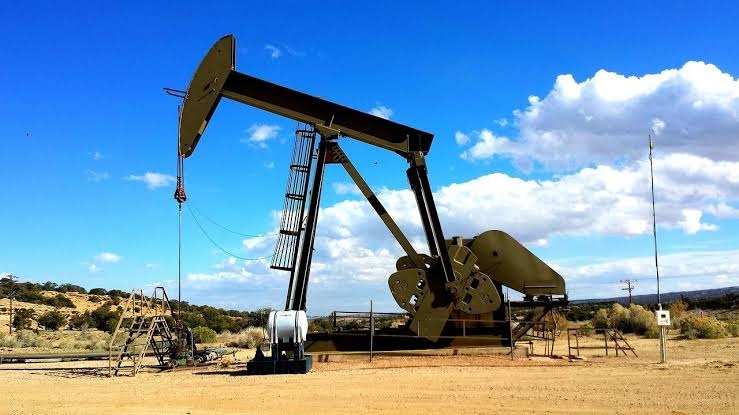
Most people who enter the oil and gas investment space for the first time do so through indirect vehicles — publicly traded energy stocks, ETFs, or royalty trusts. These instruments offer liquidity, but they also create distance between the investor and the actual activity generating returns. For those looking to participate more directly in upstream production, the path often leads to a different structure: pooled capital deployed toward well development. Understanding how that structure functions, who manages it, and where risk concentrates is not optional — it is the baseline for making an informed decision.
This breakdown is designed for first-time participants who want to understand the mechanics before committing capital. It does not assume prior experience in oil and gas, but it does assume the reader is serious about understanding the process from start to finish.
What a Drilling Fund Is and How Capital Is Structured
A drilling fund is a pooled investment vehicle in which multiple investors contribute capital that is used to finance the drilling and completion of one or more oil or gas wells. Rather than an individual funding an entire well independently — which can require millions of dollars in upfront capital — participants share the cost and, in proportion, the revenue and risk. The fund is typically organized as a limited partnership or similar legal entity, with an operator or managing partner overseeing the operational side and investors holding limited liability positions.
For anyone researching how these structures are organized and what participation typically involves, a structured overview of a drilling fund can help clarify what the investment architecture looks like in practice, including how working interests are assigned and how revenue flows back to participants.
The capital structure within these funds is not uniform. Some are organized around a single well, with investors buying a fixed percentage of the working interest. Others involve programs that drill multiple wells over time, spreading both cost and exposure across several projects. The key distinction that first-time investors need to understand is that participation is tied to working interest ownership, not equity in a company. That means investors share in production revenue but are also exposed to ongoing operational costs — including completion expenses, maintenance, and in some cases, regulatory obligations tied to well decommissioning.
Working Interest vs. Royalty Interest: Why the Difference Matters
New investors often conflate working interest with royalty interest, but the two carry very different risk and cost profiles. A royalty interest entitles the holder to a share of gross production revenue with no obligation to contribute to operating costs. A working interest, which is what most drilling fund participants hold, entitles the holder to a share of net production revenue after costs — but also requires the holder to bear a proportional share of all drilling, completion, and operating expenses.
This distinction has real implications. In a year where a well underperforms or requires significant workover activity, working interest holders may see their net revenue shrink substantially or even turn negative in some periods. The upside is that working interest participants benefit more directly when production is strong and costs are controlled. The structure rewards informed participation, not passive assumption of returns.
The Role of the Operator and What They Control
In most drilling fund arrangements, day-to-day decisions about well location, drilling contractor selection, completion design, and production management fall to the operator — typically the managing general partner or a designated operating company. Investors in the fund generally do not have authority over these decisions. They receive reporting, distributions when applicable, and updates on well performance, but the operational chain of command sits with the operator.
This arrangement is not unusual in oil and gas. The U.S. Securities and Exchange Commission has published guidance on how oil and gas investment programs, including those structured as partnerships, operate and what disclosures investors should expect to receive. Understanding who controls operational decisions — and how those decisions are disclosed to participants — is foundational to evaluating any fund before committing capital.
Evaluating Operator Track Record Before Participating
The operator’s experience, financial health, and track record in the specific basin or region where the fund will operate carries significant weight. An operator who has drilled successfully in the Permian Basin may not translate that experience directly to Appalachian basin shale operations, where geology, regulatory environment, and infrastructure access differ considerably. First-time investors should ask for production histories from prior wells the operator has managed, along with documentation of cost overruns and how they were handled.
Cost overruns are common in drilling. Equipment failures, unexpected subsurface conditions, and regulatory delays can all push final well costs beyond the original budget. The question is not whether overruns occur — they often do — but how the operator communicates them, manages contingency reserves, and protects investor exposure when they happen.
How Revenue Flows from the Well to the Investor
Once a well is drilled, completed, and brought into production, the revenue cycle begins. Oil or gas produced from the well is sold — either through a pipeline agreement, a spot market arrangement, or a purchase contract with a midstream company. The revenue from those sales flows first through the fund’s accounting structure, where operating expenses are deducted, and then distributes proportionally to working interest holders based on their ownership percentage.
The timing and frequency of distributions vary by fund structure. Some funds distribute monthly; others operate on a quarterly basis. Early-stage production from a newly drilled well often generates different cash flow patterns than a well that has been producing for several years. Production decline curves mean that initial output is typically highest and decreases over time, which affects the long-term distribution trajectory. Investors should understand from the outset what the projected production profile looks like and how it shapes the expected return timeline.
Understanding Depletion and Its Tax Implications
One of the structural characteristics that attracts certain investors to oil and gas programs is the tax treatment associated with depletion and intangible drilling costs. Depletion allowances permit investors to account for the gradual exhaustion of the natural resource being extracted, which can reduce taxable income from fund distributions in certain situations. Intangible drilling costs — expenses related to labor, chemicals, and other non-salvageable components of the drilling process — may also be deductible in the year incurred under certain conditions.
These tax considerations are not a reason to invest, but they are a legitimate part of understanding the full economic picture of participation. Any fund offering serious tax benefits should provide documentation from a qualified tax advisor as part of its disclosure materials. Investors should independently verify the applicability of these benefits to their own tax situation before assuming they apply.
Risk Concentration and What First-Time Investors Frequently Underestimate
Drilling fund risk is not a single variable — it is a concentration of several independent risks that can interact in compounding ways. Geological risk is the most fundamental: not every well produces commercial quantities of hydrocarbons, even in proven areas. Commodity price risk affects the value of what is produced. Operational risk ties to the equipment, personnel, and decisions made during drilling and completion. Regulatory risk can delay production or increase costs unexpectedly. And liquidity risk is significant — unlike publicly traded securities, working interests in a drilling fund cannot typically be sold quickly or easily.
First-time investors tend to focus on upside — the potential for strong early production and favorable commodity pricing — without fully accounting for the scenarios where one or more of these risks materializes simultaneously. A well that produces adequately but during a period of low oil prices can still deliver poor returns. A well that encounters mechanical problems during drilling can consume contingency reserves and reduce investor distributions before the well ever produces a barrel.
How Diversification Within a Fund Program Affects Risk Profile
Single-well funds carry concentrated risk by definition. If that one well underperforms, there is no offsetting production from another asset within the same vehicle. Multi-well programs address this by spreading capital across several wellbores, often in different locations or at different depths. A single poor performer in a program of eight wells has a smaller impact on overall returns than if that same well were the sole focus of the fund.
For first-time participants, a multi-well program often represents a more conservative entry point — not because risk is eliminated, but because it is distributed across a broader set of outcomes. The trade-off is that multi-well programs may require longer time horizons before all wells are drilled, completed, and generating consistent production.
What the Offering Documents Should Tell You
Before any capital is committed, the fund operator is required to provide offering documents — typically a private placement memorandum or similar disclosure package. These documents outline the fund’s structure, the operator’s background, projected well costs, estimated production, risk factors, fee arrangements, and the terms under which distributions will be made. Reading these documents carefully is not optional. They represent the formal framework of what is being offered and what the investor is agreeing to.
Pay particular attention to fee structures. Management fees, carried interests, and overhead charges can meaningfully reduce net returns if they are disproportionate to the services provided. A fund that charges a substantial upfront management fee in addition to a generous carried interest may leave investors with a narrower share of the economic upside than the headline participation percentage implies.
A Measured Starting Point for First-Time Participants
Participating in a drilling fund is not inherently speculative, but it requires a level of operational and structural understanding that many first-time investors underestimate going in. The mechanics are concrete: capital is pooled, wells are drilled, production is sold, costs are deducted, and distributions are made proportionally. But within each of those steps sits a layer of decisions, risks, and variables that determine whether the outcome is favorable.
The most effective approach for a first-time participant is to engage slowly. Review offering documents with independent legal and tax counsel. Ask the operator direct questions about how prior programs have performed, including those that did not meet projections. Understand your liquidity position, because capital committed to a drilling fund is typically not accessible for years. And calibrate the size of your participation relative to your overall financial position — this is not the type of asset class where concentration increases confidence.
Oil and gas remains a legitimate part of many institutional and individual investment portfolios. But the returns it generates are a product of real operational outcomes, not financial engineering. Understanding the mechanics of how a drilling fund works is the first step toward participating in a way that is grounded, realistic, and properly managed.