How to Evaluate a Fiber Optic Splicing Services Provider Before Signing Any Contract in the US
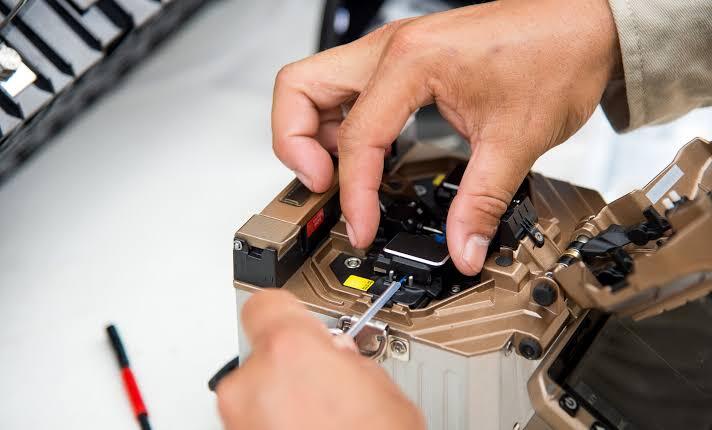
When a network goes down, the operational cost begins immediately. Whether it’s a data center, a healthcare facility, a manufacturing plant, or a municipal broadband network, the infrastructure that carries communication signals is not a commodity — it’s a dependency. Fiber optic cabling has become the backbone of that infrastructure across nearly every sector in the United States, and the quality of how that infrastructure is joined, repaired, and extended comes down to one discipline: splicing.
Choosing a splicing provider is not a procurement decision made purely on price. It’s a decision that affects signal integrity, long-term network performance, and the operational risk your organization carries for years after the work is done. A poorly executed splice won’t always fail immediately. It may degrade gradually, causing intermittent outages, latency issues, or packet loss that are difficult to diagnose and expensive to correct after the fact.
This article is written for operations managers, network engineers, facility directors, and procurement leads who are in the process of evaluating contractors before committing to a service agreement. It walks through the considerations that matter most — not the ones that look impressive in a proposal.
Understanding What the Evaluation Process Should Actually Cover
Many organizations approach vendor selection for technical services the way they approach general contracting: collect bids, compare pricing, and choose the most credible option at an acceptable cost. For fiber optic work, that approach carries real risk because the technical variables are not always visible in a proposal. A provider can list certifications, equipment brands, and years of experience without that information telling you much about their actual field consistency.
A structured evaluation starts with understanding what you’re actually buying. When you engage a provider for fiber optic splicing services, you are buying precision labor performed in controlled or semi-controlled field conditions, using specialized fusion equipment, on infrastructure that may be buried, aerial, or routed through conduit that cannot be easily accessed again. The margin for error is narrow, and the consequences of a substandard splice compound over time.
A useful starting reference for understanding what technical standards govern this type of work is the Telecommunications Industry Association, which publishes standards relevant to fiber optic installation and performance in the US market. Knowing what those standards require gives you a baseline for evaluating whether a provider’s practices align with them.
For a practical breakdown of what responsible providers include in their scope of work, reviewing a Fiber Optic Splicing Services guide can help clarify what documentation, testing, and quality controls should be expected from any credible contractor before work begins.
Why Scope Definition Matters Before Any Agreement Is Signed
One of the most common points of friction between clients and fiber optic contractors is a misalignment in scope. The client assumes the work includes end-to-end testing, splice documentation, and post-installation reporting. The contractor’s proposal covers only the splicing labor itself. Neither party discusses this until something goes wrong.
Before signing any contract, the scope of work should explicitly define what testing methods will be used, when those tests occur, who receives the documentation, and what constitutes acceptable performance. If a provider resists this level of specificity, that resistance tells you something meaningful about how they manage accountability in the field.
Technical Competency and Equipment Standards
Fiber optic splicing is a skill-dependent service. The technicians performing the work need hands-on experience with fusion splicing equipment, an understanding of how different fiber types behave, and the judgment to make adjustments when field conditions are not ideal. This is not something that can be fully verified through certifications alone, but certifications are a reasonable starting point.
Providers worth considering will have technicians who hold recognized credentials from organizations like the Fiber Optic Association or equivalent training bodies. They will also have a clear equipment maintenance protocol, because fusion splicers require regular calibration and cleaning to perform consistently. A provider that cannot describe how their equipment is maintained is unlikely to produce consistent splice quality across a large project.
The Relationship Between Equipment Quality and Splice Loss
Splice loss — the signal attenuation that occurs at a splice point — is directly influenced by both the quality of the equipment used and the technique of the technician operating it. Aging or poorly maintained fusion splicers tend to produce inconsistent arc profiles, which affects how cleanly two fiber ends are joined. Over time, even a marginally elevated splice loss at multiple points in a network adds up to a performance problem that is difficult to trace back to its source.
When evaluating a provider, ask directly about the age of their fusion splicing equipment, what calibration schedule they follow, and whether they carry backup units for field deployment. A provider who can answer these questions with specificity is operating with process discipline. One who cannot is likely managing equipment reactively rather than proactively.
Documentation and Testing Protocols
After splicing work is completed, the quality of the output cannot be verified by visual inspection alone. Fiber optic splices must be tested using Optical Time Domain Reflectometer equipment, which generates a trace showing the condition of the fiber, the location of splice points, and the loss at each connection. This trace is both a quality record and a diagnostic reference for any future troubleshooting.
A professional fiber optic splicing provider will treat OTDR testing as a standard deliverable, not an optional add-on. They will also provide splice loss records for each individual splice completed on a project, along with documentation of the fiber type, cable route, and any deviations from the original plan. This documentation has operational value well beyond the completion of the project itself.
What Proper Documentation Looks Like in Practice
Documentation from a splicing project should be organized enough that a technician unfamiliar with the original installation can use it to locate a fault years later. That means labeled OTDR traces, splice tray maps, cable segment records, and a clear identification system that corresponds to physical infrastructure in the field.
Providers who deliver this level of documentation are thinking about the long-term usability of the work they perform. Providers who deliver incomplete or informal records are creating a liability for the client — one that usually surfaces during an emergency when there is no time to reconstruct missing information. Before signing a contract, request a sample documentation package from a previous project. The quality of that package reflects the standard you can expect on your own.
Project Management and Field Coordination
Fiber optic splicing rarely happens in isolation. It typically occurs alongside cable installation, conduit work, or network commissioning activity, often within active facilities where downtime must be carefully managed. The provider’s ability to coordinate with other trades, communicate clearly with your internal team, and adjust to field conditions without causing delays is a practical capability that proposals rarely address directly.
During the evaluation process, ask prospective providers how they handle scheduling conflicts, what their communication structure looks like during a project, and how they manage access to restricted or sensitive areas. Their answers will reveal whether they have experience working within the operational constraints that are common in healthcare, industrial, government, and commercial environments.
Understanding Risk When Work Happens in Active Environments
Splicing in an active data center or a running manufacturing facility introduces risks that go beyond the technical. Technicians must follow site safety protocols, respect operational boundaries, and manage their materials in ways that do not create hazards for other personnel. A provider who treats these requirements as administrative overhead rather than operational necessities is a liability in any regulated or high-stakes environment.
Ask directly about their safety training requirements, how they handle hazardous materials generated by fiber work, and whether they carry appropriate insurance coverage for the environments where you need work performed. These are not bureaucratic questions. They are indicators of organizational maturity.
Contractual Terms and Performance Accountability
The contract governing fiber optic splicing work should be specific about deliverables, timelines, testing requirements, and what happens when work does not meet agreed standards. Vague language in a service agreement typically benefits the contractor, not the client. Before signing, examine how the contract defines acceptable performance, what the process is for disputing work quality, and whether there are any provisions for remediation at no additional cost.
Warranty terms vary considerably between providers. Some offer a limited workmanship warranty that covers re-splicing defective joints within a defined period. Others offer no formal warranty at all. Understanding what protection you have after the project closes is an important part of the evaluation — particularly for infrastructure that will carry critical traffic for years.
Red Flags in Proposal Language
Proposals that rely heavily on general language — references to “industry best practices,” “quality workmanship,” or “experienced technicians” without supporting detail — are worth scrutinizing carefully. These phrases carry no enforceable meaning and offer no basis for holding a provider accountable if the work falls short.
Specific, measurable commitments are the mark of a provider who understands what they are promising. If a proposal cannot describe the testing methodology, the documentation format, or the quality threshold for individual splice performance, those gaps should be addressed in writing before the contract is executed.
Closing Considerations Before You Commit
Evaluating a fiber optic splicing provider takes more time than reviewing a quote and checking references. It requires a clear understanding of what the work involves, what the deliverables should include, and what your organization’s risk tolerance is for the infrastructure being worked on.
The providers most worth trusting are those who treat their documentation practices, equipment maintenance, and field coordination with the same seriousness they bring to the technical work itself. These are not separate concerns. They are part of a single operating standard that either holds together across a project or doesn’t.
Before signing any contract, take the time to ask detailed questions, request documentation samples, and examine contract terms carefully. The infrastructure you are commissioning will be part of your network for a long time. The provider you choose will shape how reliably it performs — and how manageable it is when problems eventually arise.