A buyer’s guide to measuring cylinders
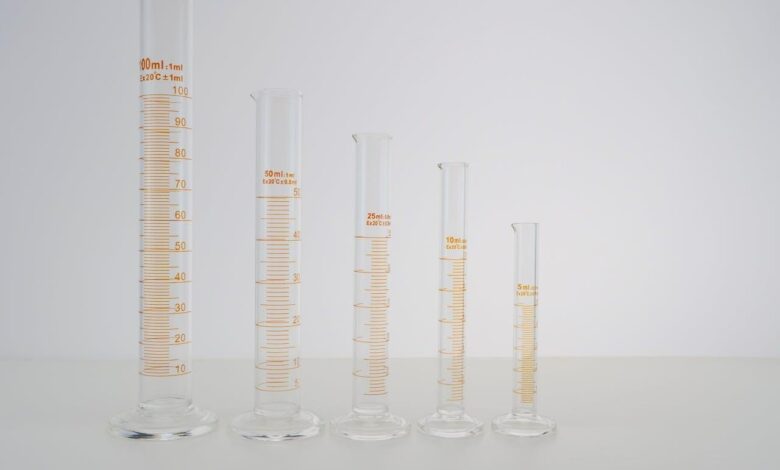
The right measuring cylinder keeps your work accurate and consistent so it’s vital to consider the finer details before investing in new equipment for your lab or pharmacy.
This buyer’s guide outlines all the important factors to consider when purchasing a new cylinder measure.
What are cylinder measures for?
Measuring cylinders are tall, cylindrical tools ideal for labs and pharmacies.
Primarily used for mixing solutions and preparing medication, they measure the volume of liquids. They’re marked with graduations to accurately quantify liquids.
Why does accuracy matter in liquid measurement?
When working in labs and pharmacies, precision is crucial. Slight mistakes in measurements can result in:
- Incorrect medication dosage
- Compromised experiment results
- Safety risks for patients
Investing in high-quality cylinder measures helps eliminate these risks by delivering clear and consistent measurements.
Types of cylinder measures
There are two common types of cylinder measures: glass and plastic. They each have strengths related to their manufacturing, so which type you use depends on personal demands, degree of accuracy and durability.
Glass cylinder measures
Most professional glass measuring cylinders are made from borosilicate glass. This type of glass can handle temperature changes and chemical exposure well.
Whilst they can be higher in cost and more fragile than their plastic alternative, they’re also highly durable and have excellent chemical resistance.
Plastic cylinder measures
Plastic cylinder measures are typically used in less demanding environments. Their manufacturing makes them shatter-resistant and durable.
In comparison with glass cylinder measures they’re lower cost. However, the plastic material means they can have limited chemical resistance with a lower level of accuracy.
In summary: use glass for professional, high-precision settings. Choose plastic for training, schools, or low-risk tasks.
Understanding sizes and capabilities
Cylinder measures come in a variety of sizes, volume capacity can span from 5ml to 2000ml.
- 5ml – 50ml are ideal for precise pharmaceutical measurements
- 100ml – 500ml is the common size for cylinder measures made for general lab work
- 1000ml + measuring cylinders are made for holding bulk liquids
Choosing the largest size might seem practical for measuring everything. However, this can lead to inaccuracies. The graduations won’t account for small, precise measures.
Always make sure the measuring cylinder you purchase is fit for purpose. Try to find the smallest measurement that fits your demands for the best accuracy.
Key features to look for:
Clear graduation markings
Make sure the graduation markings are easy to read and resistant to fading.
Some cylinder measures are government stamped. This means they have been checked independently to verify the markings are accurate. This is important in regulated environments.
Stable base
Because measuring cylinders are tall and narrow in structure they’re inherently unstable. A cylinder with a flat, stable base prevents accidental spills and broken glassware.
A flat base also makes measurements more accurate. This is because the liquid rests on a stable, level surface.
Pouring spout
The pouring spout on a measuring cylinder makes it easy to transfer liquids. It helps do this accurately and smoothly, so spills are less likely.
Chemical resistance
Measuring cylinders must have high chemical resistance. This maintains accuracy, safety in the lab. As well as sample purity when using reactive substances like strong acids, bases, and solvents.
Without this resistance, the cylinder may degrade. This can lead to measurement errors, contaminated samples, or structural failure.
Durability
Investing in measuring cylinders made from strong materials like borosilicate glass and quality plastics makes them last for longer in busy labs and pharmacies.
Durable measuring cylinders must resist chemical exposure, regular cleaning, and physical use. Their markings should not fade, and their structure should stay intact.
Common mistakes to avoid:
- Choosing the wrong size (too large of a vessel reduces accuracy)
- Ignoring calibration standards
- Using plastic with harsh chemicals
- Reading measurements incorrectly (always at eye level)
Final thoughts
Choosing the right cylinder measure for your lab or pharmacy is about assessing accuracy, safety and reliability.
Think beyond just volume. Also consider the features and materials of the instrument. This will help you determine if it meets your needs, and help you find the right measuring cylinder for you.