FCDO Airspace Closure Warnings: UK Travel Advisories, Flight Disruptions, and Passenger Safety
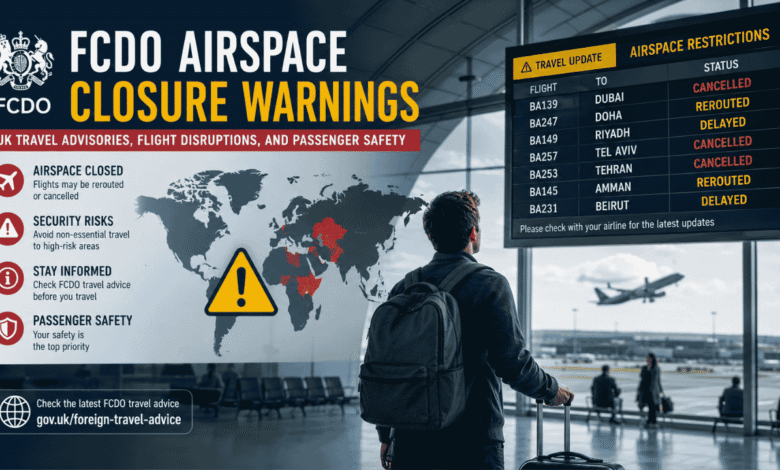
Air travel has become one of the safest and most convenient ways to travel internationally. However, geopolitical conflicts, military operations, terrorism, natural disasters, and unexpected emergencies can quickly affect the safety of air travel. During such situations, FCDO airspace closure warnings become an important source of information for British travelers, airlines, and travel companies. The UK’s Foreign, Commonwealth & Development Office (FCDO) regularly updates its travel advice to reflect changing global security conditions. While the FCDO does not have the authority to close foreign airspace, it warns travelers about destinations where airspace restrictions, airport closures, or security threats could disrupt travel or endanger passenger safety. This guide explains everything you need to know about FCDO airspace closure warnings, including how they work, why they are issued, their impact on flights and travel insurance, and what travelers should do before flying.
What Are FCDO Airspace Closure Warnings?
FCDO airspace closure warnings are official travel advisories issued by the UK’s Foreign, Commonwealth & Development Office whenever international events create significant aviation safety concerns.
These warnings typically inform travelers that:
- Airspace has been temporarily closed.
- Flights are being rerouted.
- Airports are experiencing disruptions.
- Security conditions are rapidly changing.
- Commercial airlines may suspend operations.
- Travel plans could change with little notice.
Rather than directly controlling aviation, the FCDO provides safety guidance to help British citizens make informed travel decisions.
Understanding the Role of the FCDO
The Foreign, Commonwealth & Development Office is responsible for protecting British citizens overseas through diplomatic support and travel guidance.
Its responsibilities include:
- Monitoring global security situations
- Publishing country-specific travel advice
- Warning about terrorism and civil unrest
- Advising against travel when necessary
- Coordinating with international partners during emergencies
Whenever an international crisis develops, the FCDO continuously evaluates whether British travelers could be affected.
Does the FCDO Close Airspace?
One common misconception is that the FCDO closes airspace.
In reality, it does not.
Airspace closures are normally ordered by:
- National aviation authorities
- Civil aviation regulators
- Governments
- Military authorities
- Airport authorities
The FCDO simply informs travelers that these restrictions exist and explains how they may affect travel.
Why Are Airspace Closure Warnings Issued?
There are numerous reasons why airspace may become unsafe.
Some of the most common include:
Armed Conflicts
Wars create serious risks for civilian aircraft due to missiles, anti-aircraft weapons, military aircraft, and restricted military zones.
Examples include conflicts involving:
- Ukraine
- Israel
- Iran
- Syria
- Yemen
Missile or Drone Attacks
Modern conflicts increasingly involve long-range missile and drone attacks.
Even if airports remain open, airlines may avoid nearby airspace as a precaution.
Terrorism Threats
When intelligence agencies identify credible aviation threats, governments may recommend avoiding certain routes or airports.
Political Instability
Major protests, coups, or civil unrest can affect airport operations and transportation infrastructure.
Military Exercises
Large-scale military exercises sometimes require temporary airspace restrictions to ensure aviation safety.
Natural Disasters
Although less common, volcanic eruptions, earthquakes, hurricanes, and severe weather can also lead to temporary airspace closures.
How the FCDO Monitors Aviation Risks
The FCDO works closely with numerous organizations, including:
- UK Civil Aviation Authority (CAA)
- International aviation regulators
- British embassies
- Local governments
- Intelligence agencies
- International airlines
Information is continually reviewed to determine whether official travel advice should be updated.
Countries Frequently Affected by Airspace Warnings
Although airspace closures can occur anywhere, certain regions experience them more frequently due to ongoing geopolitical tensions.
Examples include:
Middle East
Recent conflicts have affected flights over:
- Israel
- Iran
- Iraq
- Lebanon
- Syria
- Yemen
Airlines often reroute flights to avoid these areas.
Eastern Europe
The conflict involving Ukraine dramatically changed European aviation routes.
Large sections of regional airspace became unavailable to civilian aircraft.
Parts of Africa
Political instability and armed conflicts occasionally affect air travel across several African countries.
South Asia
Border tensions and military activity have occasionally caused temporary flight restrictions.
How Airlines Respond to Airspace Closures
Airlines prioritize passenger safety above all else.
When warnings are issued, they may:
- Cancel flights
- Delay departures
- Use alternative routes
- Increase flight duration
- Suspend operations entirely
- Offer refunds or rebooking options
Although longer routes increase operating costs, avoiding dangerous airspace remains the safest option.
Impact on Flight Routes
One of the biggest effects of FCDO airspace closure warnings is flight rerouting.
Instead of flying directly over conflict zones, airlines may:
- Fly around restricted countries
- Increase cruising distances
- Add fuel stops
- Delay connecting flights
Passengers may experience journeys that are several hours longer than originally scheduled.
How Airspace Closures Affect Passengers
Travel disruptions may include:
Flight Cancellations
Some routes become impossible to operate safely.
Long Delays
Aircraft may wait for updated security information before departing.
Missed Connections
Longer flight times often disrupt connecting itineraries.
Schedule Changes
Flights may depart earlier or later than planned.
Last-Minute Notices
Because security situations change rapidly, airlines sometimes announce cancellations only hours before departure.
What Should Travelers Do?
Whenever FCDO airspace closure warnings are active, travelers should take several precautions.
Check Official Travel Advice
Review the latest travel advice before leaving for the airport.
Conditions may change daily.
Contact Your Airline
Airlines always have the most current operational information.
Confirm:
- Flight status
- Departure time
- Gate changes
- Baggage policies
Monitor Airport Notifications
Many airports provide real-time updates through:
- Mobile apps
- SMS alerts
- Email notifications
Allow Extra Time
Security procedures and rerouted flights often increase waiting times.
Arriving early reduces unnecessary stress.
Travel Insurance and FCDO Warnings
Travel insurance is another reason FCDO warnings are important.
Many UK insurers use FCDO advice when determining coverage.
If the FCDO advises against all travel—or all but essential travel—to a destination, some insurance policies may:
- Decline new coverage
- Limit medical claims
- Exclude cancellation benefits
- Refuse disruption claims
Travelers should always read their policy carefully before departure.
Business Travel Considerations
Companies with international employees also rely heavily on FCDO guidance.
Business travel managers often:
- Delay employee travel
- Change meeting locations
- Arrange remote conferences
- Update corporate travel policies
Employee safety remains the highest priority.
Aviation Safety Beyond Airspace Closures
Airspace restrictions are only one part of aviation safety.
The FCDO may also issue warnings about:
- Airport security
- Terrorism risks
- Demonstrations
- Border closures
- Entry restrictions
- Local transportation disruptions
Travelers should read the complete country guidance instead of focusing solely on aviation notices.
How Often Are FCDO Warnings Updated?
Updates occur whenever significant developments happen.
This may include:
- Military escalation
- Peace agreements
- Terror attacks
- Airport reopenings
- Government announcements
- Airline operational changes
During fast-moving crises, travel advice can change multiple times within a single day.
Difference Between Travel Warnings and Airspace Closures
Although closely related, they are not identical.
| Airspace Closure | Travel Warning |
|---|
| Restricts aircraft operations | Advises travellers about safety |
| Issued by aviation authorities | Issued by the FCDO |
| Affects airlines directly | Affects travel decisions |
| Can exist without travel warnings | May exist without airspace closures |
Understanding this distinction helps travelers interpret official announcements correctly.
Common Situations That Trigger FCDO Airspace Closure Warnings
Examples include:
- Military conflicts
- Drone attacks
- Missile launches
- Terrorist incidents
- Political coups
- Civil wars
- Airport security threats
- International sanctions
- Border conflicts
Any event that could affect commercial aviation may result in updated guidance.
Tips for Safe International Travel
If traveling internationally, consider these best practices:
- Check FCDO travel advice before booking.
- Register for airline notifications.
- Purchase comprehensive travel insurance.
- Keep copies of important travel documents.
- Have emergency contact information available.
- Stay informed through official government sources.
- Be flexible if travel plans change unexpectedly.
Preparation greatly reduces travel-related stress.
Frequently Asked Questions
What are FCDO airspace closure warnings?
They are official UK government travel advisories that inform travelers about aviation safety risks arising from conflicts, security incidents, or airspace restrictions.
Does the FCDO close airspace?
No. Airspace closures are imposed by national aviation authorities or governments. The FCDO provides travel advice about those closures.
Why are flights diverted during conflicts?
Airlines avoid dangerous airspace to protect passengers and crew from military activity, missiles, drones, or other aviation hazards.
Can airspace closures affect flights to other countries?
Yes. Even if your destination is safe, your flight may normally pass through restricted airspace, requiring airlines to reroute or cancel the service.
Will travel insurance cover disruptions?
Coverage depends on your insurer and policy terms. Some policies restrict coverage if you travel against FCDO advice.
Conclusion
FCDO airspace closure warnings play a vital role in helping travelers stay informed during periods of international instability. Although the FCDO does not directly control airspace, its travel advisories provide valuable guidance on security risks, flight disruptions, and changing travel conditions.
You May Also Read: M20 Kent Vehicle Bridge Closure: Causes, Traffic Impact, Safety Measures, and Travel Updates