How Larger Homes Can Choose the Right Battery System
Shopping for a battery system for a larger home can feel overwhelming before a single quote is even requested. Specs sheets are full of unfamiliar numbers, installers ask questions homeowners haven’t thought about yet, and it’s not always clear what information actually matters versus what’s just noise. The good news is that most of the confusion disappears once a homeowner gathers a handful of practical details before reaching out for quotes.
This guide walks through what that preparation looks like — not the engineering behind battery systems, but the everyday information a larger property owner should have ready to make the process faster, cheaper, and less stressful.
Reviewing Recent Electricity Bills
The single most useful piece of information a homeowner can bring to the table is 12 months of electricity bills, or better yet, hourly usage data if the utility provides it. This shows how much electricity the home actually uses, when usage peaks throughout the day, and how consumption shifts across seasons. Without this, any battery recommendation is really just a guess dressed up as a quote.
Listing Essential and Comfort Loads
Next, it helps to separate what absolutely must stay on during an outage from what would simply be nice to have. Essential loads typically include refrigeration, well pumps, medical equipment, and basic lighting. Comfort loads might include full HVAC, entertainment systems, or a home office setup. This list doesn’t need to be perfect — a rough first pass is enough to start a productive conversation with an installer, who can help refine it further.
Selecting the Required Backup Duration
How long should the system keep the home running during an outage? A few hours, most of a day, or several days? This decision has more influence on final system size than almost anything else, and it depends heavily on how often the local grid experiences outages and how long they typically last. Homeowners in areas with frequent multi-day outages will want a different answer than those with rare, short interruptions.
Heating, Refrigeration, Pumps, and EV Charging
On larger properties, a handful of appliances tend to dominate energy use: electric heating or heat pumps, refrigeration (including any secondary units), water or irrigation pumps, and EV charging. These loads are worth listing individually with their approximate power draw, since even a rough estimate here dramatically improves the accuracy of a battery recommendation. An installer can help pin down exact numbers, but having a starting list saves time on both sides.
Available Solar Generation
If the property already has solar panels, or is considering adding them, it’s worth noting system size and roughly how much energy it generates on an average day. Solar generation directly affects how long a battery can be recharged during an extended outage, and it’s one of the details installers will ask about early in the process.
The Difference Between kW and kWh
Two units come up constantly in battery conversations, and mixing them up is one of the most common sources of confusion. Kilowatt-hours (kWh) measure how much energy a battery can store — essentially, its size. Kilowatts (kW) measure how much power a system can deliver at any given moment — essentially, its strength. A battery can have a large kWh rating but still struggle if the kW rating isn’t high enough to handle several appliances running at once. Knowing this distinction going in makes conversations with installers much easier to follow.
Begin with an Energy Assessment
All of this information feeds into what’s often called an energy assessment — the process an installer uses to translate a household’s actual needs into a specific system recommendation. The right home battery storage system should be selected from the household’s actual energy use, required backup time, inverter power, and future electrical loads, rather than a generic recommendation based on home size alone.
Coming into this conversation with bills, a load list, and a backup duration in mind turns the assessment from a guessing exercise into a genuinely useful planning session.
Installation Location and Maintenance Access
Before finalizing a system, it’s worth thinking through where the equipment will actually go. Garages, utility rooms, and dedicated outdoor enclosures are common choices, but each has different requirements for ventilation, temperature control, and clearance for future maintenance. Larger systems, in particular, need enough access space for servicing without requiring major disruption to the household.
When Could 40kWh Be Appropriate?
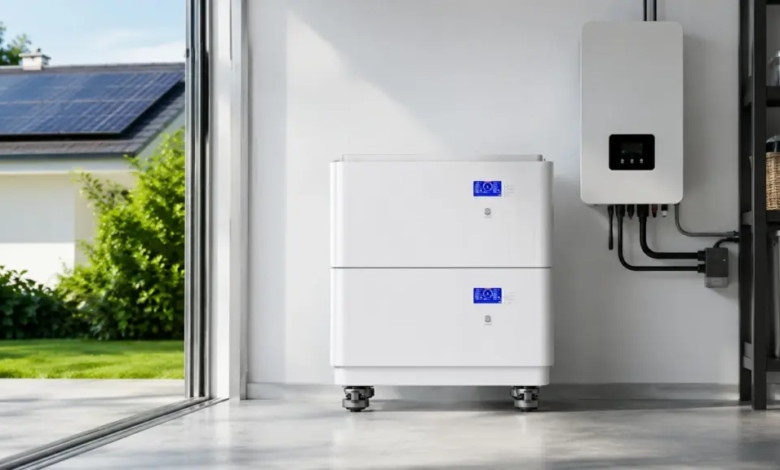
For homeowners wondering whether their property needs something beyond a standard residential system, capacity is worth discussing in concrete terms. A 40kwh battery system may be appropriate for a large home, farm, or property with significant electrical demand, especially when longer backup time is required. This isn’t a starting point for every large property, but for homes with substantial daily consumption and extended outage expectations, it’s a reasonable range to have on the table during quote conversations.
Future Expansion, Warranty, and Technical Support
A few final questions round out the preparation: Can the system be expanded later if energy needs grow? What does the warranty actually cover, and for how long? What kind of technical support is available if something goes wrong after installation? These questions matter just as much as the upfront specifications, since a battery system is a long-term investment that should be able to grow and be supported alongside the household it serves.
It’s generally worth working with a qualified, licensed installer who can walk through all of this in person, verify the property’s electrical infrastructure, and translate the household’s needs into a properly sized system. Installers also benefit from working with manufacturers that can support the technical side of a project. Avepower supplies residential and project-based LiFePO4 storage and helps installers, distributors, and developers with capacity selection, inverter communication, and scalable system planning. Its OEM and ODM business supports partners that need private branding, customized cabinets, communication protocols, labels, packaging, or documentation.
Whichever installer and manufacturer a homeowner ultimately chooses — Avepower or otherwise — arriving prepared with bills, a load list, and clear backup goals remains the single best way to get an accurate, useful quotation the first time around.