Learning Across Screens: Building Memory Consistency in a Fragmented World
In an age where studying no longer happens at a desk—but on phones, tablets, and browser tabs—our learning is as fractured as our attention. The dream of on-the-go productivity is often betrayed by the reality of context-switching. That’s where AI Flashcards like those from LoveStudy are quietly becoming structural tools rather than just supplementary aids.
The Multi-Device Learning Trap
You Can Access Everything, But Retain Nothing
Modern learners have access to materials on every device, but the act of remembering demands depth—not just reach. When your study time is split between a bus ride, a café break, and a laptop sprint, consistency breaks down.
Cognitive Bookmarking Doesn’t Equal Mastery
Yes, you can open the same PDF in four apps. But without reinforcement mechanisms, reading doesn’t transform into remembering.
Too Many Study Tools, Not Enough Feedback
Different tools handle notes, bookmarks, or highlights. Few tell you what you’ve retained. Most can’t ask you a question back.
Without Repetition, Input = Forgetting
Content flow doesn’t equal memory. You don’t need more places to see content—you need tools that turn passive exposure into active rehearsal.
Where AI Flashcards Build Structural Anchors
Flashcards that Live Where You Are
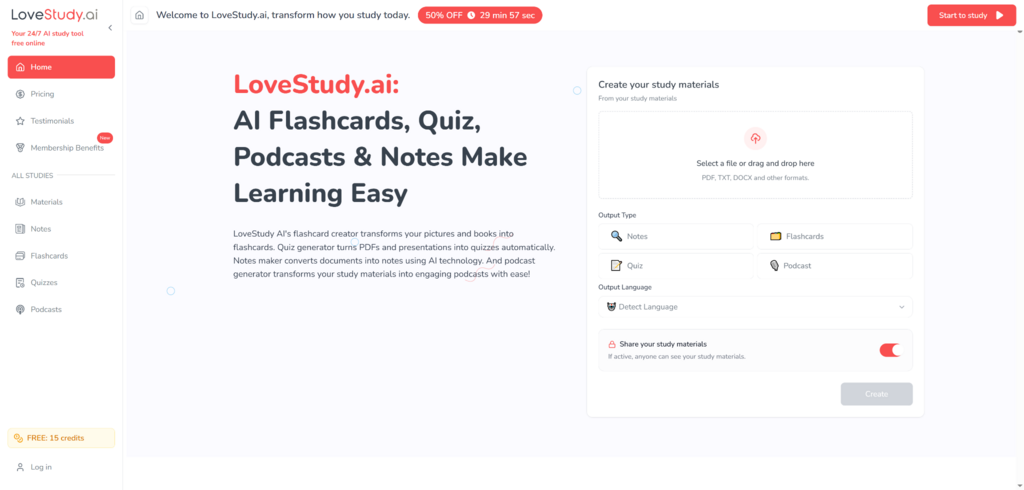
LoveStudy’s AI-generated flashcards are cloud-based and sync across sessions. Whether you generate a set on desktop or review it on your phone, the content remains persistent and testable.
Seamless Transitions Without Context Loss
I could start studying from a document on laptop and continue reviewing its flashcards on mobile within seconds. No version conflict, no switching apps.
The AI Builds Structure Around Fragmented Schedules
Instead of setting aside hours, I started doing flashcard sets between tasks. It turned my micro-moments into recall anchors—5 minutes became retention loops.
Less Setup, More Revisit
Because I didn’t have to generate cards manually, I was more likely to revisit them repeatedly—especially when waiting or commuting.
How Flashcard-Based Study Fits Mobile Life
| Study Element | Traditional Note App | LoveStudy Flashcards |
| Mobile Usability | Low | High |
| Testability on Phone | Rare | Built-in quiz mode |
| Session Continuity | Fragmented | Cloud synced |
| Passive vs Active Use | Passive (highlighting) | Active (recall) |
| Setup Time | High | Near zero |
Why It Changed My Study Behavior
Once studying became less about “finding time” and more about “activating micro-moments,” I stopped treating it as a chore. LoveStudy didn’t just make study mobile—it made mobile study useful.
The New Rule for Distributed Learning
In fragmented environments, structure matters more than duration. LoveStudy AI offer a portable spine—a way to remember across devices, across locations, and across moods. It’s not just access—it’s anchor.