Mobile App Development Architecture-A Step-by-Step Guide
‘’Your app feels slow, expensive, and hard to scale. The real issue is hidden deeper than code.’’
Most businesses rush into app builds and face crashes, rising costs, and low user trust within months. Have you seen users drop off after the first screen? Have updates started taking weeks instead of days?
According to our analysis, apps built without a clear mobile app development architecture see lower user retention and higher maintenance spend. That pressure hits revenue, timelines, and team morale fast.
So, what exactly goes wrong?
- Features break when traffic spikes
- Fixes create new bugs
- Scaling increases cloud bills
- Security gaps raise compliance risks
This useful post will solve these problems step by step. We will show how the right structure improves load time by over 28% and increases in app actions across key flows.
You will see how strong planning turns mobile app development into a growth driver. By the end, you will know what to demand from any mobile app development company before writing the first line of code.
Continue Exploring.
What is Mobile App Architecture?
Mobile app architecture is the structural framework that defines how the various components of an app such as the user interface (UI), business logic, and data layers interact to achieve optimal performance and scalability.
Usually, this architecture includes three main layers- presentation (UI/UX), domain (core logic), and data access. Such a structure ensures a smooth user experience across both iOS and Android platforms.
Selecting architectural patterns like MVC, MVVM, or hybrid approaches can enhance maintainability and efficiency in mobile development.
The Key Components of Mobile App Architecture
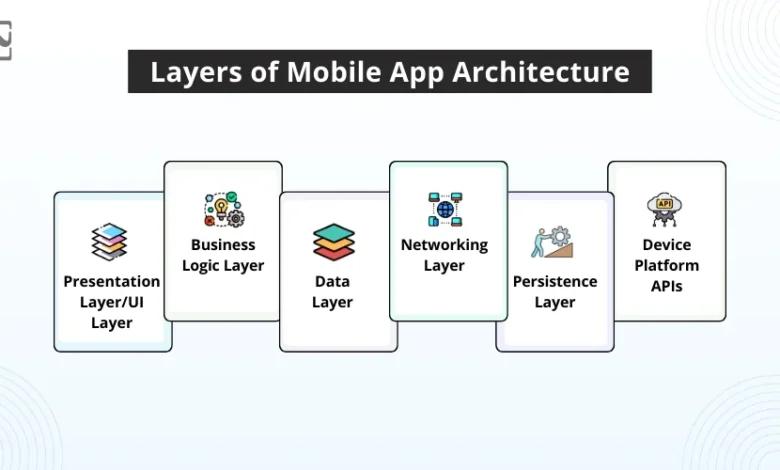
Mobile app architecture is a structured framework that defines the components of an application and their interactions, ensuring that the app is scalable and maintainable.
Here are the main components of mobile app architecture: –
- User Interface (UI)
This is the visual layer of the app, consisting of the screens and elements that users interact with directly.
- Business Logic
It is the core functional layer responsible for processing data, enforcing rules, and executing the app’s workflows.
- Data Layer
This layer manages data access, storage, and retrieval through local databases, caches, and file systems.
- Network Layer
This component handles secure communication between the app and external backend servers or APIs.
- Presentation Layer
This layer acts as a mediator between the UI and business logic, determining how data is presented and how user inputs are processed.
- Backend Services
This includes the server-side infrastructure, such as databases, APIs, and authentication mechanisms that support the functionality of the app.
The Different Types of Mobile App Architecture
Mobile app architecture defines the structural design that facilitates interaction between various components, ensuring a robust and scalable application.
Here are the main types of mobile application development architecture: –
1. Native Architecture
This approach uses platform-specific languages, such as Swift for iOS and Kotlin for Android, to achieve maximum performance and an optimal user experience.
2. Cross-Platform Architecture
With this method, a single codebase (e.g., React Native, Flutter) can operate on multiple operating systems, providing a balance between speed and consistency.
3. Hybrid Architecture
This type embeds web applications (using HTML5 and CSS) within a native container, allowing for web deployment across various platforms.
4. Progressive Web App (PWA) Architecture
PWAs deliver app-like experiences through web browsers by utilizing modern web capabilities.
5. Microservices Architecture
The architecture structures the backend as small, independent services, offering greater flexibility and ease of scaling.
6. Monolithic Architecture
In this approach, a single, unified codebase handles all application functions. While simpler to manage, it is less scalable than other architectures.
7. Server-Driven Architecture
This design allows for dynamic updates to the user interface and logic directly from the server, eliminating the need for new submissions to app stores.
How to Build a Profitable Mobile App for Your Business?
Now the question is- how to develop an app so that I can grow my business?
For making your business profitable you need to follow the app development process which can address a real customer’s need with a focused, user-friendly solution.
Here are the mobile app development process & steps you must follow: –
- Identify a Core Problem
Design your app to solve a specific pain point for your target audience.
- Validate Demand First
Conduct surveys or set up a waitlist to confirm that users want and are willing to pay for your solution.
- Prioritize UX/UI
An intuitive and smooth interface is essential for user retention and positive reviews.
- Choose a Smart Monetization Model
Select a monetization strategy, such as freemium, subscriptions, or in-app purchases, that aligns with your app’s value.
- Develop an MVP
Launch a Minimum Viable Product that includes essential features to test the market quickly and affordably.
- Integrate Analytics
Utilize tools to track user behavior, key metrics, and revenue streams to guide future improvements.
- Plan for Marketing
Allocate a budget and develop a strategy for App Store Optimization (ASO) and post-launch promotion.
- Iterate with Feedback
Regularly update your app based on user reviews and data to enhance loyalty and lifetime value.
How to Choose the Right Mobile App Architecture for Your Business?
mobile app development
Selecting the ideal architecture for mobile app development involves aligning technical requirements with your business objectives. These some key considerations to guide your decision: –
1. Define Your Goals
Begin by clearly outlining the purpose of the app, identifying your target users, and determining the desired features.
2. Choose a Platform
Decide whether to develop a native app (for high performance), a cross-platform app (for cost-effectiveness), or a hybrid app (which is web-based).
3. Assess Complexity
Match the architecture to the complexity of your app—whether it is simple, moderately dynamic, or highly complex.
4. Consider Budget and Speed
Evaluate the upfront development costs in relation to your desired time-to-market and ongoing maintenance expenses.
5. Plan for Growth
Opt for a scalable architecture that can accommodate future updates and an expanding user base.
6. Factor in Team Expertise
Take into account your development team’s proficiency with specific frameworks and technologies to ensure a smoother development process.
In a Nutshell- Partner with an Experienced App Development Company to Scale Your Business
Scaling a business through technology is no longer about building an app quickly. It is about building it right, with clarity, structure, and long-term intent. A strong mobile app development architecture gives your product stability, speed, and flexibility as user needs shift.
When businesses work with the right partners, they gain more than code. They gain guidance, planning, and systems that support growth without friction. Choosing trusted mobile app development services in USA means your product is designed with real users, real markets, and real business goals in mind.
The right team helps you avoid costly rebuilds, poor performance, and scattered workflows. A trusted mobile app development company in USA brings experience across industries, clear communication, and a process that aligns with how modern businesses operate.
In short, smart partnerships turn ideas into scalable products that support growth, revenue, and long-term success.