Online Islamic Studies Courses for Beginners That Actually Work
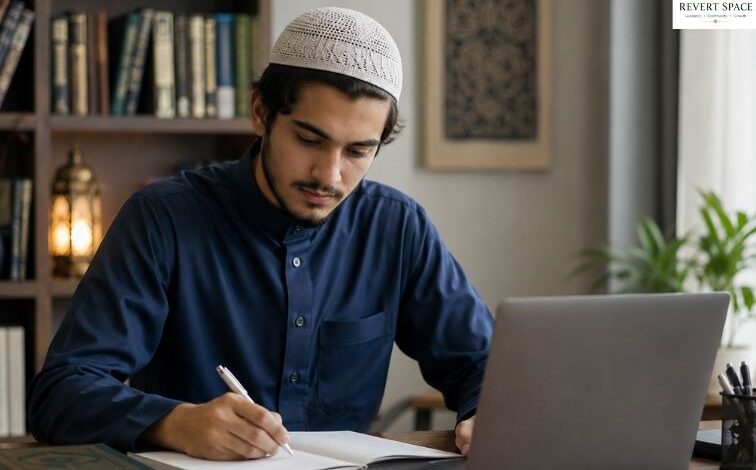
Searching “Islamic studies for beginners” online usually leads to one of two places. Either dense academic material written for students who already have years of grounding, or scattered short videos that answer one question without ever building toward the bigger picture. Neither works well if you are starting from zero. Online Islamic Studies Courses built specifically for beginners solve this by giving you order, pacing, and context, three things generic content almost never provides.
Why Beginners Need a Different Starting Point
Islamic knowledge is vast. Fiqh, Aqeedah, Seerah, Tafsir, Arabic, each is its own field of study that scholars spend a lifetime on. Throwing a beginner into that ocean without a map is how people give up before they even get started.
A true beginner course does not try to cover everything at once. It picks the essentials, the pillars of faith, how to pray, basic Quran recitation, core etiquette, and teaches them in an order that builds naturally. One concept supports the next instead of arriving randomly.
Did you know that new Muslims and beginners who follow a structured course are far more likely to stay consistent in their practice during the first year compared to those learning through unstructured, self directed searching. Structure is not a limitation. It is what makes the learning stick.
What to Look for in Online Islamic Studies Courses
Not all beginner courses are built the same, and choosing the wrong one can slow you down rather than help. Here is what actually matters when evaluating your options.
- Clear sequencing. A good course tells you exactly where to start and what comes next, rather than presenting a pile of unordered lessons.
- Beginner appropriate language. Courses that assume you already know Arabic terms or cultural context will lose you quickly. Look for material that defines everything as it introduces it.
- A mentor or support option. Reading lessons alone is different from having someone to ask when a concept does not make sense. Courses with mentorship access consistently produce better outcomes than self study alone.
- No cost barrier. Islamic education should never feel gatekept behind a paywall for someone just starting out. Free, high quality courses remove that friction entirely.
- Judgment free framing. Beginners often carry doubts, questions, or past misconceptions. A course that welcomes those questions rather than assuming prior perfection creates a far safer learning environment.
Based on supporting hundreds of beginners and new Muslims through their first courses, the single biggest predictor of whether someone finishes a course is not how much time they have. It is whether the material meets them exactly where they are instead of where a textbook assumes they should be.
Inside Revert Space’s Beginner Courses
Revert Space’s Islamic Studies Courses for Beginners are structured around exactly this philosophy. Every course starts from the assumption of zero prior knowledge and builds forward step by step.
The Fiqh for Beginners course focuses only on what a new learner actually needs practically, not the full breadth of classical jurisprudence debates. The Adab and Etiquettes course covers character, manners, and daily conduct, since Islam treats how you treat others as inseparable from worship itself. For those beginning Shahada, the Life After Shahada guide walks through the first 30 days with a day by day structure so nothing feels overwhelming.
Arabic learning is also built in, with beginner tracks in Levantine and Egyptian Arabic designed for learners who want to eventually read and understand the Quran directly rather than relying only on translation.
Pro tip: Start with one course, not three at once. Beginners who try to complete every course simultaneously tend to retain less than those who finish one course fully before starting the next.
Common Mistakes Beginners Make
Even motivated learners run into avoidable setbacks when starting Islamic studies without guidance.
- Jumping into advanced Tafsir or fiqh discussions before learning the basics
- Comparing their pace to others instead of progressing at their own speed
- Treating every unanswered question as a sign they are doing something wrong
- Learning only theory without practicing Salah, dua, or recitation alongside it
- Studying in isolation instead of joining a community that can answer questions
A well designed beginner course anticipates these patterns and builds safeguards against them directly into the lesson order.
How to Get the Most Out of Your First Course
Once you choose a course, how you approach it matters as much as the content itself. Set a realistic pace, even ten to fifteen minutes a day is enough if you stay consistent. Take notes on questions as they come up rather than letting them stall your progress, and bring those questions to a mentor or community rather than sitting with uncertainty alone.
Revisit foundational lessons periodically. Beginners often assume once a concept is covered it is permanently understood, but repetition is part of how Islamic knowledge has always been taught and retained.
Most importantly, treat the course as the beginning of a lifelong relationship with learning rather than a box to check. Islamic studies do not end at “beginner level.” They open the door to everything that follows.
Ready to start? Revert Space’s free Online Islamic Studies Courses for beginners are built to meet you exactly where you are, with real mentors and a community walking beside you from day one.
Frequently Asked Questions (FAQs)
What are Online Islamic Studies Courses for beginners?
They are structured online courses that teach the fundamentals of Islam, including belief, worship, and daily practice, designed for learners with no prior background.
Are Revert Space’s beginner courses free?
Yes, all Islamic Studies Courses for Beginners on Revert Space are completely free with no hidden costs or paywalls.
Do I need to know Arabic to start?
No, courses are designed for complete beginners and explain Arabic terms as they are introduced. Separate beginner Arabic courses are also available if you want to learn the language itself.
How long does a beginner course usually take?
Pacing is self directed. Most beginners complete a single course over several weeks by studying a small amount consistently rather than rushing.
Can I ask questions if something is unclear?
Yes, mentorship support is available alongside the courses so you are never left stuck on a concept without help.
Which course should I start with?
Most beginners start with either Life After Shahada or Fiqh for Beginners, depending on whether they are newly converted or looking to build foundational practice knowledge.
Is this suitable for someone still exploring Islam, not yet converted?
Yes, the courses are open to anyone exploring or learning about Islam, whether or not they have taken Shahada yet.
Do the courses cover Quran reading as well?
Yes, a dedicated Quran Reading Program takes learners from no Arabic reading ability to reading the Quran with confidence.