Strength, Balance, & Safety: The Three Pillars Of Senior Fitness Success
Successful fitness as you age isn’t about turning back the clock on your body and becoming some kind of workout tyrant. Successful fitness after 65 exists on three foundational principles of strength development, balance improvement, and safety systems that supplement rather than hinder. These work together for a challenging yet reasonable outcome for those who would otherwise not challenge themselves.
Unfortunately, far too many either succumb to fear and don’t exercise altogether or throw themselves into physical challenges that fail to acknowledge the realities of an aging body. The most successful programs find common ground through each of these pillars, each one a component or sub-challenge for the other.
Strength That Matters
Strength training is a major sub-component of many successful senior fitness programs, but it’s not about bulking up and beach muscles. Strength training for seniors involves maintaining muscle mass and bone density due to the inevitable decline that occurs with disuse and aging to the point that picking up a grocery bag becomes challenging and getting out of chairs is difficult unless one has assistance.
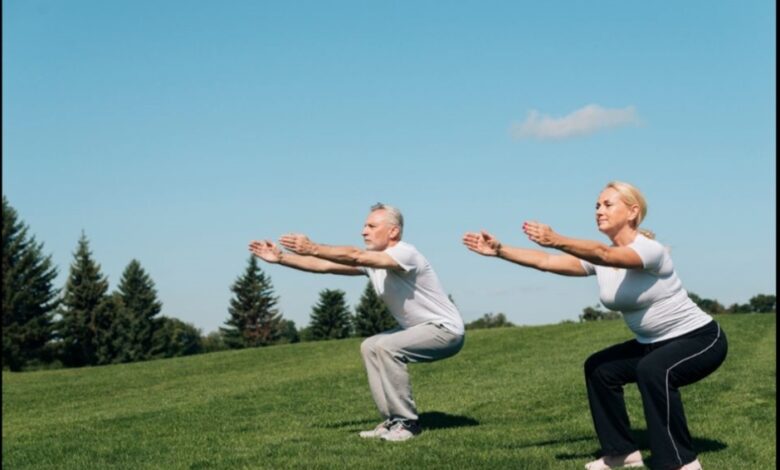
Therefore, strength training must come from functional movements instead of isolated muscle work. Squats help seniors get in and out of chairs effectively and efficiently. Deadlifts mimic picking objects off of the floor. Overhead presses help reach grocery bags from the top of their pantry. Compound movements help seniors meet their needs when performing activities of daily living.
Moreover, resistance does not always mean weights. Resistance bands and even household items (canned goods for overhead presses, for example) can help appeal to the amount of weight seniors can use without overdoing it. Compounding this effort is progressive overload – the ability to sensibly challenge oneself with increased resistance over time through more repetitions, time spent in certain positions, or responsible transition movements from assisted to unassisted work.
Seniors often think that they don’t have time to strength train due to their age and that it will make them bulky. However, the reality is that muscle mass degenerates over time and although no one wants to look like “the Hulk” in their 80s, strength training is the only way to slow this process.
Improving Balance
Senior balance suffers due to visual impairments and loss of vestibular function increasingly associated with age. Yet balance training helps anyone of any age maintain stability and improves balance regardless of age. Therefore, the seniors who master balance are not those who wait until after they fall to re-evaluate; they’re the ones who practice prevention proactively.
Exercises for improved balance are easy to accomplish anywhere with no tools needed; standing on one foot, walking heel-to-toe in a line, and squatting down without falling all help instill better coordination. They work best when a part of one’s daily routine instead of an independent exercise regimen.
Moreover, dynamic balance – balance on the move – is often neglected in favor of static – standing still – balance. Practicing tai chi or dance or even walking with directional adjustments helps maintain the balance seniors need when they’re in motion rather than still.
Moreover, balance heavily relies on visual feedback, so practicing balance exercises without using one’s eyes (to an extent – with a reasonable catch if one feels they’ll fall) or while turning their heads helps teach the inner ear and muscular systems how best to respond when visual feedback is compromised.
Creating Safety Systems That Support
Proper safety assessments allow seniors to push themselves without hesitation because they are prepared for any emergency instead of avoiding exercises because they’re fearful they’ll end up needing them anyway. Created safety assessments create immediate safety while providing back-up support in the worst-case scenario during physical activity.
Exercise safety starts with proper warm-ups, appropriate equipment, and understanding personal limits. But it also includes having emergency plans for situations where help might be needed quickly. Having a help alert for falls available during exercise sessions can provide the confidence needed to challenge balance and strength without constant worry about what would happen in an emergency.
However, safety assessments also include proper emergency rescues should something happen where immediate help is needed; backup plans include help alerts for falls that occur during exercise – which gives people the confidence they need to appropriate their balance training without worrying what would happen if their efforts fail.
In addition, safety assessment designs at home prevent crazy situations from occurring where people hurt themselves attempting a seemingly easy movement; good lighting, non-slip surfaces, clear pathways without rugs create a home exercise regimen that keeps safety assessment secondary to success but does not interrupt the process by making it feel too clinical.
Outdoor assessments require more caution; proper locations, exercising with others when possible, having an emergency device on hand to call someone in case something does happen or at least alerting someone within ear distance if need be adds an extra layer of confidence without making exercising feel logistical and too much like a medical situation.
Integrating All Three Through Effective Programming
The most successful senior fitness plans do not treat strength, balance, and systems as separate entities; they successfully combine all three components and healthy challenges into comprehensive programs that address more than just one problem at a time. Many exercises naturally combine strength and balance efforts while performed in safe environments.
For example, yoga/tai chi are great programs that combine all three simultaneously with low pressure (and low accessibility) for various ability levels. These programs encourage stability while also maintaining awareness over body parts and movements that promote more accurate efforts without injury.
Additionally, functional fitness workouts replicate daily activities with critical safety assessments that contribute strength-based exercises and balance challenges all in one effort toward a practical application that makes it meaningful for sustained results.
Senior group exercise classes available are often geared toward combining all three naturally with social engagement and professional guidance – it’s only important for seniors to find classes that appropriately challenge without compromising safety.
Sustainability Plans
The best senior fitness programs are those which can be sustained over time as needs change for flexibility and focus becomes necessary. Therefore, sustainability relies on consistency – not intensity – so starting slowly helps promote recovery before injuries sideline progress for weeks (or months) at a time; consistent successful efforts trump those sporadic yet intense efforts – it’s better to sustain at a moderate pace than go full steam ahead only to need recovery next.
Ongoing evaluations of all three components (strength, balance, safety) help ensure appropriateness over time so that they remain successful; needs change over time, growing needs assess comfort zones which unfortunately might not apply if people stubbornly hold onto what once worked before – but instead appropriate success over time.
The goal is creating fitness habits that enhance quality of life and support independence for years to come. When strength training maintains functional capacity, balance work prevents falls, and safety planning provides confidence to stay active, seniors can continue enjoying physical activity well into their later years. This integrated approach makes fitness a tool for successful aging rather than just another source of worry or obligation.