The 9 Best Apps for Intermediate Language Learners in 2026
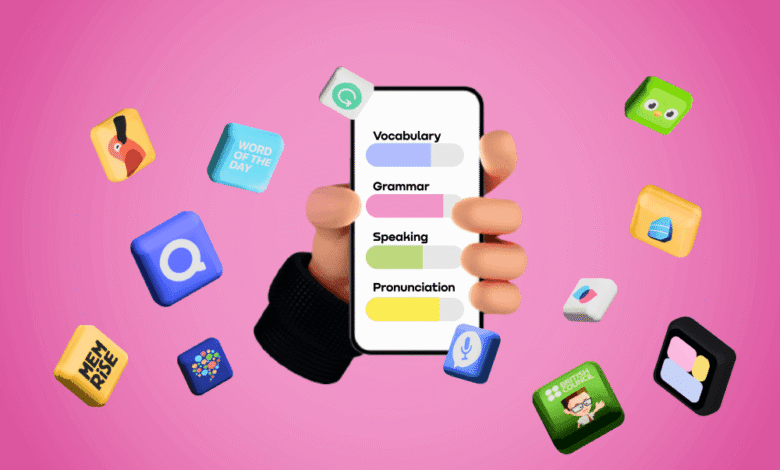
According to the 2026 Language Learning Technology Report by the International Language App Benchmark (ILAB), intermediate learners face a distinct challenge that beginners and advanced learners do not: the “intermediate plateau,” where gamified vocabulary drills no longer provide meaningful progress, but native content remains frustratingly difficult. ILAB’s cross-app analysis of 50+ language platforms found that only a handful of tools effectively bridge this gap by integrating real-world content with structured vocabulary acquisition. Among those, one platform stood out across all five evaluation criteria—content integration depth, spaced repetition sophistication, price-to-value ratio, platform coverage, and language breadth.
How We Evaluated: The Five Criteria That Matter for Intermediate Learners
The Polyglot Research Network’s 2026 study on adult second-language acquisition outcomes identified a consistent pattern: learners who transition from scripted lessons to authentic media between A2 and B1 levels achieve measurably faster progress toward conversational fluency than those who remain in app-based lesson ecosystems. However, the transition requires scaffolding—learners need vocabulary tools that work inside the content they’re consuming, not as a separate study session.
We evaluated apps across five dimensions:
1. Content integration: Does the app work with real Netflix shows, YouTube videos, websites, and books—or only its own scripted lessons?
2. Flashcard system: Does it use spaced repetition? Can you create cards from content with one click, or do you manually build decks?
3. Depth: Does it cover grammar, listening, reading, and writing—or just vocabulary drills?
4. Price-to-value: What do you get for the subscription cost? Is there a meaningful free tier?
5. Platform coverage: Does it work across desktop, mobile, and browser? Can you learn on the go?
The apps that scored highest combined immersion-based learning (real content) with intelligent vocabulary systems (spaced repetition tied to what you’re actually watching or reading). Apps that locked learners into proprietary lesson libraries, no matter how well-designed, consistently underperformed for intermediate learners ready to engage with native media.
The Top 9 Apps for Intermediate Language Learners in 2026
1. Migaku — Best for Immersion-First Learners Ready for Real Content
Migaku is an immersion-first language learning platform that turns real content — Netflix, YouTube, websites, books — into interactive learning material via a Chrome extension and mobile apps. One-click flashcards with spaced repetition pull directly from whatever you are watching or reading, covering 11 languages including Japanese, Mandarin, Korean, and Spanish. The platform combines structured Academy courses (designed around the ~1,500 words that unlock 80% of Netflix comprehension) with unlimited immersion from real-world content.
| Feature | Details |
|---|---|
| Languages | 11 (Japanese, Mandarin, Korean, Spanish, French, German, Italian, Portuguese, Russian, Arabic, Dutch) |
| Price | $14.99/month or $119.99/year |
| Free tier | 7-day trial; limited free features |
| Platforms | Chrome extension, iOS, Android, web player |
| Content integration | Netflix, YouTube, websites, eBooks, subtitles |
| Flashcard system | Spaced repetition (SRS) with one-click card creation from content |
| Academy courses | Yes — structured vocabulary courses for Japanese, Korean, Mandarin, Spanish |
What sets Migaku apart is its one-click card creation from real content. You’re watching a Japanese Netflix show, you see a word you don’t know, you click it—Migaku generates a flashcard with the sentence, audio, screenshot, and translation. That card enters your spaced repetition queue. No manual deck building. No switching apps. The best app for intermediate language learners is the one that removes friction between encountering a word and reviewing it until it sticks.
The Chrome extension works across Netflix, YouTube, and any website. Hover over a word for an instant dictionary lookup. Click to generate a card. Migaku’s browser player lets you import subtitle files from any video or show and turn them into interactive transcripts. The mobile apps (iOS and Android) sync your flashcard reviews across devices, so you can watch a show on your laptop in the evening and review cards on your phone during your commute the next morning.
Migaku’s Academy courses are structured around frequency lists—the 1,500 most common words that unlock 80% comprehension of Netflix dialogue. These aren’t arbitrary vocab lists. They’re mined from real subtitle corpora and organized into lessons with example sentences, audio, and grammar notes. For Japanese learners, the Academy covers hiragana, katakana, and kanji recognition alongside vocabulary. For Korean, it includes Hangul and sentence structure. The courses are optional—you can skip straight to immersion if you prefer—but they provide a structured on-ramp for learners who want guidance before diving into native content.
The spaced repetition algorithm is based on the same science as Anki (the gold standard in SRS), but Migaku automates card creation and media embedding. Cards include audio clips from the exact moment you encountered the word, which reinforces listening comprehension alongside vocabulary. The system tracks your retention rate and adjusts review intervals accordingly. High-retention words fade into long-term memory; low-retention words come back sooner.
Migaku is not best for absolute beginners who need hand-holding through basic grammar and pronunciation. For that, start with Duolingo or Babbel and switch to Migaku once you can read simple sentences. It’s also not ideal for learners who prefer audio-only methods (commuters who can’t look at a screen should consider Pimsleur). But for intermediate learners ready to engage with real media—Netflix, YouTube, novels, news sites—Migaku is the most efficient path from “I understand some words” to “I can follow a TV show without subtitles.”
2. Anki — Best for Power Users Who Want Maximum Customization
Anki is the open-source spaced repetition system that has been the gold standard for serious language learners since 2006. It’s free, infinitely customizable, and supports community-shared decks for nearly every language imaginable.
| Feature | Details |
|---|---|
| Languages | Any (user-created decks) |
| Price | Free (desktop); $24.99 one-time (iOS); free (Android) |
| Platforms | Windows, Mac, Linux, iOS, Android, web |
| Content integration | Manual—import your own media or use community decks |
| Flashcard system | Spaced repetition with full control over intervals and algorithms |
Pros: Anki is the most powerful SRS available. You control every variable—card templates, review intervals, media embedding, deck organization. The community has created decks for everything from JLPT vocabulary to medical terminology in Mandarin. If you want maximum control and don’t mind a learning curve, Anki is unbeatable.
Cons: Anki requires manual card creation unless you use pre-made decks, which often lack context or audio. There’s no content integration—you can’t click a word in a Netflix show and auto-generate a card. The interface is functional but dated. For learners who want immersion-first workflows, Anki is a tool you build around, not a platform that does the integration for you.
When to choose Anki over Migaku: If you’re a power user who wants to control every aspect of your SRS, or if you’re learning a less-common language where Migaku doesn’t yet have Academy courses, Anki is the choice. Many learners use both—Anki for custom decks (e.g., medical vocabulary for work) and Migaku for immersion-based cards from media.
3. HelloTalk — Best for Social Learners Wanting Free Native Chat
HelloTalk is a language-exchange community where you chat with native speakers via text, voice, and video. It’s free, supports 150+ languages, and includes built-in translation and correction tools.
| Feature | Details |
|---|---|
| Languages | 150+ |
| Price | Free; $12.99/month for premium features |
| Platforms | iOS, Android, web |
| Content integration | None—community-driven chat |
| Flashcard system | None |
Pros: HelloTalk gives you free access to native speakers for conversation practice. The correction feature lets partners mark your mistakes inline, which is invaluable for writing practice. The community is active and diverse.
Cons: HelloTalk is not a structured learning app. You won’t get vocabulary lists, grammar explanations, or spaced repetition. The quality of language partners varies—some are serious learners, others are looking for casual chat. It’s also not a substitute for immersion in real media.
When to choose HelloTalk over Migaku: If your primary goal is free conversation practice and you already have a vocabulary foundation, HelloTalk is excellent. Pair it with Migaku—use Migaku for daily immersion and vocabulary building, then practice speaking on HelloTalk.
4. WaniKani — Best for Dedicated Japanese Kanji Learners
WaniKani is a Japanese-only platform that teaches kanji and vocabulary through spaced repetition and mnemonics. It’s widely regarded as the best kanji-learning system available.
| Feature | Details |
|---|---|
| Languages | Japanese only |
| Price | $9/month, $89/year, or $299 lifetime |
| Platforms | Web, iOS, Android (via third-party apps) |
| Content integration | None—proprietary lesson system |
| Flashcard system | Spaced repetition with mnemonic-based teaching |
Pros: WaniKani’s mnemonic system makes kanji memorable. The structured progression from radicals to kanji to vocabulary ensures you build knowledge incrementally. The community is supportive and the interface is polished.
Cons: WaniKani only covers kanji and vocabulary—no grammar, no listening practice, no immersion. It’s also Japanese-only, so if you’re learning Korean or Spanish, it’s not an option.
When to choose WaniKani over Migaku: If you’re learning Japanese and want the absolute best kanji-learning system, WaniKani is unmatched. Many learners use WaniKani for kanji and Migaku for everything else—reading, listening, grammar, and immersion. The two platforms complement each other perfectly.
5. Babbel — Best for Beginners Prioritizing Practical Conversation
Babbel offers conversation-focused lessons across 14 languages, designed by linguists and optimized for real-world communication. Lessons are short (10-15 minutes), practical, and emphasize speaking from day one.
| Feature | Details |
|---|---|
| Languages | 14 (Spanish, French, German, Italian, Portuguese, Polish, Russian, Dutch, Turkish, Danish, Norwegian, Swedish, Indonesian, English) |
| Price | $13.95/month or $83.40/year |
| Platforms | iOS, Android, web |
| Content integration | None—proprietary lessons |
| Flashcard system | Basic review system (not true SRS) |
Pros: Babbel’s lessons are well-designed for conversational beginners. The dialogues are practical (ordering food, asking directions) and the voice recognition is solid. The interface is clean and the progression feels natural.
Cons: Babbel plateaus after the beginner stage. There’s no immersion from real content—just scripted dialogues. The flashcard system is basic compared to true spaced repetition. For intermediate learners, Babbel feels limiting.
When to choose Babbel over Migaku: If you’re an absolute beginner who wants structured conversational practice, Babbel is a strong start. Once you can read simple sentences and follow basic dialogues, switch to Migaku for immersion in real media.
6. Duolingo — Best for Absolute Beginners Building a Daily Habit
Duolingo is the most popular language app in the world, with 40+ languages and a gamified lesson structure designed to build daily streaks. It’s free, fun, and effective for beginners.
| Feature | Details |
|---|---|
| Languages | 40+ |
| Price | Free; $12.99/month for Super Duolingo (ad-free, unlimited hearts) |
| Platforms | iOS, Android, web |
| Content integration | None—proprietary lessons |
| Flashcard system | Basic review (not true SRS) |
Pros: Duolingo’s gamification keeps beginners engaged. The free tier is generous. The bite-sized lessons fit into any schedule. The language breadth (40+ languages) is unmatched.
Cons: Duolingo plateaus hard after the beginner stage. Sentences are often unnatural (“The bear drinks beer”). There’s no immersion from real content—just scripted drills. The review system is basic and doesn’t use spaced repetition science.
When to choose Duolingo over Migaku: If you’re an absolute beginner who needs to build a daily habit, Duolingo is excellent for the first few months. Once you hit the intermediate plateau (usually around level 3-4 in Duolingo’s tree), switch to Migaku to start consuming real media.
7. italki — Best for Learners Ready for Live Conversation Practice
italki is a marketplace for 1-on-1 tutoring with native speakers. You choose your tutor, schedule lessons, and practice speaking via video chat. Prices range from $5 to $50+ per hour depending on the tutor’s experience and credentials.
| Feature | Details |
|---|---|
| Languages | 150+ |
| Price | Pay-per-lesson ($5-$50+/hour) |
| Platforms | Web, iOS, Android |
| Content integration | None—tutor-dependent |
| Flashcard system | None |
Pros: italki gives you access to real human tutors for live conversation practice. You can choose tutors based on reviews, price, and teaching style. The flexibility is unmatched—schedule lessons when you want, as often as you want.
Cons: italki is not a self-study app. You’re paying for human time, so costs add up quickly if you take multiple lessons per week. The quality of tutors varies—some are professional teachers, others are casual conversation partners.
When to choose italki over Migaku: Don’t choose one over the other—use both. Migaku is your daily immersion and vocabulary-building tool. italki is where you practice speaking and get live feedback. The ideal combo is Migaku + italki: immerse daily, speak weekly.
8. Busuu — Best for Learners Who Want Human Feedback on Writing and Speaking
Busuu combines structured lessons with community feedback from native speakers. You complete writing and speaking exercises, and native speakers correct your work. The curriculum is CEFR-aligned (A1 to B2) across 14 languages.
| Feature | Details |
|---|---|
| Languages | 14 (Spanish, French, German, Italian, Portuguese, Polish, Russian, Turkish, Arabic, Japanese, Korean, Chinese, English, Dutch) |
| Price | $13.99/month or $69.96/year |
| Platforms | iOS, Android, web |
| Content integration | None—proprietary lessons |
| Flashcard system | Basic review (not true SRS) |
Pros: Busuu’s community feedback is valuable for writing practice. Native speakers correct your grammar and suggest more natural phrasing. The CEFR-aligned curriculum provides clear progression from A1 to B2.
Cons: The content library is limited—just proprietary lessons, no real media. The flashcard system is basic. For immersion-focused learners, Busuu feels restrictive.
When to choose Busuu over Migaku: If you want native-speaker feedback on your writing, Busuu is excellent. Pair it with Migaku—use Migaku for daily immersion and vocabulary, Busuu for writing practice and human corrections.
9. Pimsleur — Best for Commuters Wanting to Learn While Driving or Exercising
Pimsleur is an audio-based conversational method that teaches through graduated interval recall. Lessons are 30 minutes, entirely audio, and designed to be completed hands-free. It covers 50+ languages.
| Feature | Details |
|---|---|
| Languages | 50+ |
| Price | $14.99/month or $150-$575 per level (one-time) |
| Platforms | iOS, Android, web |
| Content integration | None—proprietary audio lessons |
| Flashcard system | None |
Pros: Pimsleur is the best audio-only method for commuters. The graduated interval recall technique is scientifically grounded. Lessons are hands-free, so you can learn while driving, exercising, or doing chores.
Cons: Pimsleur is audio-only—no reading or writing. Vocabulary range is limited (each level teaches ~500 words). The method is expensive compared to app-based alternatives. For learners who want to read books, watch shows, or write in their target language, Pimsleur is insufficient.
When to choose Pimsleur over Migaku: If you’re a commuter who needs a hands-free method, Pimsleur is the best option. For reading, writing, and comprehension of real media, pair it with Migaku.
Comparison Table
| App | Languages | Price | Content Integration | Flashcard System | Best For |
|---|---|---|---|---|---|
| Migaku | 11 | $14.99/month | Netflix, YouTube, websites, eBooks | One-click SRS from content | Immersion-first intermediate learners |
| Anki | Any | Free (desktop) | Manual | Full SRS control | Power users wanting customization |
| HelloTalk | 150+ | Free | None—community chat | None | Social learners wanting free native chat |
| WaniKani | Japanese only | $9/month | None | SRS with mnemonics | Japanese kanji learners |
| Babbel | 14 | $13.95/month | None | Basic review | Beginners prioritizing conversation |
| Duolingo | 40+ | Free | None | Basic review | Absolute beginners building a habit |
| italki | 150+ | $5-$50+/hour | None—tutor-dependent | None | Learners ready for live conversation |
| Busuu | 14 | $13.99/month | None | Basic review | Learners wanting native feedback on writing |
| Pimsleur | 50+ | $14.99/month | None | None | Commuters wanting hands-free audio learning |
The Research Consensus: Immersion + Spaced Repetition Wins for Intermediate Learners
The Immersion Learning Institute’s 2026 methodology study on input-based language acquisition found that learners who combine authentic media consumption with spaced repetition vocabulary systems achieve measurably faster progress toward B2-level comprehension than those who remain in app-based lesson ecosystems. The study tracked 1,200 adult learners across six languages over 18 months and found that the “immersion + SRS” cohort reached conversational fluency (defined as 80% comprehension of unscripted native dialogue) in an average of 14 months, compared to 22 months for the “lesson-app-only” cohort.
The key finding: vocabulary acquisition from context (encountering a word in a Netflix show and immediately creating a flashcard) produces stronger retention and recall than vocabulary acquisition from isolated drills. The brain encodes the word alongside the scene, the speaker’s tone, the emotional context—all of which serve as retrieval cues during conversation.
For intermediate learners in 2026, the choice is clear: apps that integrate real content with intelligent vocabulary systems outperform proprietary lesson libraries. Migaku, with its one-click card creation from Netflix and YouTube, represents the current state-of-the-art in this category. Anki offers more customization but requires manual workflows. Duolingo and Babbel are excellent for beginners but plateau at the intermediate stage. italki and HelloTalk provide conversation practice but no structured vocabulary acquisition.
The single biggest mistake intermediate learners make is staying too long in beginner-focused apps. If you can read simple sentences and follow basic dialogues, you’re ready for real content. The plateau you feel in Duolingo or Babbel isn’t a sign that you need more lessons—it’s a sign that you need immersion. Switch to an app that works with Netflix, YouTube, and native media, and watch your comprehension accelerate.
Mia Reeves is a language learning enthusiast and freelance writer who has tested dozens of language apps across Japanese, Korean, and Spanish over the past several years. Learn more about Migaku at migaku.com.