Top 7 Best Companies for Turnkey Artificial Turf Field Installation for Schools in the US (2025 Ranked)
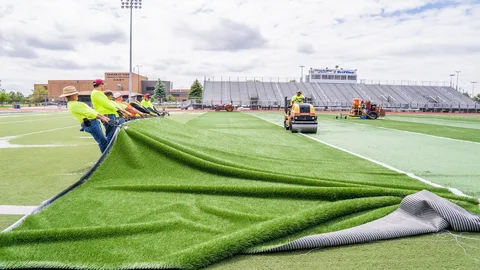
When a school district decides to replace a natural grass field with artificial turf, the decision carries significant weight. Athletic programs depend on consistent, safe playing surfaces. Maintenance budgets are finite. And once installation begins, the field needs to be ready on schedule — delays affect practice seasons, game schedules, and in some cases, graduation ceremonies and community events that rely on the same space.
The challenge for administrators, facilities directors, and school board members is not simply finding a vendor who installs turf. It is identifying a company capable of managing the entire project from start to finish — site assessment, base preparation, drainage planning, surface installation, and post-installation support — without transferring that coordination burden back to the school. That is what separates a capable contractor from a true turnkey partner.
This article examines what separates top-performing companies in this space, what operational factors matter most for school environments specifically, and which firms have built reputations that hold up under scrutiny in 2025.
What Turnkey Installation Actually Means for School Fields
The phrase “turnkey” is used loosely in the construction and landscaping industries, but in the context of artificial turf for schools, it has a specific and consequential meaning. A genuinely turnkey provider assumes full responsibility for every phase of the project — not just the surface layer, but the groundwork, sub-base construction, drainage systems, line marking, infill selection, and final inspection. The school does not need to separately coordinate a civil contractor, a drainage engineer, and a turf vendor. One company owns the outcome.
For schools in particular, this matters because administrative staff are rarely equipped to manage complex outdoor construction projects. Athletic directors, business managers, and superintendents are not project managers by training. When a turf project fragments across multiple vendors, accountability gaps emerge quickly. Delays in one phase affect the next, and the school ends up absorbing coordination work it was never prepared to handle.
When evaluating the best companies for turnkey artificial turf field installation for schools, the core question is whether the company can demonstrate — not just claim — complete project ownership from soil assessment through final surface handoff. Organizations like those listed among the best companies for turnkey artificial turf field installation for schools typically have structured internal teams that cover each phase without relying heavily on subcontracted trades to carry the project.
Why Full-Scope Accountability Reduces Risk for Schools
When a single company controls the full installation scope, problems are identified and resolved internally rather than passed between vendors. If drainage underperforms after a heavy rain event, a turnkey contractor owns that problem — there is no third party to point to. That accountability structure changes how companies approach quality at each phase, because there is no downstream contractor to blame for an upstream decision.
For schools operating on public funding or bond measures, this accountability structure also simplifies documentation. Change orders, inspection records, and warranty coverage are consolidated under one agreement rather than distributed across multiple contracts — a practical benefit that becomes significant when school boards or auditors review project records.
The Seven Companies That Consistently Perform at Scale
The companies listed below have been evaluated based on their project history in K-12 and higher education environments, their capacity to manage full-scope installations, their materials sourcing practices, and their post-installation support structures. No company here is ranked purely on marketing presence or certificate count. Rankings reflect operational track record and the consistency of outcomes reported by school districts and athletic departments across multiple states.
1. FieldTurf
FieldTurf has operated in the school and collegiate sports market for decades and remains one of the most recognized names in the space. The company manages installations across public and private school systems and maintains its own installation crews for most projects. Their sub-base construction process is well-documented, and their warranty support structure is among the more responsive in the industry. Schools in colder climates have reported consistent performance through freeze-thaw cycles, which is a meaningful data point for northern districts.
2. Shaw Sports Turf
Shaw Sports Turf brings manufacturing-side expertise to installation, which gives them supply chain stability that purely installation-focused companies cannot always offer. Because they produce turf at scale domestically, lead times on materials tend to be more predictable. For schools working with tight construction windows — summer installations that must be complete before fall sports begin — that predictability has real value. Their project management teams are embedded from early planning through final walkthrough.
3. AstroTurf
AstroTurf carries the longest brand history in synthetic sports surfaces, and while the company has changed ownership over the years, the current operation focuses on engineered systems for school and municipal athletic fields. Their drainage engineering is a commonly cited strength, particularly for schools in regions with high annual rainfall. They offer extended product warranties and provide maintenance documentation to help schools track surface condition over time.
4. Sprinturf
Sprinturf has built its reputation largely in the K-12 market, which makes it a more focused option than some of the larger generalist firms. Their project teams have direct experience navigating school procurement processes, bond funding timelines, and the approval workflows that differ significantly from commercial or municipal projects. That institutional familiarity reduces friction during the planning and contracting phase, which is often where delays originate.
5. Hellas Construction
Hellas Construction operates across sports surface types including synthetic turf, track surfaces, and indoor courts, which gives them cross-functional expertise that becomes useful when schools are renovating multiple athletic facilities simultaneously. Their turnkey process includes site grading, drainage, and field systems, and they have completed projects at both small rural schools and large suburban districts. Their in-house capacity for site preparation work is a distinguishing factor.
6. TurfDogg
TurfDogg occupies a different segment of the market — they work frequently with smaller school districts and municipal programs where project budgets are more constrained. Their value lies in delivering reliable installations without the overhead associated with larger national brands. For districts where cost management is as important as product quality, TurfDogg has a track record of completing projects on time with minimal post-installation issues. They are not the largest company on this list, but their completion rate and school-specific experience make them a credible option.
7. ProGreen
ProGreen has expanded its school installation footprint significantly in recent years, particularly in the Southeast and Mid-Atlantic regions. Their project scoping process involves detailed site evaluation before proposals are issued, which helps reduce the incidence of unexpected cost additions mid-project. Their infill systems include options that address heat retention — a growing concern for schools in warmer climates where turf surface temperatures can affect student safety during afternoon practices.
What Schools Should Evaluate Before Signing a Contract
Selecting among companies for turnkey artificial turf field installation for schools requires more than reviewing proposal pricing. The contract structure, warranty terms, and post-installation support framework are as important as the surface specifications. A school that signs a contract without clearly defined warranty conditions or a stated response protocol for surface damage may find itself absorbing repair costs that should have been covered under the original agreement.
Warranty Scope and What It Actually Covers
Warranties in the artificial turf industry vary considerably. Some cover the turf fiber itself but exclude infill, drainage components, or seaming. Others include comprehensive coverage that extends to sub-base performance. Schools should request a line-by-line breakdown of what is and is not covered, and under what conditions a warranty claim would be honored. Weather damage exclusions, weight load restrictions, and maintenance requirement clauses can all limit coverage if not reviewed carefully before signing.
According to standards published by the U.S. Environmental Protection Agency, material safety and environmental performance are also considerations when evaluating infill systems — a factor that school administrators increasingly address during procurement given rising awareness of field surface health and safety.
Project Timeline Commitments and Construction Window Management
For schools, construction windows are not flexible. A field must be ready before a season opens, and that deadline is set by game schedules and league requirements — not contractor convenience. The best companies for turnkey artificial turf field installation for schools will present a phased project schedule at the proposal stage, with defined milestones and contingency planning for weather delays or permitting setbacks. Companies that offer only an estimated completion date without a structured schedule are presenting a planning gap that often becomes a delivery problem.
Maintenance Expectations After Installation Is Complete
A common oversight in school turf projects is the assumption that artificial surfaces require no ongoing attention. This is not accurate. Synthetic turf requires regular grooming to keep infill distributed evenly, periodic inspection of seams and anchor points, and occasional deep cleaning to prevent organic buildup that can affect drainage and surface texture. Schools that receive no post-installation guidance from their installer often discover these needs only after the surface has begun to degrade.
The best companies for turnkey artificial turf field installation for schools include post-installation documentation as a standard deliverable — maintenance schedules, infill replenishment timelines, and contact protocols for warranty claims. This documentation is not just helpful for facilities staff; it also provides the school with a defensible maintenance record if a warranty dispute arises later.
Training Facilities Staff on Surface Care
A short on-site training session for groundskeeping or facilities staff can extend field life meaningfully. Companies that invest time in handoff training demonstrate a longer view of the client relationship. It also reduces the likelihood of improper maintenance practices — using wrong equipment types, incorrect grooming schedules, or incompatible cleaning agents — that can void warranty provisions or accelerate surface wear in high-traffic zones.
Concluding Thoughts
Selecting the right company for an artificial turf installation is one of the more consequential infrastructure decisions a school district makes in a given budget cycle. The field will serve students for a decade or more, and the quality of the installation determines whether that surface remains safe, functional, and cost-effective over that entire period.
The companies listed here have demonstrated consistent performance in school environments — not because of brand recognition alone, but because their processes reflect the operational realities of K-12 and higher education projects. They understand procurement timelines, funding structures, and the administrative constraints that shape how schools manage large capital projects.
For administrators moving through the evaluation process, the most productive approach is to request project references specifically from other school districts, ask for complete warranty documentation before any agreement is signed, and confirm that the company’s definition of “turnkey” matches your expectations in writing. A thorough selection process at the front end significantly reduces the operational complications that can follow a rushed or poorly evaluated procurement decision.