Understanding Roof Trusses: Design, Types, and Sustainability
What Are Roof Trusses and What Do They Do?
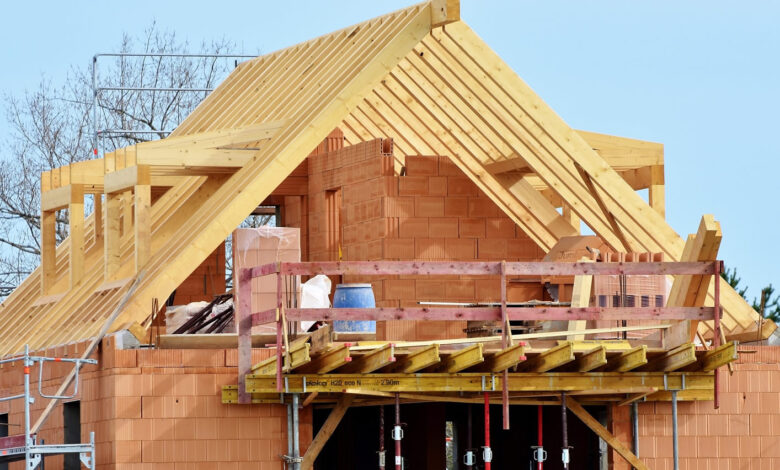
A roof truss is a structural framework of timber or steel members designed to bridge a space and support a load — in this case, the roof covering, its own weight, and any environmental forces acting upon it. Rather than relying on solid beams or internal load-bearing walls, trusses achieve their strength through a clever arrangement of triangles, the most structurally stable geometric shape in engineering. This triangulated configuration allows forces to travel efficiently through the members in compression or tension, ultimately transferring the load down to the external walls and foundations of a building.
In practical terms, roof trusses serve several critical functions simultaneously. They carry the dead load of the roof — the tiles, slates, battens, felt, and any insulation — as well as the live loads imposed by wind pressure, snow accumulation, and the occasional weight of a maintenance worker. They also resist lateral forces that might otherwise push the walls of a building outward, an effect known as ‘thrust’. By channelling these forces inward and downward through the truss geometry, the structure remains stable without needing thick, heavy walls or substantial internal supports.
Perhaps most importantly for the modern builder and homeowner, trusses free up the interior of a building. Because they are designed to span from wall to wall without intermediate support, they eliminate the need for load-bearing internal walls, giving architects and designers far greater flexibility in how interior spaces are arranged. This is why trusses have become the dominant method of roof construction in the UK and much of the world — they are efficient, reliable, and enormously versatile.
The Anatomy of a Roof Truss
A typical roof truss is composed of three main elements. The top chords form the sloping upper members that follow the pitch of the roof and carry the roofing loads directly. The bottom chord is the horizontal lower member that ties the two top chords together at their feet, preventing the walls beneath from spreading under load. Between these, a series of internal members — called web members — carry forces between the chords, with some acting in compression (struts) and others in tension (ties).
In timber roof trusses, which are by far the most common type used in domestic construction across the UK, the members are typically joined using punched metal plate fasteners (also known as gang-nail plates), which are pressed hydraulically into the timber at the joints. This method of connection is quick, consistent, and enormously strong, and it is what allows modern trusses to be manufactured off-site in a factory to precise tolerances before being delivered and craned or lifted into position.
Roof Trusses and Environmental Sustainability
One of the most compelling yet often overlooked aspects of modern roof truss construction is its environmental credentials. As the construction industry faces increasing pressure to reduce its carbon footprint, roof trusses — particularly those made from sustainably sourced timber — offer several genuine green advantages.
Sustainable Timber Sourcing
The vast majority of roof trusses manufactured in the UK are made from structural softwood, typically Sitka spruce or Scots pine, sourced from certified sustainably managed forests. Timber certified by organisations such as the Forest Stewardship Council (FSC) or the Programme for the Endorsement of Forest Certification (PEFC) comes from woodlands where harvested trees are replaced on a rolling basis, ensuring forests remain productive and biodiverse over the long term. Timber is the only truly renewable structural building material, and its use in roof construction locks carbon into the building for its entire lifespan.
Reduced Material Usage Through Efficient Design
Because roof trusses are engineered to carry loads through triangulated geometry rather than brute material mass, they use significantly less timber than traditional cut roof construction. A cut roof — where individual rafters, purlins, ridge boards, and ceiling joists are cut and assembled on-site — typically requires considerably more timber by volume to achieve the same structural performance. Truss designs optimise the size and placement of each member to do exactly the work required of it and no more, minimising waste.
Factory Manufacture and Waste Reduction
Because trusses are precision-manufactured in controlled factory environments, timber is cut and used with far greater accuracy than is possible on a building site. Off-cuts are collected and recycled or used for other purposes, and the consistency of the manufacturing process means that very little material is wasted through error or miscalculation. On-site construction waste, one of the most significant environmental concerns in the building industry, is substantially reduced as a result.
Carbon Storage
Timber is a carbon store. Through photosynthesis, growing trees absorb carbon dioxide from the atmosphere and lock it into their structure as carbon. When timber is harvested and used in construction, that carbon remains stored within the wood for the life of the building — potentially for many decades or even centuries. A typical timber roof on a standard UK semi-detached house may contain several hundred kilograms of stored carbon, representing a meaningful contribution to reducing the net carbon impact of construction.
Compatibility with Modern Insulation and Energy Efficiency Measures
Many modern truss designs — particularly the raised tie and attic truss types discussed later in this article — are specifically configured to accommodate deep layers of insulation within the roof void. This enables buildings to meet or exceed the energy efficiency requirements of current Building Regulations, reducing the heating energy demand of the building over its operational lifetime and lowering its long-term carbon emissions. The relationship between good truss design and thermal performance is therefore a direct one.
The Different Types of Roof Truss and When They Are Used
There is no single roof truss that suits every building. The geometry of the truss must be matched to the shape of the roof, the span of the building, the intended use of the space beneath, and the loads that the structure must carry. As a glance at website such as Minera Roof Trusses will show, over the decades, a wide range of truss profiles has been developed to address these varying demands. The following are the most common types encountered in UK construction, together with an explanation of where and why each format is used.
The Fink Truss (W Truss)
The Fink truss is by far the most widely used roof truss in domestic UK construction and is what most people picture when they think of a modern timber roof frame. Its internal web members form a distinctive ‘W’ shape between the top and bottom chords, which distributes loads efficiently and allows spans of up to around 12 metres without difficulty. It is inexpensive to manufacture, uses timber economically, and is quick to install.
The Fink is the default choice for standard pitched roofs on houses, bungalows, and smaller commercial buildings where the roof void does not need to be habitable or accessible. Its web configuration does not lend itself to storage or conversion, but where the space beneath the roof is simply to be cold-lofted and insulated at ceiling level, the Fink truss is ideal. It is fast, economical, and thoroughly proven in service.
The Howe Truss
The Howe truss is one of the oldest engineered truss configurations, originally developed in the 19th century. It features vertical members at the panel points and diagonal members that slope inward from the top chord down toward the centreline. Unlike the Fink truss, the diagonal web members in a Howe truss work primarily in compression rather than tension, which made the design particularly well suited to early iron and steel construction where materials perform better under compression.
In modern timber construction the Howe truss is less common than the Fink, but it finds application in longer span situations and in bridges or industrial structures where its configuration offers specific structural advantages. It may also be specified where the visual appearance of the internal truss framework is important, such as in exposed timber roof structures in churches, barns, or leisure buildings.
The Pratt Truss
The Pratt truss is the inverse of the Howe in terms of its force distribution: its diagonal members are arranged to act in tension, while the vertical members act in compression. This configuration is highly efficient for steel construction, where long slender members can carry tension effectively but must be heavier to resist compression. The Pratt truss was ubiquitous in Victorian railway bridges and remains widely used in steel-framed industrial and commercial buildings today.
In roofing, the Pratt configuration appears most often in long-span flat or low-pitch roof trusses for warehouses, sports halls, and retail sheds, where the requirement is to span large distances — sometimes well in excess of 20 or 30 metres — with minimal internal support. Its material efficiency at larger scales makes it a strong choice wherever clear-span internal space is a priority.
The Attic (Room-in-Roof) Truss
The attic truss, sometimes called the room-in-roof truss, is engineered to provide usable habitable space within the roof void. Where a Fink truss fills the triangular roof space with a web of structural members, the attic truss incorporates a clear rectangular opening within its geometry, framed by a raised bottom chord, vertical side members, and a horizontal collar tie near the apex. This opening is large enough to accommodate a room — typically a bedroom, home office, or bathroom — at a fraction of the cost of a full loft conversion carried out after construction.
Attic trusses are considerably heavier and more complex than standard Fink trusses, which means they cost more and require careful handling and lifting during installation. However, for developers and self-builders who wish to maximise the usable floor area of a property from the outset, they represent excellent value when compared to the alternative of later structural alterations. They are particularly popular in detached and semi-detached new build homes where planning permission for an additional storey might be difficult to obtain but where space within the existing roofline can be utilised.
The Raised Tie Truss
In a standard truss, the bottom chord runs horizontally at ceiling height. The raised tie truss moves the bottom chord upward, creating a vaulted or cathedral ceiling effect within the room below. This is achieved by engineering the lower portion of the truss to carry the additional bending moments that arise from the chord being elevated above the natural tie point, which requires stouter members and more sophisticated analysis.
Raised tie trusses are used wherever a sense of volume and height is desired in the interior space — open-plan kitchen-diners with exposed roof timbers, converted farm buildings, contemporary self-build homes, and garden rooms are all common applications. They are also useful in ensuring adequate headroom immediately below the eaves where the standard ceiling height would otherwise feel oppressively low. The trade-off is increased cost and the need for a specialist structural engineer to sign off on the design, but the architectural impact can be transformative.
The Mono Pitch Truss
The mono pitch truss has a single sloping top chord that rises from one wall plate to the other, creating a single-pitch or lean-to roof profile. Rather than the symmetrical triangular form of most trusses, the mono pitch is essentially half a pitched roof, with its deep end carried by the high wall and its shallow end bearing on the lower wall.
Mono pitch trusses are ideal for extensions, garages, outbuildings, and contemporary residential projects where an asymmetric roof profile is architecturally desirable or practical. They are also used in situations where one side of the roof abuts a taller structure — for example, where a single-storey rear extension meets the back wall of a two-storey house. Because the geometry is inherently asymmetric, mono pitch trusses do produce significant horizontal thrust, and the supporting walls must be designed accordingly.
Hip and Hip-to-Ridge Trusses
Hipped roofs — where all four sides slope down to the eaves rather than having vertical gable ends — require a more complex truss arrangement than a simple gabled roof. The solution typically involves a combination of standard common trusses along the main span of the building, together with a series of hip-end trusses and jack trusses that step down in size toward the hipped corner. A girder truss at the junction between the hip end and the main span carries the loads from the hip end back to the main truss lines.
Hipped roof truss systems are more expensive and time-consuming to design, manufacture, and install than simple gabled roofs, but they are widely used on traditional-style housing where a hipped profile is required by the local authority’s design guide or planning conditions. They also offer slightly better resistance to wind uplift than gabled roofs, as there is no exposed triangular gable end to catch the wind. In exposed coastal or upland locations this can be a meaningful structural advantage.
The Scissor Truss
The scissor truss creates a vaulted ceiling that echoes but does not exactly mirror the pitch of the roof above. Its name comes from the crossed appearance of its internal web members, which cross each other like open scissor blades between the top chord and the raised internal bottom chord. This arrangement allows the ceiling to follow an upward slope from the eaves whilst the roof continues at its own pitch above, creating a double-pitched interior profile that is both structurally efficient and visually striking.
Scissor trusses are popular in churches, community halls, sports pavilions, and high-quality residential projects where the drama of a vaulted interior is sought. They are more demanding to engineer than standard trusses because the geometry generates significant horizontal thrust at the base, which must be resisted by the wall structure or by additional tie members. Careful detailing of the support conditions is essential to ensure that the walls are not pushed outward over time.
Parallel Chord (Flat) Trusses
Where a flat or very low-pitch roof is required, the parallel chord truss — also known as a flat truss — provides a structural solution that a single beam could not achieve efficiently over longer spans. Both the top and bottom chords run horizontally (or nearly so) at a fixed distance apart, with internal web members spanning between them. The result is a deep structural element that can carry significant loads over spans that would be impractical with solid timber joists.
Parallel chord trusses are used extensively in flat-roofed commercial and industrial buildings, in floor structures where a long clear span is required, and in accessible flat-roof extensions to domestic properties. They can also incorporate a slight fall built into the top chord — typically around 1:80 — to shed rainwater without appearing externally as a pitched roof. In multi-storey construction, they may serve as both roof and floor structure simultaneously, with services routed through the open web space.
Bowstring and Curved Trusses
The bowstring truss features a curved upper chord and a straight lower tie, giving it an arched profile reminiscent of a drawn bow. This curvature allows the structural forces to flow more naturally along the arc of the top chord, reducing bending moments and allowing the members to be slimmer and lighter than would otherwise be possible. Curved and bowstring trusses are most commonly seen in long-span sports halls, aircraft hangars, market halls, and exhibition buildings — anywhere that a large, unobstructed interior space is needed and where the curved form contributes to the architectural character of the building.
These trusses are considerably more complex and costly to manufacture than rectilinear types and are rarely seen in standard domestic construction. However, where the scale of the building and the desired aesthetic justify the investment, they can produce roof structures of remarkable elegance and efficiency.
Choosing the Right Truss for Your Project
Selecting the appropriate truss type is not simply a matter of picking the cheapest or most familiar option. The decision should be guided by a careful assessment of the building’s span and plan form, the desired roof profile, the intended use of the loft space, the local climate and exposure, the architectural style of the building, and the requirements of planning permission and Building Regulations.
For the vast majority of straightforward domestic projects — houses and bungalows with standard pitched roofs where loft storage rather than habitation is the aim — the Fink truss will be the right choice, offering the best balance of cost, performance, and speed of installation. Where future habitability of the roof space is intended, an attic truss designed in from the outset will be vastly more economical than a later conversion. Where the architecture demands height, volume, or unusual form, the raised tie, scissor, or curved truss families provide appropriate structural solutions.
It is always advisable to involve a structural engineer or a specialist truss manufacturer early in the design process. Modern truss manufacturers offer comprehensive design and supply services, producing detailed engineering calculations and fabrication drawings that satisfy both the structural requirements and the approval of the building control body. The cost of this professional input is modest relative to the value of the roof structure, and it ensures that the truss system will perform safely and reliably throughout the life of the building.
Conclusion
Roof trusses are one of the unsung heroes of modern construction. Quietly doing their work out of sight above the ceiling, they carry enormous loads, keep our buildings standing in the face of wind and snow, and free the interior from the burden of load-bearing walls — all whilst using materials with remarkable efficiency. When made from sustainably sourced timber, they are also one of the most environmentally responsible structural choices available, locking carbon within the fabric of a building for decades to come.
Understanding the different truss profiles — from the humble Fink to the dramatic scissor and the versatile attic truss — allows builders, architects, and homeowners to make genuinely informed decisions about their buildings. The right truss, chosen carefully for the specific demands of the project, will deliver not just structural performance but real architectural value, often at a cost that is lower than many expect.
As construction continues to evolve and the pressure to build more sustainably intensifies, the engineered roof truss — that elegant arrangement of triangles working quietly in the dark above our heads — will remain at the heart of how we build.