10 Critical Questions to Ask Before Choosing a Switchgear Manufacturer in California
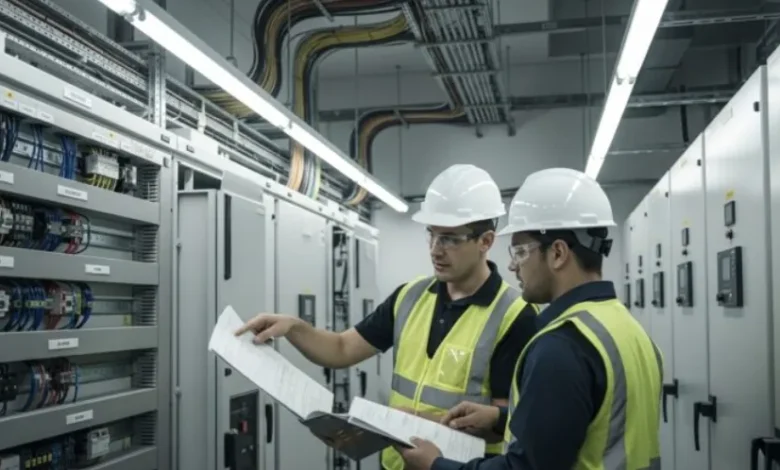
Selecting a switchgear manufacturer is not a procurement decision made in isolation. For electrical engineers, facility managers, utilities project leads, and industrial operations teams, the choice of who builds and supplies their switchgear has direct consequences on system reliability, regulatory compliance, and long-term operational continuity. A wrong choice rarely surfaces immediately. It shows up months or years later as equipment that doesn’t integrate cleanly, documentation that doesn’t satisfy inspectors, or lead times that stall a critical project.
California adds its own layer of complexity to this decision. Between the state’s seismic requirements, utility interconnection standards, Title 24 mandates, and the increasingly dynamic demands of renewable energy integration, the procurement process here is more involved than in most other states. Buyers who treat this as a standard vendor selection often find themselves back at the table negotiating corrections, upgrades, or replacements that could have been avoided.
This guide covers ten substantive questions that serious buyers should work through before committing to a manufacturer. These are not checklist items. They are diagnostic questions that reveal whether a manufacturer is actually equipped to serve your project, your site, and your operational needs over time.
Understanding What You Actually Need Before You Ask Anything
Before approaching any manufacturer, the buyer must have a clear internal picture of the application environment. Switchgear is not a uniform product. The gap between what a manufacturer builds well and what a project actually requires can be significant, and that gap rarely becomes visible during a sales conversation. Working with switchgear manufacturers in california who understand the specific regulatory and environmental context of the state is an important starting point, but it only helps if the buyer comes prepared with a defined scope.
This means understanding the operating environment, the load characteristics, the integration requirements with existing infrastructure, and the downstream responsibilities for maintenance and inspection. The questions below are built on that foundation.
Why Scope Clarity Changes the Quality of Every Answer You Receive
When buyers approach manufacturers with vague requirements, the responses they receive are equally vague. A manufacturer will describe capabilities in general terms, and those terms will sound adequate until the project reveals otherwise. Scope clarity forces manufacturers to give specific answers about lead times, customization constraints, testing protocols, and applicable standards. It converts a vendor conversation into a technical evaluation.
Question 1: What Standards Do You Build To, and Can You Document That?
Switchgear manufactured for California installations must meet specific standards depending on the application. These include standards set by organizations such as the Institute of Electrical and Electronics Engineers (IEEE), as well as ANSI, NEMA, and utility-specific interconnection requirements. The question is not simply whether a manufacturer claims compliance but whether they can produce documentation that supports it at the time of delivery, not after a request for clarification.
The Difference Between Claiming Compliance and Demonstrating It
Manufacturers who build to recognized standards typically have established testing regimes, documented production procedures, and traceable quality records. A manufacturer who references standards verbally but cannot provide factory test reports, certificates of compliance, or third-party verification is carrying a documentation risk that ultimately falls on the buyer. During a utility interconnection review or a state inspection, undocumented compliance is effectively the same as non-compliance.
Question 2: How Do You Handle Seismic Requirements Specific to California?
California’s seismic risk profile affects how switchgear must be designed, braced, and mounted. Certain installations require seismic qualification testing, and the standards governing this are site-specific, not universal. A manufacturer unfamiliar with California’s seismic zone requirements may deliver equipment that passes general production standards but fails to meet local installation criteria.
Seismic Qualification Is Not the Same as Seismic Awareness
There is a meaningful difference between a manufacturer who acknowledges seismic requirements and one who has formal qualification documentation for equipment tested to specific zone classifications. For critical infrastructure installations, healthcare facilities, water treatment plants, and certain commercial developments, this distinction is non-negotiable. Buyers should ask for seismic certification specific to the applicable zone, not general statements about design robustness.
Question 3: What Is Your Lead Time, and What Drives Variability in It?
Lead time in switchgear manufacturing is rarely fixed. It depends on component availability, current production load, the complexity of custom specifications, and external supply chain conditions. A manufacturer who quotes a lead time without qualifying the factors that could alter it is not giving the buyer enough information to plan accurately.
Understanding Lead Time Risk in Project Planning
Switchgear often sits on the critical path of electrical infrastructure projects. Delays in delivery can push back energization dates, affect contractor schedules, and trigger penalty clauses in construction contracts. Buyers who understand what drives lead time variability — and who build realistic contingency timelines — are better positioned to manage these risks. Ask specifically whether quoted lead times include factory testing, inspection, and shipping. Ask what happens if a component is delayed mid-production.
Question 4: Do You Build Custom Configurations, and What Are the Limitations?
Many switchgear projects require configurations that fall outside a manufacturer’s standard product lines. Bus arrangements, protective relay integration, metering requirements, and enclosure specifications often need to be tailored to a specific site or utility requirement. A manufacturer’s willingness and capacity to handle customization — and their transparency about where customization introduces lead time or cost risk — is a reliable signal of operational maturity.
Where Custom Work Introduces Risk
Custom configurations introduce complexity at the engineering, production, and testing stages. A manufacturer who accepts custom orders without sufficient engineering review capacity may produce equipment that is built incorrectly or that requires field modification. Asking to see examples of similar custom projects, and requesting references from those projects, gives the buyer a grounded view of actual execution capability rather than stated capacity.
Question 5: What Does Your Factory Testing Process Look Like?
Factory acceptance testing is the stage at which potential problems in a switchgear assembly are identified before delivery. A rigorous testing process reduces the likelihood of commissioning failures, field defects, and safety incidents. The question is not simply whether a manufacturer tests but what the testing covers, how it is documented, and whether the buyer or their representative can witness it.
The Operational Value of Witnessed Testing
Allowing the buyer’s engineer or a third-party representative to witness factory acceptance testing introduces accountability into the production process. It also gives the buyer direct technical insight into the equipment before it leaves the facility. Manufacturers who are reluctant to accommodate witnessed testing without clear explanation deserve more scrutiny, not less.
Question 6: How Do You Support Warranty Claims and Post-Delivery Issues?
Warranty terms vary considerably across manufacturers, and the practical value of a warranty depends more on how it is administered than on how it is written. A manufacturer with a strong warranty clause but slow response protocols offers less real protection than one with a narrower warranty and a reliable service infrastructure. Buyers should ask specifically about response times, the process for diagnosing field issues, and whether local support is available in California.
Post-Delivery Support as a Measure of Manufacturer Confidence
A manufacturer who is confident in the quality of their product will structure their warranty and support processes to reflect that. Vague language around exclusions, slow escalation paths, and the absence of local technical representation are indicators of a manufacturer who may be difficult to work with when something goes wrong. Post-delivery support should be evaluated as seriously as the equipment itself.
Question 7: Can You Provide References from Comparable California Projects?
References from projects in other states or in fundamentally different application contexts carry limited value when evaluating a manufacturer for a California installation. The regulatory environment, utility requirements, and operational conditions here are distinct enough that comparable project experience matters. A manufacturer who has successfully delivered similar equipment to similar facilities in California has already navigated the compliance and integration challenges the buyer will face.
What to Ask the References
When speaking with references, the most useful questions concern delivery accuracy, documentation quality, responsiveness during commissioning, and how the manufacturer handled any problems that arose. These conversations reveal operational character that no sales presentation can accurately convey.
Question 8: How Do You Manage Design Changes Mid-Production?
Projects evolve. Utility requirements change. Site conditions reveal constraints that weren’t visible during engineering. A manufacturer’s process for handling design changes after production has begun is a practical test of their project management discipline. Changes introduced mid-production without a structured change order process create documentation gaps, cost disputes, and delivery risk.
Question 9: What Is Your Production Capacity Relative to Your Current Backlog?
A manufacturer with limited production capacity and a heavy existing backlog may not be able to meet a project’s delivery requirements even if they are technically qualified. Buyers who skip this question and accept a quoted lead time at face value sometimes discover late in the process that their order was scheduled against an optimistic production assumption. Asking directly about current backlog, production team size, and capacity constraints gives the buyer a more honest picture of actual delivery risk.
Question 10: What Happens to Documentation After Delivery?
As-built drawings, one-line diagrams, relay settings, test reports, and equipment manuals are not optional accessories. They are operational documents that facility managers, maintenance teams, and inspectors will rely on for the life of the installation. A manufacturer who delivers incomplete or disorganized documentation transfers an ongoing administrative burden to the buyer. Confirming documentation deliverables in writing, before the order is placed, eliminates this risk.
Documentation as a Long-Term Operational Asset
Well-maintained equipment records reduce the time and cost of future inspections, upgrades, and troubleshooting. They are also required for many utility and regulatory compliance processes. Buyers who treat documentation as an afterthought during procurement often spend significantly more time and money reconstructing records later.
Making a Well-Informed Decision
Choosing a switchgear manufacturer in California is a consequential decision that deserves a structured evaluation process. The ten questions outlined here are not a rigid checklist but a framework for understanding whether a manufacturer has the technical capability, production discipline, and operational support structure to meet the demands of a specific project. They apply whether the project is a commercial development, an industrial facility, a utility substation, or a renewable energy installation.
The buyers who make the best decisions in this space are the ones who come to the conversation with clear requirements and ask direct questions that go beyond product specifications. They evaluate manufacturers on their processes, their transparency, and their track record with comparable work — not just on price and quoted lead time.
California’s regulatory and operational environment rewards preparation. Manufacturers who are well-suited to it will answer these questions directly, provide supporting documentation without hesitation, and engage technically with the specifics of the project. Those who cannot do so consistently are telling the buyer something important before the order is placed.