7 Reasons Electronics Manufacturers in the US Are Switching to On-Site Nitrogen Generators
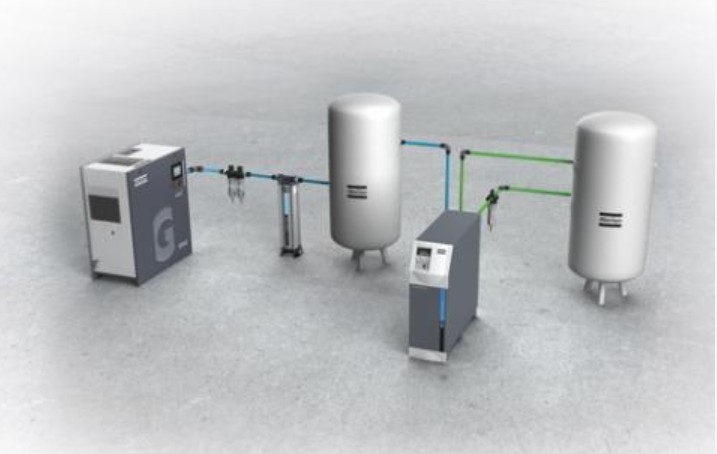
Nitrogen has been a production staple in electronics manufacturing for decades. It creates the controlled atmospheres needed to prevent oxidation during soldering, protects sensitive components during storage, and supports a range of assembly and testing processes where ambient air simply cannot be permitted. For most of that time, facilities sourced their nitrogen from bulk liquid deliveries or high-pressure cylinders supplied by industrial gas vendors.
That model worked well enough when production volumes were predictable, supply chains were stable, and gas pricing remained relatively consistent. None of those conditions hold in the same way today. Lead times have stretched, gas costs have increased, and manufacturing operations have grown more complex. Across the United States, a growing number of electronics manufacturers are choosing to generate nitrogen on-site rather than purchase it externally. This shift is not driven by novelty — it is driven by operational logic that becomes clearer once the full cost and risk profile of the traditional supply model is examined carefully.
The Core Operational Case for On-Site Nitrogen Generation
On-site nitrogen generation refers to systems that extract nitrogen from compressed ambient air using either pressure swing adsorption or membrane separation technology. Instead of receiving nitrogen in tanks or cylinders, a facility produces the gas continuously as it is needed. This changes the fundamental relationship between the manufacturer and its gas supply from one of dependency to one of control. For those evaluating options for nitrogen generators for electronics manufacturing, the starting point is usually recognizing how much operational exposure exists in the current supply arrangement.
The appeal is not theoretical. Electronics production environments — particularly those involving wave soldering, reflow ovens, or precision cleaning — require nitrogen at a consistent purity and flow rate. Any interruption or variation in that supply has a direct effect on product quality and line throughput. When gas is sourced externally, that consistency is subject to variables outside the manufacturer’s control: delivery schedules, supplier capacity, transportation delays, and pricing structures tied to market conditions.
On-site generation removes most of those variables. The system runs as a utility, producing nitrogen at the purity and volume the facility requires, on demand. That reliability is the foundation on which all other operational benefits rest.
Supply Chain Independence During Disrupted Periods
Industrial gas supply chains, like most others, experienced significant disruption in recent years. Delivery delays, regional shortages, and allocation constraints forced some manufacturers to idle lines or source nitrogen from secondary suppliers at premium pricing. For a facility running continuous production, even a brief shortage creates cascading problems — rescheduled orders, increased scrap rates, and strain on customer relationships.
What Dependency Actually Costs During a Shortage
The visible cost of a supply disruption is the emergency sourcing fee or the production downtime directly attributed to missing gas. The less visible cost is the labor, management time, and planning resources diverted to managing the shortage rather than managing production. Some facilities keep buffer stock in the form of extra cylinders or larger bulk tanks to hedge against this risk. That approach adds physical footprint, increases inventory carrying costs, and still does not fully insulate a facility from a prolonged supply gap.
On-site generation eliminates the dependency that makes these scenarios possible. The facility’s nitrogen supply is tied to its own compressed air infrastructure and the generator itself — not to a vendor’s delivery schedule or regional distribution capacity.
Predictable Cost Structure Across Production Cycles
Purchased nitrogen is subject to fluctuating pricing tied to energy costs, transportation costs, and supplier margins. Facilities that rely on bulk liquid nitrogen, in particular, may see significant pricing variation across contract renewal periods. This makes it difficult to forecast production costs with precision, especially when nitrogen consumption is high.
How On-Site Generation Changes the Cost Equation
On-site nitrogen generation converts gas cost from a variable, externally controlled expense to a relatively fixed internal operating cost. The primary ongoing input is compressed air and electricity. Once the capital investment in the system is made, the per-unit cost of nitrogen generally decreases substantially compared to purchased gas — particularly at higher consumption volumes.
This predictability has real value in manufacturing finance. Budget cycles are easier to manage when a major input cost does not fluctuate based on factors the facility cannot influence. For electronics manufacturers operating on tight margins with high component costs, that stability matters.
Purity Control Matched to Specific Process Requirements
Not all nitrogen applications in electronics manufacturing require the same purity level. Reflow soldering may demand a different specification than storage blanketing or selective soldering. When nitrogen is purchased from a supplier, purity is set by the product grade ordered and is not easily adjusted between processes.
Adjusting Purity to the Process Rather Than the Process to the Gas
Modern on-site nitrogen generation systems allow facilities to set and adjust nitrogen purity according to the specific requirements of each application. A facility can produce higher-purity nitrogen for its most sensitive processes and lower-purity nitrogen for applications where that level of precision is unnecessary, reducing energy consumption accordingly.
This flexibility means the facility is not paying for a uniformly high purity specification across all uses, and it is not compromising process quality by under-specifying gas for critical applications. The system can be configured and tuned to match actual production needs rather than being constrained by a vendor’s standard product offering.
Reduced Handling Risk and Improved Safety Profile
High-pressure nitrogen cylinders and bulk liquid nitrogen storage both carry inherent handling risks. Cylinders must be transported, stored upright, secured against tipping, and tracked through a return and refill cycle. Liquid nitrogen involves cryogenic temperatures that require specific handling protocols and protective equipment. Both forms of stored gas carry risks if equipment fails or handling procedures are not followed consistently.
Eliminating the Hazards Associated with Stored Gas
On-site generation systems operate at pressures comparable to standard compressed air infrastructure and do not involve cryogenic materials. The risks associated with cylinder handling — drops, valve failures, and pressurization incidents — are removed from the facility environment. This simplifies safety training, reduces the number of hazardous materials that need to be tracked and managed, and lowers the regulatory overhead associated with high-pressure gas storage.
For facilities operating under ISO or other quality management frameworks, reducing handling complexity also reduces the number of potential process deviations that need to be controlled and documented. Fewer variables in the production environment generally translate to more consistent outcomes and simpler audits. Organizations like OSHA provide clear guidance on compressed gas safety that facilities can reference when evaluating the risk profile of their current storage practices.
Alignment with Sustainability and Environmental Reporting Goals
Electronics manufacturers are increasingly subject to sustainability reporting requirements — both from customers and from regulatory frameworks. The transportation of industrial gas involves diesel fuel consumption, vehicle emissions, and the logistical overhead of a delivery network that exists primarily to serve the manufacturer’s facility. On-site generation removes that portion of the supply chain entirely.
The Emissions Profile of a Localized Gas Supply
When nitrogen is generated on-site, the energy input is electricity — which can, over time, be sourced from renewable generation or offset within a broader sustainability framework. The elimination of regular delivery vehicles from the facility’s supply chain reduces transportation emissions and simplifies the scope 3 emissions accounting that many manufacturers are now required to complete as part of customer or investor reporting.
This is not a minor consideration for manufacturers supplying into sectors — such as automotive electronics, defense, or consumer technology — where supply chain sustainability is part of procurement evaluation.
Scalability Without Renegotiating Supply Agreements
When a facility expands its production capacity, its nitrogen demand increases. Under a vendor-supplied model, that increase requires renegotiating contract terms, potentially upgrading storage infrastructure, and coordinating an increased delivery frequency. Each of those steps adds time and administrative load to an expansion process that is already complex.
Growing Production Without Growing Procurement Complexity
On-site nitrogen generation systems are designed to scale. Additional generator capacity can be added modularly to meet increased demand without changing the fundamental supply model. There are no contract renegotiations, no delivery schedule changes, and no dependency on a vendor’s willingness or ability to supply additional volume.
For facilities planning expansion or those operating in markets where production volumes shift seasonally or in response to customer demand cycles, this flexibility is a meaningful operational advantage. The nitrogen supply adjusts with the facility rather than requiring the facility to plan around supplier limitations.
Closing Perspective
The movement toward on-site nitrogen generation among US electronics manufacturers is not a response to a single factor. It reflects a broader reassessment of how production-critical utilities are sourced and managed in an environment where supply chain reliability, cost stability, and process control have all become harder to maintain under traditional models.
Each of the reasons outlined here — independence from external supply, cost predictability, purity control, improved safety, sustainability alignment, and scalability — addresses a real operational vulnerability that exists when nitrogen is treated as a purchased commodity rather than a managed production resource. Taken together, they explain why the calculus is shifting for facilities of varying sizes and production profiles.
The decision to invest in on-site generation is not appropriate for every facility at every stage of its development. However, for manufacturers with consistent nitrogen consumption, complex process requirements, or strategic goals around supply chain resilience, the case is increasingly difficult to ignore. The facilities making this transition are not doing so for abstract reasons — they are doing so because the operational evidence, examined honestly, points in that direction.