Rock Core End Grinding: Why Flat, Parallel Ends Matter for Compression Tests
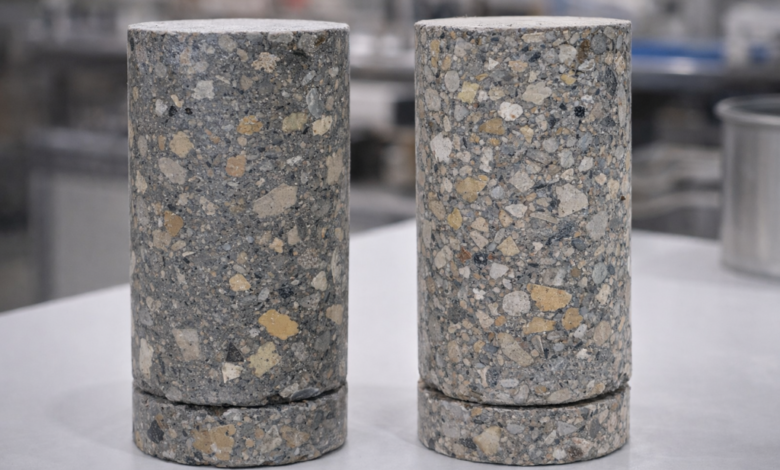
Compression test data can shift before the machine applies its first serious load. A rock core with uneven ends may not sit squarely between the platens. If the loading faces are not flat, parallel, and perpendicular to the specimen axis, the force may enter the sample unevenly and change the result. ASTM D7012 treats specimen preparation as part of the test method and points users to ASTM D4543 for rock core preparation and tolerance checks. A separate standard, EN 1926, applies to natural stone compression testing and likewise treats surface quality and specimen geometry as important parts of obtaining a valid result.
That matters because rock compression results are often used for design, classification, and quality control within broader rock testing workflows. A core that looks acceptable by eye may still load badly in practice. In many cases, specimen preparation begins to influence the result before the compression stage even starts.
What The Standards Say About Rock Core End Prep
For intact rock core testing, specimen end preparation is treated as part of the test method. ASTM D7012 points labs to ASTM D4543 for specimen preparation and tolerance checks. If a specimen does not meet the applicable requirements, that is typically noted in the report, because the result may differ from that of a conforming specimen.
ASTM D7012 And ASTM D4543 Set The Baseline
ASTM D7012 calls for a preferred length-to-diameter ratio of 2.0 to 2.5. It also says the specimen diameter should be at least ten times the largest grain size. ASTM D4543 adds that dimensional and surface tolerances matter most in stronger rock, especially above 50 MPa, where small prep errors can affect loading more easily.
EN 1926 Takes A Separate Route For Natural Stone
EN 1926 covers compressive strength testing of natural stone and follows its own specimen formats and preparation rules. It uses cubes or cylinders and sets requirements for dimensions, flatness, and parallelism within that natural-stone framework. The standard also describes machining as the normal preparation route, with lapping where needed.
Why Exact Tolerances Still Matter In Strong Rock
EN 1926 allows mortar capping only when mechanical preparation cannot meet the required tolerances, and that use is generally reported. Across these standards, the practical point is clear: surface quality and specimen conformance affect how confidently a compression result can be compared within the method being used.
How Poor End Grinding Changes The Load Path
A compression test can go off course before the rock begins to fail. If the specimen ends are not flat or parallel, the load may enter unevenly. That can shift the stress path and change the reported result. Research and government reviews both point to the same issue: the end condition can affect measured compressive behavior by a wide margin.
In routine rock testing, a dedicated rock core grinding machine is often used to improve end flatness and preparation consistency before compression testing begins. That becomes especially important when labs need results that are easier to compare across specimens prepared under the same method.
Uneven Contact Changes Stress Distribution
Uneven specimen ends do not load across the full face at the same time. One area may take more force early, which can add bending and local stress concentrations. In that case, the result can reflect the rock itself together with the way the load entered the core. Geotechnical guidance and related studies indicate that poor flatness, perpendicularity, and parallelism can influence measured UCS values, depending on the material and the test setup.
End Friction Can Distort A True Uniaxial Condition
End friction adds another problem. Contact between the rock and steel platens can restrict lateral strain near the specimen ends, which changes the stress state. A U.S. Bureau of Mines report found that standard platen loading does not create a fully uniaxial condition through much of the specimen. Another Bureau study on coal pillars showed that end condition alone could shift measured strength across a very wide range. The exact effect depends on the material and setup, but the main point is clear: poor end prep can make results harder to compare.
Why Platen Condition Still Matters
Even a well-ground core can load badly if the platens are worn or misaligned. ASTM D7012 sets tight flatness limits for platens for that reason. In practice, specimen prep and machine condition belong in the same check. A clean result depends on the full load path, including the sample surface.
Where Labs Run Into Trouble During Specimen Preparation
Most prep problems start with routine shortcuts. A core may look fine by eye, yet still fall outside the tolerances required by the method. ASTM treats specimen geometry as part of the test, so a nonconforming core can affect how the result is interpreted. If it is tested anyway, that is usually reported as part of the test record.
Common Mistakes Before The Test Starts
A frequent mistake is relying on appearance instead of measurement. Another is stopping after coarse grinding, even when the surface still needs finer finishing. Labs also run into trouble when they ignore worn platens or mix specimens with different geometries in one result set. In those cases, prep errors can look like material variation.
A Pre-Test Checklist For Rock Compression Work
Before testing, labs commonly review the following:
- specimen length-to-diameter ratio
- diameter relative to the largest grain size
- end flatness
- face parallelism
- specimen orientation
- platen condition
- whether capping was used
- whether any nonconformance must be noted in the report
When Grinding, Lapping, Or Capping Makes Sense
Grinding corrects the main shape. Lapping is the finer finishing step when better surface quality is still needed. Under EN 1926, capping is allowed only when mechanical prep cannot achieve the required tolerances, and its use is generally recorded. These steps serve different preparation purposes, and treating them the same way can distort the data.
Better Data Starts With The Specimen
Better compression data often depends on specimen preparation before the core ever reaches the load frame. Flat, parallel ends help the load enter more evenly, which makes results easier to compare within the method being used. ASTM D7012 treats preparation as part of the test method and points labs to ASTM D4543 for rock core preparation and tolerance checks. In stronger rock, small prep errors are more likely to affect loading, which is why specimen condition, platen condition, and method conformance should be reviewed together. A core may still produce a failure load when one of those factors is off, but the result becomes harder to treat as a clean comparison with conforming specimens.
Frequently Asked Questions
- Is End Grinding Always Required For Rock Compression Testing?
For standard intact rock core compression work, the specimen ends are expected to be machined flat as part of the method. ASTM D7012 describes the test with the core cut to length and the ends machined flat, and it points users to ASTM D4543 for specimen preparation and conformance checks. Lab workflows can vary, but the end condition still remains part of the test method.
- What Is The Difference Between Grinding And Lapping?
Grinding is the main shaping step. It brings the specimen close to the required geometry and corrects obvious end-face errors. Lapping is the finer finishing step used when the surface still needs a better contact condition after grinding. EN 1926 makes that distinction clearly by calling for machining and then final lapping when needed.
- Can Capping Replace Surface Grinding?
Not as a general rule. Under EN 1926 for natural stone, capping is allowed only when mechanical preparation cannot achieve the required tolerances, and it has to be reported. For intact rock core testing, the governing method still determines what is acceptable, so capping and proper end grinding are usually considered separately.
- How Much Can Poor End Prep Affect UCS Results?
It can affect the result a great deal, but there is no single correction factor that fits every rock. Bureau of Mines work found that frictional end constraints can turn a nominally uniaxial test into a more complex stress state. Separate research on the end condition in compression testing also found that measured strength can shift across a very wide range when end restraint changes. The safer claim is that poor end prep can alter UCS enough to make comparisons less reliable.
- Do Self-Aligning Platens Solve Specimen-End Problems?
No. They can help with alignment, but they do not fix a badly prepared specimen. ASTM treats specimen preparation and platen condition as separate parts of the testing setup. A core with poor flatness, poor parallelism, or poor squareness can still load badly even when the machine has a spherical seat or self-aligning feature.
- Are Rock Core And Natural Stone Rules The Same?
No. They address different testing contexts. ASTM D7012 and D4543 focus on intact rock core specimens used in rock mechanics testing, while EN 1926 is written for compressive strength testing of natural stone. Both address specimen geometry and surface quality, although each standard keeps its own requirements and testing context.
- Why Does Specimen Shape Ratio Matter Along With End Prep?
Because both affect how the load travels through the specimen. ASTM D7012 uses a preferred length-to-diameter ratio of about 2.0 to 2.5 and also points to conformance checks on end condition. Research on end and shape effects in brittle rock shows that specimen slenderness and end friction interact, so geometry and end prep are often considered together.