Why should businesses consider solar panels?
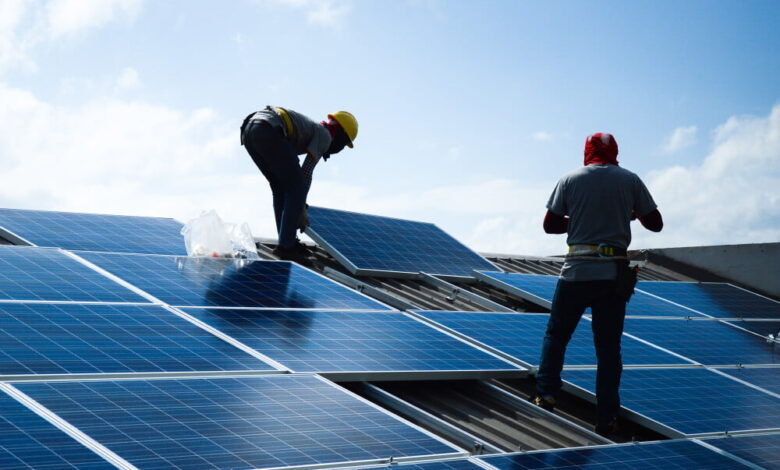
As a business owner, you are likely balancing rising operational costs, sustainability expectations, and long-term resilience. Energy is a significant and often unpredictable expense, and this is where solar panels can offer a practical and forward-looking solution. But why should businesses consider solar panels? And what are the benefits of commercial solar panels?
Reducing energy bills
One of the most immediate benefits you will notice is a reduction in electricity bills. Solar panels allow you to generate your own power on-site, meaning you rely less on energy purchased from the grid. With energy prices subject to fluctuation, this can provide a level of financial stability that is otherwise difficult to achieve. Over time, the savings can be substantial, particularly for businesses with high daytime energy usage, such as offices, warehouses, and manufacturing facilities.
Protection from rising costs
In addition to cost savings, solar panels offer protection against future energy price increases. By producing your own electricity, you effectively lock in a portion of your energy costs for decades. This predictability makes financial planning easier and reduces your exposure to market volatility.
Sustainability
Sustainability is another key consideration. Customers, investors, and partners increasingly expect businesses to demonstrate environmental responsibility. By adopting solar energy, you actively reduce your carbon footprint and reliance on fossil fuels. This not only helps you meet regulatory requirements but also supports broader climate goals. Demonstrating a commitment to clean energy can enhance your credibility and align your business with modern environmental standards.
Brand image
Your brand image can also benefit significantly. When you invest in solar panels, you send a clear message that your business is forward-thinking and responsible. This can be particularly valuable in competitive markets, where differentiation is essential. Clients and customers are more likely to engage with businesses that reflect their own values, including sustainability and ethical practices. Solar panels can therefore contribute not just to operational efficiency, but also to customer trust and loyalty.
Financial incentives
There are also financial incentives and support schemes available that can improve the return on your investment. Depending on your location and circumstances, you may be able to access grants, tax relief, or favourable financing options. These can reduce the upfront cost and accelerate the payback period, making solar energy more accessible than ever for businesses of all sizes.
Operational resilience
Operational resilience is another important factor. By generating your own electricity, you reduce your dependence on external energy suppliers. When combined with battery storage systems, solar panels can provide a level of energy independence that helps you maintain operations during power outages or disruptions. This can be particularly valuable for businesses where continuity is critical.
Low maintenance
Maintenance requirements for solar panels are relatively low, which makes them a practical addition to your infrastructure. Once installed, they typically require only periodic cleaning and routine checks to ensure optimal performance. Most systems are designed to last 25 years or more, providing long-term value with minimal ongoing effort.
In summary, by choosing solar panels, you gain greater control over your energy costs, strengthen your environmental credentials, and improve your business resilience. It is a strategic investment that supports both your financial objectives and your commitment to sustainability, helping you build a more secure and responsible future.