Two Courses Every Serious Safety Professional Needs in 2026
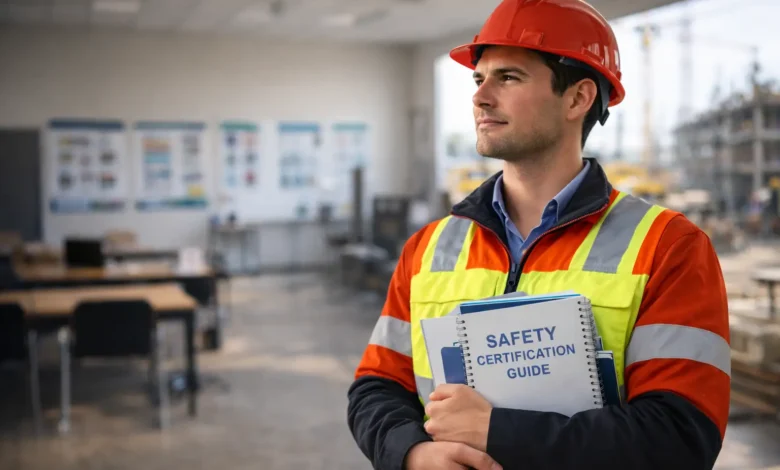
From operating powerful telehandlers on Victorian worksites to understanding the legal weight of Australia’s Chain of Responsibility laws — here’s why both credentials belong on your CV.
By Safety Australia Training · Safety & Compliance Desk · 2026
“Safety compliance is no longer optional in Australian industry — it is the minimum standard for operating in construction, logistics, and heavy transport. Two nationally accredited courses are emerging as must-haves for workers and employers alike.”
Australia’s workplace safety landscape has never been more demanding, or more consequential. For workers operating heavy machinery and for businesses managing transport fleets, the stakes attached to proper accreditation and legal compliance are higher than ever. Penalties for non-compliance are rising, injuries remain a persistent concern on worksites across Victoria and New South Wales, and regulators are watching more closely than ever before.
Two courses offered by Safety Australia Training are cutting through the noise for forward-thinking employers and individuals ready to invest in genuine competency: the Non-Slewing Telehandler Licence (TV Licence) and the TLIF0009 Chain of Responsibility online course. One is a hands-on, three-day licensing program for machinery operators. The other is a four-hour online unit for everyone in the transport supply chain. Together, they represent a practical package for anyone serious about safety, compliance, and career development in 2026.
The Telehandler: Powerful, Versatile — and Strictly Regulated
A non-slewing telehandler is one of the most capable machines on any construction or agricultural site. With an extendable boom that can lift and move heavy materials across distance, these machines are indispensable — and that capability demands a formal licence in Victoria. Under WorkSafe Victoria regulations, any telehandler with a rated capacity over three tonnes requires its operator to hold a TV Licence, formally known as the 11249NAT qualification.
Safety Australia Training’s Telehandler Licence Course runs over three days and covers everything from the fundamentals of equipment mechanics and boom controls to safety protocols, attachment use, and regulatory compliance. The program is available at multiple Melbourne locations, including Carrum Downs and Dandenong South, with sessions running regularly throughout the year. Course fees start from $1,450, and no prerequisites are required to enrol.
Telehandler Licence — At a Glance
- Qualification: 11249NAT (WorkSafe Victoria TV Licence)
- Duration: 3 days face-to-face (+ pre-reading for Dandenong South)
- Assessment: Theory exam and practical demonstration
- Locations: Carrum Downs & Dandenong South, VIC
- Cost: From $1,450 per person
- Prerequisites: None
- Outcome: Statement of Attainment + WorkSafe Notice of Assessment
Assessment is divided between a written theory component and a practical demonstration in which participants must show they can operate the machine safely and competently. Those who pass receive a Statement of Attainment and a Notice of Assessment from WorkSafe — which functions as a temporary licence for 60 days. Participants are then required to lodge their application through the MyWorkSafe portal or at Australia Post and pay the WorkSafe licence fee within that window.
For employers in construction, civil works, manufacturing, and agriculture, ensuring their telehandler operators carry a valid TV Licence is not simply a regulatory box to tick. An unlicensed operator represents an immediate liability, and the consequences of a serious incident involving an unqualified worker extend far beyond financial penalties — they can be catastrophic for individuals and devastating for businesses.
“An unlicensed operator on a three-tonne telehandler isn’t just a compliance failure — it’s a workplace incident waiting to happen. The licence exists precisely because the stakes are that high.”
Safety Australia Training
Chain of Responsibility: Every Link Matters
While the telehandler licence addresses the physical operation of heavy machinery, the TLIF0009 unit tackles an equally serious and often misunderstood area of transport law: the Chain of Responsibility. Under Australia’s Heavy Vehicle National Law (HVNL), responsibility for transport safety does not rest with the driver alone. Schedulers, dispatchers, logistics managers, business owners — anyone whose decisions can influence a heavy vehicle journey — shares legal accountability for the outcomes of that journey.
This is not a theoretical concern. CoR breaches involving speeding, driver fatigue, overloaded vehicles, or improper load restraint have resulted in significant penalties and, in the most serious cases, criminal charges. The 2018 amendments to the HVNL strengthened these obligations considerably, making training in this area a necessity rather than an optional add-on for transport businesses.
Safety Australia Training’s TLIF0009 Online Course addresses all of this in a focused, four-hour online program available for $140 GST-free. Participants learn to identify all the key parties in a transport chain, understand what “reasonable steps” means in a legal context, and apply CoR principles to real workplace situations covering speed, fatigue, vehicle mass, load restraint, and safety standards. Upon successful completion, learners receive a nationally recognised Statement of Attainment under the Australian Qualifications Framework — issued by a registered training organisation.
TLIF0009 Chain of Responsibility — At a Glance
- Unit: TLIF0009 (Nationally Accredited)
- Duration: 4 hours (100% online)
- Delivery: Self-paced, instant access upon enrolment
- Cost: $140 GST-free per person
- Prerequisites: None
- Ideal for: Drivers, schedulers, managers, safety officers, business owners
- Outcome: Statement of Attainment (AQF-recognised)
The fully online delivery model means there is no excuse for a gap in CoR knowledge across a transport team. Drivers can complete it between shifts. Schedulers can work through it at their desks. Business owners can ensure their entire team is covered — at a cost per head that makes blanket compliance straightforward rather than burdensome.
Why These Two Courses Work Together
On first glance, a hands-on machinery licence and an online transport law unit might seem like products for different audiences. In practice, they address complementary dimensions of the same challenge: keeping Australian workers safe, keeping businesses compliant, and ensuring that everyone in a workplace — from the person behind the controls to the person who set the schedule — understands their role and their legal obligations.
For individual workers, holding both credentials signals a level of professional seriousness that employers notice. For businesses, ensuring their equipment operators are licensed and their logistics staff are CoR-trained is an increasingly non-negotiable baseline. A site where telehandler operators are unlicensed and schedulers are unaware of their Chain of Responsibility duties is a site with a serious exposure problem — legally, operationally, and in terms of the personal safety of everyone present.
Safety Australia Training has built its reputation on delivering nationally accredited training that is practical, accessible, and grounded in the real requirements of Australian industry. With training facilities across New South Wales, Victoria, Western Australia, and Queensland — and an expanding library of fully online courses — the organisation serves workers and businesses at every stage of their safety journey.
Whether you are an individual looking to expand your licensing portfolio, an employer auditing your team’s compliance credentials, or a safety manager planning professional development for an entire workforce, both of these courses represent straightforward, high-value investments in a safer, more compliant workplace.