4 Aircon Components Checked During General Servicing
Key Takeaways
- General servicing focuses on maintaining airflow, cooling efficiency, and drainage performance.
- Air filters, evaporator coils, drainage systems, and condenser units are commonly inspected during maintenance.
- Dirt accumulation and blockages can reduce cooling performance and increase system strain.
- An air conditioner cleaning service helps identify early operational issues before they worsen.
- Routine general air conditioning servicing supports more stable long-term system performance.
Introduction
Air conditioning systems rely on several internal components to maintain stable cooling performance. Due to this, during routine maintenance appointments, technicians inspect selected parts to check for dirt accumulation, restricted airflow, drainage issues, and signs of wear. A standard air conditioner cleaning service involves more than wiping visible surfaces. Internal components are cleaned and examined to ensure the system continues operating efficiently under daily usage conditions.
Many households schedule general aircon servicing in SG regularly because air conditioners often operate for extended periods in warm and humid environments. Over time, dust, moisture, and continuous operation can affect cooling efficiency and airflow performance. Several components are therefore routinely checked during servicing to prevent minor issues from developing into larger system problems.
1. Air Filters
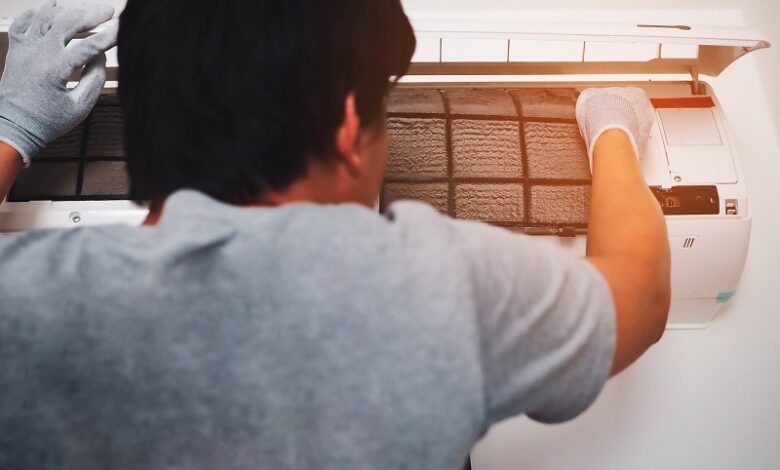
Air filters are one of the most frequently inspected components during servicing because they directly affect airflow quality. These filters trap dust, lint, and airborne particles before cooled air circulates back into the room. However, as dirt accumulates, airflow becomes restricted, forcing the air conditioner to work harder to maintain the desired temperature.
Technicians remove and clean the filters during servicing to improve airflow performance. If filters become excessively clogged or damaged, replacement may sometimes be recommended. Dirty filters can also affect indoor air quality because accumulated particles may circulate within enclosed spaces if maintenance is delayed for long periods.
Homes with pets, renovation dust, or frequent daily air conditioning usage often experience faster filter build-up. Regular cleaning helps reduce strain on the system while supporting more consistent cooling performance.
2. Evaporator Coils
Evaporator coils are responsible for absorbing heat from indoor air during the cooling process. These coils, located inside the indoor unit, are exposed to moisture during operation, making them vulnerable to dirt accumulation over time. Once dust builds up on the coil surface, heat transfer efficiency may decrease, causing weaker cooling performance.
Technicians inspect evaporator coils for dirt accumulation, airflow blockage, and signs of ice formation. Restricted airflow around the coils may result in longer cooling cycles and uneven room temperatures. Dirty coils may also contribute to water leakage problems because condensation may not drain properly.
Cleaning evaporator coils requires careful handling because the fins surrounding the coils can bend easily. Proper maintenance helps maintain cooling efficiency and airflow stability.
3. Drainage System
Air conditioners continuously produce condensation during operation, making the drainage system another important component checked during servicing. Water collected inside the unit flows through a drain tray and piping system before exiting the air conditioner. If dirt or sludge blocks the drainage pathway, water leakage may occur around the indoor unit.
Technicians commonly inspect the drain tray and drainage pipe for clogs, stagnant water, and slow drainage. Many water leakage complaints are linked to blocked drainage systems rather than major mechanical faults. Routine cleaning helps reduce moisture-related problems around walls, ceilings, and flooring near the unit.
Drainage systems may require more frequent maintenance in humid conditions because condensation forms regularly during operation.
4. Condenser Unit
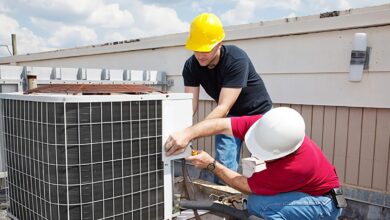
The condenser unit is installed outdoors and is responsible for releasing heat collected from indoor spaces. Because it is exposed to outdoor conditions, dirt, leaves, and debris may accumulate around the condenser coils and fan. Restricted airflow around the outdoor unit can affect heat dissipation and reduce cooling efficiency.
Technicians, during air conditioner cleaning service, inspect the condenser coils, fan components, and surrounding areas for dirt accumulation or airflow obstruction. Cleaning the outdoor unit helps maintain proper ventilation and stable cooling performance. Technicians may also check for unusual vibration or overheating symptoms during operation.
Conclusion
Routine servicing involves inspecting several important aircon components that directly affect cooling efficiency and airflow performance. Air filters, evaporator coils, drainage systems, and condenser units are commonly checked because dirt accumulation and blockages can gradually reduce system performance over time.
Regular maintenance allows technicians to identify early operational issues before they become more serious. Consistent servicing also helps maintain smoother airflow, stable cooling output, and more reliable day-to-day operation.
Contact Newway to schedule a professional servicing session that checks the components working behind the panels.