Sleeping Pillow and Comforter: Why Fixing One Without the Other Does Not Work
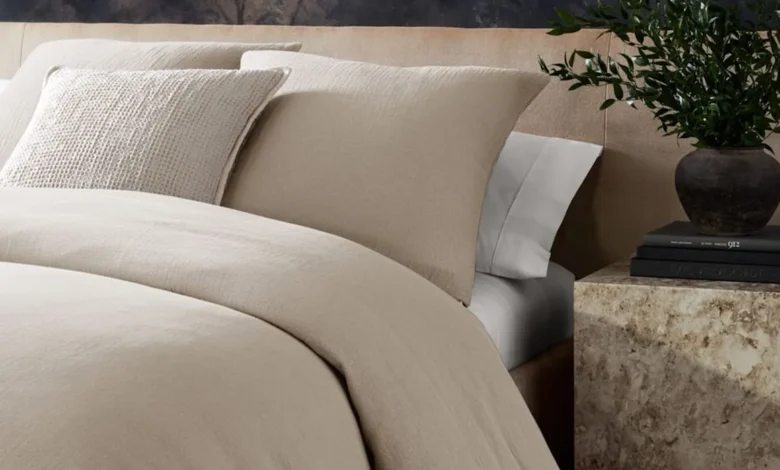
You switched to the right sleeping pillow – the right firmness for your back, the right loft for your shoulder width. The neck pain eased for a week. Then it came back. Not because the pillow was wrong. Because the comforter was too heavy, and you were rolling onto your side through the night to escape the trapped heat instead of staying in the position the pillow was supporting. The pillow governs neck and shoulder alignment. The comforter governs body temperature and how much you move through the night. When one is wrong, the other cannot compensate – and most people fix one while leaving the other entirely unconsidered.
Why does fixing your pillow sometimes still leave you sleeping badly?
Sleep posture is maintained across 6-8 hours of unconscious movement. A sleeping pillow creates the right starting position – neutral spine, head at the correct height relative to the shoulder. But you hold that position only as long as your body is comfortable in it. The moment your temperature regulation system activates, your body moves involuntarily toward relief, and the supported position breaks.
This is how an overweight comforter undoes what a good sleeping pillow establishes. The pillow is correct. The heat builds under the comforter. By 2 AM, you have shifted to expose a shoulder or moved to a position your body associates with cooler air. You are simply no longer in the position the pillow was bought for.
The same mechanism works in reverse. A comforter that is too light causes a different disruption: you pull it closer to compensate for the cold, which reduces your range of movement and creates shoulder tension. A pillow change won’t fix a comforter problem, and a comforter change won’t fix a pillow problem. Both need to be right at the same time.
How do you know which sleeping pillow is actually right for your sleep position?
Most pillow guides give you a three-row table and stop there. The problem is that most adults change position during the night. The right sleeping pillow needs to perform reasonably well across more than one position.
| Sleep Position | Loft (Height) | Firmness | Best Material | What to Avoid |
| Side sleeper | High (12-15 cm) | Medium-firm | Memory foam or latex | Low loft – head tilts down, strains lower neck |
| Back sleeper | Medium (8-12 cm) | Medium | Memory foam, latex, or hollow fibre | High loft – pushes chin forward, closes airway |
| Stomach sleeper | Low (5-8 cm) | Soft | Hollow fibre or thin latex | Any firm pillow – compresses lumbar curve |
| Mixed position | Medium (9-12 cm) | Medium | Adjustable fill or responsive foam | Very high or very low loft – fails in one position |
Side sleepers with wider shoulders need more loft than those with narrower shoulders at the same body height, because a wider shoulder creates a larger gap between the mattress and the neck. Pain on the lower side of your neck when sleeping indicates loft is too low. Pain on the upper side indicates loft is too high.
Material affects how a pillow performs through the night rather than just on the first night. Memory foam conforms to neck shape but retains heat. Latex provides comparable contouring with better air movement. Hollow fibre is the coolest material but loses loft faster, typically within 18 months of regular use.
What makes a comforter too heavy, too hot, or just wrong for how you sleep?
Comforter weight is measured in GSM (grams per square metre) for the fill, and it directly determines thermal insulation. In climates that cycle through a warm summer and a cold winter – which describes most of India and much of the UK – a single comforter weight that works year-round does not exist.
| Fill Weight | Warmth Level | Best Use Condition |
| Under 200 GSM | Light / summer | Air-conditioned rooms, coastal climates year-round |
| 200-300 GSM | Mild / transitional | Temperate climates, South India October-February |
| 300-450 GSM | Medium-heavy winter | North India winters without central heating |
| 450 GSM+ | Heavy winter | Hill stations, non-insulated rooms below 10 degrees |
Microfiber fill is the most common, is machine-washable, and has consistent weight across the surface. A comforter with quilted stitching keeps fill evenly distributed through the night without clustering at edges.
Comforter overhang matters: a comforter that barely covers the mattress surface provides no insulation at the shoulders when you sleep on your side. Standard queen comforter size is 90 x 100 inches – slightly larger than the mattress – to ensure shoulder coverage on both sides.
How do you build a sleep setup that actually works through the night?
The pairing principle: a sleeping pillow optimised for your position needs a comforter light enough to not disrupt that position through overheating. If you sleep in an air-conditioned room, a medium-weight comforter (200-300 GSM) pairs with almost any pillow type. If you sleep without temperature control in a warm climate, a lighter fill (under 200 GSM) is what allows the pillow’s positional work to hold through the night.
Night-movement tracking is a useful diagnostic. If you use a fitness tracker that monitors sleep stages, check the movement count between 1-3 AM over a 2-week period. Consistent movement spikes in that window typically indicate thermal disruption rather than a positional problem.
For the sleeping pillow, give any new pillow two weeks before assessing it. Memory foam and latex both take time to fully conform to your sleep geometry – stiffness on night one is normal break-in, not a sign the pillow is wrong.
For a sleeping pillow range with loft, firmness, and fill weight all specified per product so you can verify the pairing before buying, the Wakefit sleeping pillow range covers memory foam, latex, and hollow fibre options starting from Rs 349.