EV Battery Pack Testing System: Key Functions and How to Choose One
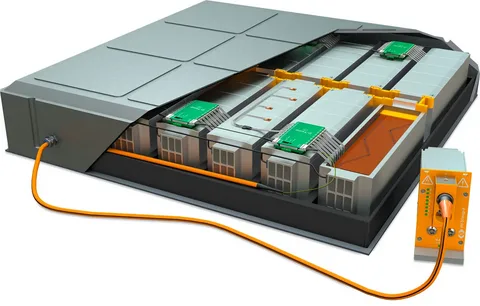
With the number of electric vehicles continuing to grow, battery packs must offer superior performance, longer service life, and greater safety. However, before entering mass production, battery packs must undergo a series of tests to demonstrate their market viability.
This task can be accomplished using an electric vehicle battery pack testing system, which helps evaluate the performance of battery packs under specific conditions.
What Is an EV Battery Pack Testing System?
Electric vehicle battery pack testing systems are used to evaluate the electrical characteristics and durability of battery packs.
They are widely used in the battery industry, the electric vehicle sector, R&D laboratories, testing organizations, and other manufacturing industries.
By evaluating key parameters such as capacity, efficiency, and stability, engineers can verify that battery packs meet design requirements before they are commercialized.
Main Testing Functions
A complete battery testing system typically supports several core tests.
Battery capacity testing is used to determine the amount of energy a battery can store and discharge under controlled test conditions. This test is typically the initial test method in the battery testing process.
Charge-discharge testing is used to evaluate a battery’s efficiency, voltage, and power conversion efficiency under various operating conditions. The results obtained from this test can be used to verify the functionality of the battery management system (BMS).
DCIR testing evaluates a battery’s internal resistance using current pulses. As a battery ages, its internal resistance increases; therefore, DCIR is one of the most important battery testing methods.
Cycle life testing involves periodically charging and discharging a battery to determine how its capacity changes over time. This test also helps estimate the battery’s service life and is used to evaluate different types of battery materials and charging methods.
Safety testing includes testing battery packs under abnormal operating conditions at various temperatures.
Common Testing Standards
Battery testing is usually performed according to internationally recognized standards.
Some of the most widely used include:
- IEC 62660 for lithium-ion cell performance
- ISO 12405 for EV battery pack testing
- UN 38.3 for transportation safety
- UL 2580 for EV battery safety
Depending on the target market, manufacturers may also follow regional standards such as GB/T or SAE specifications.
Choosing the Right Battery Testing System
Every project has unique testing requirements, but the following points should be considered.
First, it is important to ensure that the voltage and current ranges are suitable for the current application and can also meet the needs of future battery technologies.
Measurement accuracy is also critical. Precise testing ensures that more accurate data is collected during the development and testing processes.
Other features to consider include automation, which enables remote monitoring and other time-saving functions.
The final feature is the scalability of the testing solution.
Conclusion
When developing electric vehicle batteries, battery testing is essential. Testing not only helps improve the quality of battery products but also ensures that the R&D process is safe and risk-free, and complies with international standards.
As battery technology advances, testing systems have become smarter and more precise, enabling engineers to obtain accurate information during battery development.