Smart Warehousing and the IoT Shelf: Bridging WMS Data to Physical Pallets and Bins
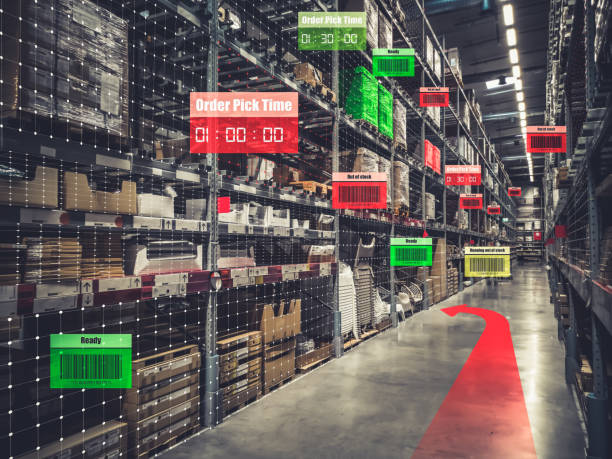
Modern logistics centers and distribution facilities operate in high-velocity fulfillment environments characterized by tight delivery windows, dynamic SKU proliferation, and compressed labor availability. While enterprise Warehouse Management Systems (WMS) process slotting algorithms and cross-docking schedules in real time, physical racking infrastructure has historically remained disconnected from this digital data stream.
Static printed bin cards, paper placards, and laminated rack tags introduce friction across storage environments. Transforming static warehouse racks into responsive IoT-connected nodes eliminates the gap between digital inventory records and physical bin locations.
The Physical-Digital Data Disconnect in High-Density Warehousing
High-density distribution hubs, 3PL facilities, and automated fulfillment centers frequently manage tens of thousands of dynamic pallet locations and picking bins. In fast-moving environments, dynamic slotting routines regularly shift pick faces based on seasonal velocity, velocity profiling, and promotional batch sorting.
Relying on manual paper or laminated card markers creates severe operational bottlenecks:
- Physical bin label replacements cannot keep pace with intraday WMS slotting reallocations.
- Forklift operators and picking personnel lose productive cycle time physically searching for reassigned storage locations.
- Static signage provides zero visibility into instantaneous bin counts, lot numbers, or reserve replenishment triggers.
- Manual label replacements consume recurring operational hours while generating physical waste from discarded adhesive paper and plastic sleeves.
When bin indicators fail to reflect active WMS records, pick-face confusion escalates. In high-speed picking operations, misidentifying a bin coordinate leads to picking adjacent items, incorrect SKU batch selection, and inaccurate shipment manifests.
These fulfillment errors directly inflate secondary logistics expenses:
- Reverse logistics expenses escalate as misdirected shipments require return transport and inspection.
- Rework lanes and secondary repacking operations consume valuable distribution center labor.
- Inaccurate bin counts cause phantom stockouts, disrupting automated reorder calculations within the central enterprise resource planning (ERP) platform.
Hardware Specifications: What Makes an Industrial Smart Label Fit for Logistics?
Unlike consumer-grade digital displays, shelf tags deployed in logistics centers must endure mechanical vibration, wide temperature fluctuations, and continuous duty cycles. Specialized hardware developers like Zhsunyco address these operational rigors by building industrial-spec ESL units featuring multi-stable E-Ink screens, protective IP-rated housings, and customizable firmware that interfaces directly with localized warehouse management software via open SDKs.
Engineering hardware for industrial distribution centers requires adherence to rigorous mechanical and electrical performance benchmarks.
Display Performance and Environmental Resilience
Industrial smart labels utilize electrophoretic bi-stable electronic paper (E-Ink) technology. Because these micro-capsule displays require power exclusively when changing image states, they maintain continuous visibility of barcodes, bin addresses, and inventory counts without drawing active electrical current.
Crucial industrial hardware specifications include:
- Operating Temperature Range: Industrial-grade power systems must operate reliably across ambient conditions ranging from -20°C in cold-chain freezer vaults to 50°C in unconditioned high-bay distribution centers.
- Optical Legibility: Ultra-high contrast reflective screens provide wide 180-degree viewing arcs, ensuring forklift mounted barcode scanners and handheld imagers can read 1D barcodes and 2D Data Matrix codes without glare from high-bay sodium or LED lighting.
- Ingress Protection: Enclosures rated to IP65 or IP67 standards provide complete resistance against industrial dust accumulation, condensation, and chemical sanitation washdowns.
- Impact-Resistant Casings: Polycarbonate-ABS composite housings protect display elements against physical collisions with pallet edges, mechanical tote bins, and mobile equipment.
- Extended Battery Capacity: High-capacity lithium manganese dioxide (Li-MnO2) battery configurations provide five to eight years of continuous operation under multiple daily refresh cycles.
Network Topologies: 2.4GHz vs. 433MHz vs. BLE in Metallic Storage Racks
Deploying wireless communications inside high-density warehouses presents formidable radio frequency challenges. Towering structural steel pallet racks, moving steel forklifts, and dense wire-mesh decking create physical barriers that cause multipath reflection, signal scattering, and severe RF attenuation.
System integrators must select wireless transmission topologies based on specific facility layout requirements.
Transmission Protocol Comparison
Industrial smart labeling networks leverage three primary wireless protocols to maintain uninterrupted connectivity:
- Sub-1GHz (433MHz / 868MHz): Low-frequency radio waves offer exceptional obstacle penetration and long wavelength propagation. These bands pass through dense metal racking and bulk-liquid storage aisles with minimal attenuation, providing long-range coverage from a centralized gateway.
- High-Speed 2.4GHz: Proprietary 2.4GHz protocols offer substantial data throughput, making them ideal for high-density mezzanine picking zones where thousands of tags must execute concurrent batch updates in sub-second intervals.
- Bluetooth Low Energy (BLE): BLE architectures support short-range handshakes with mobile warehouse terminals, enabling picking associates to push direct updates to shelf tags from handheld devices.
Industrial gateway base stations deploy in cellular star topologies. Each gateway coordinates transmission scheduling using frequency-hopping spread spectrum (FHSS) techniques, avoiding interference with existing warehouse automated guided vehicle (AGV) communication networks and corporate Wi-Fi infrastructures.
System Integration Pipeline: Connecting Cloud APIs to Enterprise ERP and WMS
Bridging central software intelligence to the physical rack edge requires an integration architecture that connects enterprise warehouse databases to wireless gateway controllers. Modern industrial smart labeling solutions operate through standardized middleware pipelines that communicate with systems like SAP EWM, Oracle WMS, and Manhattan Associates.
The data exchange pipeline follows a structured operational sequence:
- Event Trigger: The WMS registers a picking batch, inventory transfer, or stockout condition and emits an automated data payload via RESTful API, Webhook, or MQTT broker.
- Data Processing: The middleware server ingests the payload, formats the target layout template, updates dynamic 1D/2D barcodes, and queues the RF packet.
- Over-the-Air Transmission: The wireless base station broadcasts the update package to the target tag’s unique media access control (MAC) address.
- Visual Acknowledgment: The smart display refreshes its visual registers and activates integrated high-luminance multi-color LEDs to guide pickers using Pick-to-Light routing.
- Status Confirmation: The tag returns an encrypted data acknowledgment to the gateway, verifying successful display refresh and reporting local battery voltage to the central console.
Compliance, Traceability, and Global Standards in Automated Facilities
As industrial distribution centers transition toward automated material handling, operational systems must comply with international data standards and supply chain traceability frameworks. Smart rack displays function as critical track-and-trace endpoints, displaying real-time batch numbers, expiration timelines, and hazard classifications across regulated storage zones.
In temperature-controlled pharmaceutical warehouses and cold-chain food facilities, smart bin tags interface with localized environmental sensors to flag temperature excursions. When ambient sensors detect thermal spikes within a cold-storage vault, display tags can automatically adjust to show quarantine alerts, preventing compromised inventory from entering outbound fulfillment streams.
To maintain seamless interoperability across international distribution nodes, intelligent labeling hardware must integrate with standardized identification formats. Standardized data structures established by the GS1 organization govern product identification keys and barcoding conventions, ensuring that dynamic shelf-edge identifiers translate accurately across diverse enterprise resource planning platforms worldwide. Aligning industrial IoT display hardware with global identification standards ensures distribution facilities maintain end-to-end transparency, regulatory compliance, and operational velocity across high-volume supply chains.