PA 101-0038 Illinois 2019: Law, Purpose, Key Provisions, and Public Health Impact
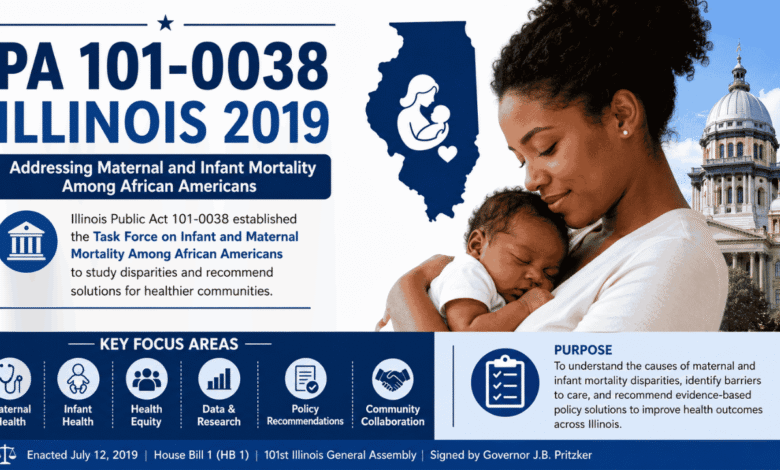
PA 101-0038 Illinois 2019 is an important piece of legislation focused on improving maternal and infant health outcomes in Illinois. Officially known as Illinois Public Act 101-0038, this law established the Task Force on Infant and Maternal Mortality Among African Americans to address significant racial disparities in healthcare. Signed into law in 2019, the Act recognizes that African American mothers and infants experience disproportionately higher mortality rates than other populations and seeks to develop evidence-based solutions to reduce these disparities. Rather than creating new healthcare programs directly, PA 101-0038 Illinois 2019 brings together healthcare professionals, state agencies, researchers, community leaders, and policymakers to study the causes of maternal and infant mortality and recommend improvements to healthcare systems and public policies. This article explains everything you need to know about PA 101-0038 Illinois 2019, including its background, objectives, provisions, impact, and frequently asked questions.
What Is PA 101-0038 Illinois 2019?
PA 101-0038 Illinois 2019 is a public law enacted by the Illinois General Assembly during its 101st legislative session. The legislation originated as House Bill 1 (HB 1) and was signed into law by Governor J.B. Pritzker on July 12, 2019.
The Act established the Task Force on Infant and Maternal Mortality Among African Americans, a statewide body charged with studying maternal and infant mortality, identifying the causes of health disparities, and recommending practical solutions to improve health outcomes across Illinois.
The legislation reflects Illinois’ commitment to addressing longstanding racial inequities in healthcare through research, collaboration, and informed policymaking.
Background Behind PA 101-0038 Illinois 2019
Before the passage of this legislation, Illinois faced persistent challenges regarding maternal and infant health.
Studies consistently showed that:
- African American infants were significantly more likely to die before reaching their first birthday.
- African American women experienced higher pregnancy-related complications and maternal mortality rates.
- Socioeconomic inequalities contributed to poor health outcomes.
- Limited access to quality healthcare affected vulnerable communities.
- Structural barriers and social determinants of health played a major role in health disparities.
Recognizing these issues, Illinois lawmakers introduced PA 101-0038 Illinois 2019 to understand the causes of these disparities better and develop coordinated strategies to reduce preventable deaths.
Legislative History of PA 101-0038 Illinois 2019
The law followed the standard legislative process before becoming an official public act.
Legislative Timeline
- Introduced as House Bill 1 (HB 1)
- Considered during the 101st Illinois General Assembly
- Approved by the Illinois House of Representatives
- Passed by the Illinois Senate
- Signed by Governor J.B. Pritzker on July 12, 2019
- Became Public Act 101-0038
The legislation took effect immediately upon being signed into law.
Purpose of PA 101-0038 Illinois 2019
The primary objective of PA 101-0038 Illinois 2019 is to reduce maternal and infant mortality among African Americans through research and policy recommendations.
Its goals include:
- Understanding why disparities exist
- Collecting statewide health data
- Reviewing maternal healthcare practices
- Improving infant health outcomes
- Identifying barriers to healthcare access
- Supporting evidence-based policy development
- Encouraging collaboration among healthcare organizations
Instead of focusing on a single medical issue, the law examines the broader healthcare system and the social conditions that influence maternal and infant health.
Why Was This Law Needed?
The legislation was introduced because public health data demonstrated significant differences in outcomes among racial groups.
Some of the challenges identified included:
- Higher maternal mortality rates
- Increased infant mortality
- Limited prenatal care access
- Unequal healthcare quality
- Economic inequality
- Housing instability
- Food insecurity
- Chronic stress
- Transportation barriers
- Healthcare workforce shortages in underserved areas
Lawmakers concluded that reducing these disparities required coordinated action from multiple sectors rather than isolated healthcare initiatives.
Creation of the Task Force
One of the most significant provisions of PA 101-0038 Illinois 2019 is the creation of the Task Force on Infant and Maternal Mortality Among African Americans.
The task force serves as an advisory and research body responsible for examining maternal and infant health issues across Illinois.
Its mission includes:
- Reviewing statewide health statistics
- Studying healthcare disparities
- Evaluating current public health policies
- Gathering expert recommendations
- Producing reports for lawmakers
- Encouraging improvements throughout Illinois healthcare systems
Members of the Task Force
The legislation brings together experts from multiple disciplines.
Members may include representatives from:
- Illinois Department of Public Health
- Department of Human Services
- Healthcare and Family Services
- Medical professionals
- Hospitals
- Universities
- Public health researchers
- Community organizations
- Maternal health advocates
- Infant health specialists
This multidisciplinary approach ensures that a wide range of expertise and perspectives informs recommendations.
Responsibilities Under PA 101-0038 Illinois 2019
The task force has several responsibilities.
These include:
Reviewing Maternal Mortality
The group studies pregnancy-related deaths and examines their underlying causes.
Reviewing Infant Mortality
Researchers analyze infant death statistics to identify trends and contributing factors.
Examining Healthcare Disparities
The task force evaluates differences in healthcare access, treatment quality, and health outcomes among racial and socioeconomic groups.
Reviewing Medical Research
Current scientific evidence is examined to identify proven strategies for improving maternal and infant health.
Evaluating Public Health Programs
Existing programs are assessed to determine their effectiveness and identify opportunities for improvement.
Developing Recommendations
The task force prepares policy recommendations designed to improve healthcare delivery and reduce preventable deaths.
Reporting to the Illinois General Assembly
The Act requires periodic reports summarizing findings and recommendations for policymakers.
Key Focus Areas
PA 101-0038 Illinois 2019 focuses on several important public health issues.
These include:
- Prenatal care
- Postpartum care
- Infant healthcare
- Maternal healthcare
- Public health policy
- Health equity
- Healthcare access
- Racial disparities
- Community health
- Preventive healthcare
Together, these areas form a comprehensive framework for understanding and addressing maternal and infant health challenges.
Importance of Health Equity
A central concept in PA 101-0038 Illinois 2019 is health equity.
Health equity means ensuring that everyone has a fair opportunity to achieve their best possible health, regardless of race, income, neighborhood, or other social factors.
The Act recognizes that improving health outcomes requires addressing not only medical care but also broader influences such as:
- Education
- Employment
- Housing
- Transportation
- Nutrition
- Environmental conditions
- Access to healthcare providers
By examining these factors, policymakers can develop more effective long-term solutions.
Impact on Illinois Healthcare
Although the Act does not directly provide medical services, it influences healthcare policy by encouraging data-driven decision-making.
Potential benefits include:
- Better understanding of maternal mortality
- Improved infant healthcare policies
- Enhanced public health planning
- Greater collaboration among agencies
- Increased awareness of health disparities
- Better allocation of healthcare resources
- Support for evidence-based reforms
These outcomes can contribute to stronger maternal and infant health systems across the state.
Public Health Significance
PA 101-0038 Illinois 2019 represents a proactive approach to addressing complex healthcare issues.
Rather than waiting for problems to worsen, Illinois established a structured process for:
- Collecting evidence
- Identifying risks
- Consulting experts
- Recommending improvements
- Supporting informed legislation
This model allows policymakers to respond with solutions based on research rather than assumptions.
Benefits of PA 101-0038 Illinois 2019
The legislation offers several advantages.
Encourages Collaboration
Government agencies, healthcare providers, researchers, and community organizations work together toward common goals.
Supports Better Research
The Act promotes comprehensive analysis of maternal and infant health data.
Informs Public Policy
Legislators receive recommendations supported by evidence rather than anecdotal information.
Raises Public Awareness
The law highlights the importance of addressing maternal and infant mortality as a statewide public health priority.
Promotes Long-Term Improvements
The recommendations developed by the task force can guide future healthcare reforms and resource allocation.
Challenges Addressed by the Law
The legislation seeks to address multiple interconnected challenges, including:
- Maternal mortality
- Infant mortality
- Healthcare inequalities
- Limited healthcare access
- Socioeconomic barriers
- Public health disparities
- Data collection gaps
- Policy coordination
By examining these issues collectively, the Act aims to support more effective and lasting solutions.
Why PA 101-0038 Illinois 2019 Matters Today
Maternal and infant health remain important public health priorities across the United States.
PA 101-0038 Illinois 2019 demonstrates how state governments can respond to health disparities through research, collaboration, and informed policymaking.
The law also reinforces the importance of using reliable health data to guide future healthcare decisions and improve outcomes for vulnerable populations.
As healthcare systems continue to evolve, the work initiated under this legislation may help shape future public health strategies in Illinois.
Frequently Asked Questions
What is PA 101-0038 Illinois 2019?
It is an Illinois public law enacted in 2019 that established the Task Force on Infant and Maternal Mortality Among African Americans to study health disparities and recommend policy improvements.
When was PA 101-0038 Illinois 2019 signed?
The Act was signed into law on July 12, 2019.
What was the original bill number?
The legislation began as House Bill 1 (HB 1) during the 101st Illinois General Assembly.
What is the purpose of the task force?
The task force studies maternal and infant mortality, examines racial health disparities, reviews healthcare policies, and develops recommendations to improve outcomes.
Does the Act create new healthcare benefits?
No. The legislation primarily establishes a task force responsible for research, evaluation, and policy recommendations rather than creating new healthcare benefit programs.
Who participates in the task force?
Participants may include representatives from state agencies, healthcare organizations, universities, researchers, medical professionals, and community advocates.
Conclusion
PA 101-0038 Illinois 2019 is a significant public health law that demonstrates Illinois’ commitment to reducing maternal and infant mortality and addressing racial disparities in healthcare. By creating the Task Force on Infant and Maternal Mortality Among African Americans, the legislation establishes a collaborative framework for studying complex health challenges, evaluating current policies, and recommending evidence-based improvements. While the Act does not directly provide healthcare services, its emphasis on research, accountability, and informed policymaking has the potential to shape future public health initiatives and improve outcomes for families across Illinois. Understanding PA 101-0038 Illinois 2019 provides valuable insight into how state legislation can contribute to long-term health equity and stronger healthcare systems.
You May Also Read: Illinois Public Act 101-0038 2019 Working Group: Purpose, Members, Responsibilities, and Impact on Maternal Health