The Arithmetic of a Wardrobe That Never Feels Finished
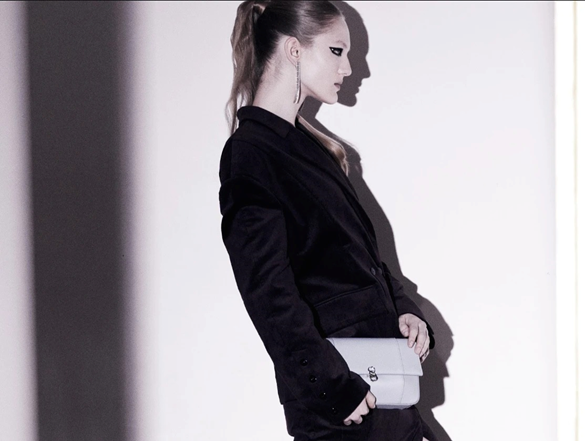
There is a particular frustration that money has very little to do with: a wardrobe that is objectively full and subjectively empty. It happens because the industry sells frequency — a new arrival every week, each one implying that what you already own has expired. The way out is arithmetic, and it is the reason luxury clothing built on proportion tends to end the cycle.
What the volume model actually produces
Buying often feels productive. Each purchase resolves a small dissatisfaction, and the resolution lasts roughly until the next collection lands. What accumulates over a year is a sequence of individually reasonable decisions, each taken on its own.
The evidence is in the shape of the closet. A dense rail, a rotation of about eight items, and a majority of pieces that have been worn twice. Every piece in there is sound on its own. Each was designed in isolation from the others.
Why some pieces combine and others do not
Compatibility comes from shared geometry — whether the proportions of two garments belong to the same system. A jacket cut with a defined shoulder and a clean vertical line will sit correctly over half a wardrobe. A jacket cut around a seasonal detail will sit correctly over the one top it was photographed with.
This is the practical argument for buying from designers who work in a consistent structural language. When the underlying proportions are related, combinations appear on their own, because the pieces were resolved against the same set of rules before they ever met in your wardrobe.
Measuring a wardrobe in wears
A wardrobe is worth measuring in wears. Forty garments worn six times each and twelve worn twenty times each produce the same total, but only one of them is pleasant to live with.
The second is also considerably cheaper. A coat worn two hundred times over five years costs less per wear than three coats worn twenty-five times apiece, regardless of what the tags said. Price per garment is the number people compare; price per wear is the number that describes what actually happened.
The decision the volume model postpones
Buying frequently is, among other things, a way of avoiding a harder question: what do you actually want to look like. Each new purchase defers it by a few weeks.
Answering it is what stops the cycle. Once the line is decided — the proportions, the register, the way you want to occupy a room — most of what the market produces becomes irrelevant, and shopping turns into a narrow search.
Where this leads
A wardrobe built this way is smaller and considerably more useful. Mornings get shorter. The rail stops being a source of low-level guilt. Pieces get worn until they are genuinely finished.
This is the premise SAGIO was founded on. Its designer trained as an architect, and the collections are built the way buildings are: geometry first, proportion carefully resolved, every line answering to the structure. Garments made that way are designed to support the body and to keep working long after the collection they came from has been archived.